 English
Views: 0 Author: Site Editor Publish Time: 2026-05-15 Origin: Site


Navigating the coastline to reach a pristine surf break is rarely a simple walk on the sand. You often face sharp reef beds, slippery moss-covered rocks, or rugged cliff trails. Generic footwear fails instantly in these harsh, unpredictable environments.
Choosing the right coastal gear is essential for your safety and performance. Surfers require a diverse spectrum of footwear to manage everything from active wave-riding to post-surf travel. You need distinct solutions to handle various elements. These range from dedicated neoprene booties for icy waters to rugged approach shoes for jungle treks.
This guide provides a strict, use-case-driven evaluation framework to navigate the surf footwear market. We will help you select the exact gear needed for your specific coastal environment. Read on to master sizing, drainage, and terrain-matching for your upcoming surf travels.
In-water vs. Approach logic: Active wave-riding requires distinct traction and thermal properties (booties/water shoes) compared to terrain-approach footwear.
The "One-Shoe Quiver" challenge: Maximizing surf travel efficiency requires balancing rugged trail-readiness with casual versatility.
Fit determines function: In-water footwear must be sized down to prevent interior slipping; drainage efficiency is the key metric for blister prevention.
Construction trade-offs: Buyers must weigh board-feel (soft soles) against puncture protection (hard soles).
Unpredictable coastal environments present a complex problem for surfers. You must effectively balance puncture protection, thermal retention, and out-of-water comfort. No single footwear design manages to do it all perfectly. We can divide surf footwear into two main functional categories. Understanding these two distinct categories represents your first step toward building an effective gear locker.
This category focuses purely on submerged performance. It includes neoprene surf booties and highly advanced Coastal Water Shoes. Manufacturers design these specific items to stay securely attached to your foot during complete, violent water submersion. They provide essential grip on waxy surfboard decks. They also give you critical traction on slippery, rocky ocean floors. In-water gear prioritizes a restrictive second-skin fit. This tight fit prevents internal water pooling and maintains your precise balance while actively riding waves.
Approach footwear serves a strictly out-of-water purpose. You wear these shoes to actively navigate toward the break. The journey might involve descending steep dirt cliffs. It could require hiking through thick, muddy jungles. Sometimes, it merely involves walking across scorching hot pavement. Post-surf activities also demand casual comfort. Hybrid lifestyle shoes handle these dry-land transitions exceptionally well. They provide terrestrial support while actively resisting destructive salt and sand.
When you enter the water, thermal demands dictate your initial footwear choice. You must weigh raw heat retention against maximum breathability.
Coldwater surfers rely heavily on neoprene booties to prevent severe numbness. According to cold water safety guidelines, unprotected extremities lose motor function rapidly in low temperatures. You need the exact material thickness to match the ocean temperature. The surf industry relies on a standard thickness matrix to categorize thermal protection.
Water Temperature (°F) | Recommended Bootie Thickness | Primary Function & Profile |
|---|---|---|
50°F - 60°F | 3mm | Light insulation, high ankle flexibility |
45°F - 50°F | 5mm | Moderate thermal protection, thicker barriers |
30°F - 45°F | 7mm+ | Maximum heat retention in freezing surf |
Tropical conditions flip this logic entirely. Thermal retention rapidly becomes a liability. Instead, you wear quick-dry mesh Coastal Water Shoes strictly for reef-walking. These rely on maximum breathability. Rapid water drainage becomes the critical performance metric in these warm environments.
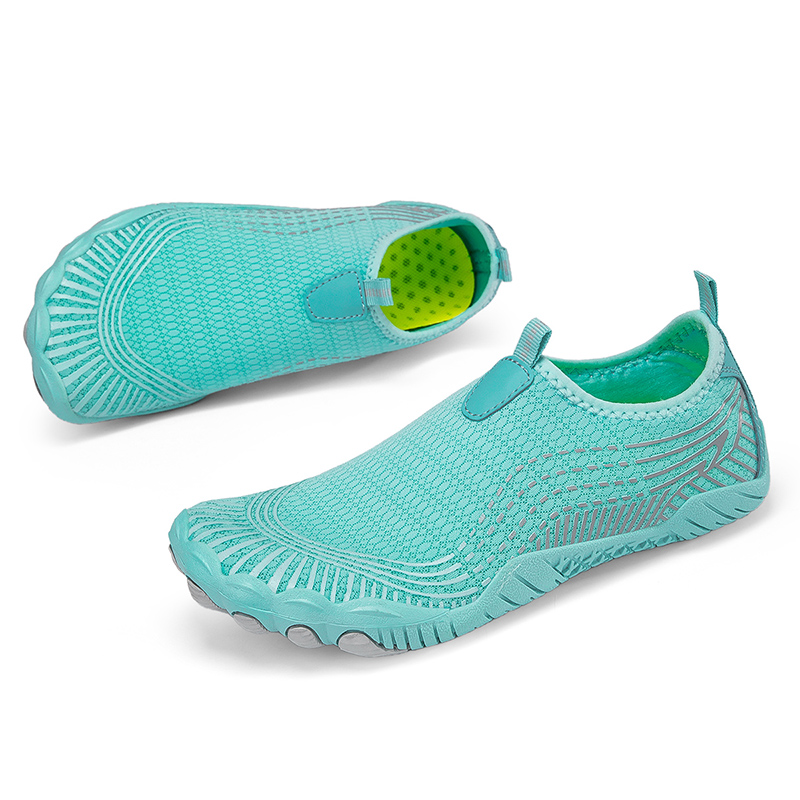
Your local ocean floor thoroughly determines your specific sole construction needs.
Soft Soles: These deliver superior tactile feedback. Surfers refer to this as "board feel." Soft soles let you intimately feel the wax and shape of your board. However, they offer minimal bottom-of-foot protection against sharp coral heads or spiky sea urchins.
Hard Soles: These are absolutely mandatory for aggressive rock-hopping. Rugged reef environments demand rigid, puncture-proof rubber bottoms. The main trade-off involves noticeably reduced agility on your surfboard. Hard soles effectively mute the tactile feedback you normally get from the deck.
In-water footwear usually features one of two structural toe designs. You must choose based on your preference for balance versus warmth.
Split-toe models physically separate the big toe from the remaining toes. This structural separation mimics your natural barefoot balance. It effectively prevents the shoe material from rolling around your foot during aggressive turns. The split design firmly locks your foot in place.
Round-toe models cluster all of your toes together inside a single, unified pocket. This basic design provides vastly superior heat retention. Your toes share radiant body warmth, making round-toe booties highly ideal for freezing winter environments.
The global surf traveler faces a highly frustrating dilemma. Strict airline baggage constraints severely restrict your available packing volume. You need a highly versatile footwear strategy to remain mobile. Ideally, you want a single pair of shoes. These specific shoes must handle rugged trail approaches easily. They must look highly acceptable for casual dining in local towns. They also need enough flat-sole structure to comfortably ride a skateboard down the boardwalk.
Traditional trail runners often seem like an obvious choice. They offer excellent terrestrial grip. Many feature highly advanced waterproofing membranes. However, they carry severe limitations for a proper surf trip. They lack aesthetic versatility entirely. They look bulky and overly technical at a restaurant. Furthermore, their lugged, unevenly textured soles perform terribly on a skateboard.
Fortunately, the footwear market has evolved significantly. Top brands now produce weatherized, lug-soled skate shoes. These hybrid models bridge a crucial gap perfectly. They combine familiar street style with legitimate light trail capability. They utilize a much flatter profile for skateboards while cleverly adding reverse-waffle treads for dirt and gravel traction.
You must carefully evaluate the materials used in your travel shoes. The beach environment destroys standard athletic fabrics quickly.
DWR Coatings: Look specifically for Durable Water Repellent finishes. These block morning dew and unexpected light rain during early surf checks.
Machine-Washable Fabrics: Corrosive salt and abrasive sand build up relentlessly over time. Washable materials keep lingering odors firmly at bay.
Collapsible Heels: Surfers change clothes frequently in parking lots. A drop-in heel allows extremely easy slip-on access. You can step directly into the shoe without crushing the internal structure.
Selecting highly functional footwear requires looking well past surface aesthetics. The incredibly harsh reality of saltwater environments demands highly specific engineering. You must evaluate three core performance pillars before buying.
Water must inevitably exit the shoe immediately. Look for shoe models incorporating dedicated side or bottom drainage ports. If a particular shoe lacks proper drainage mechanisms, trapped water creates a heavily weighted burden. This excess water weight violently strains your leg muscles. Even worse, pooled water drastically increases internal friction. This unchecked friction leads directly to severe, debilitating blistering during long coastal hikes.
Standard athletic rubber becomes incredibly slick on wet coastal rocks. You need proprietary rubber blends designed specifically for marine environments. Look closely for siped outsoles. Siping refers to razor-thin, wavy slits cut deeply into the rubber tread. These channels forcefully push water away from the contact patch. They function exactly like a premium wet-weather tire on a performance car. This specific feature actively prevents disastrous falls on steep, mossy cliffs.
Your gear will routinely encounter razor-sharp shells and abrasive, loose sand. Assess the overall abrasion resistance of the upper material very carefully.
Neoprene Uppers: Always check the physical construction of the seams. Seams should be securely glued and blind-stitched. Taped internal seams provide an even better defense. This specific construction prevents freezing cold water from violently flushing into the bootie.
Mesh Uppers: Look exclusively for tightly woven textiles. A loose fabric weave readily allows coarse sand intrusion. Sand trapped inside a wet shoe acts precisely like coarse sandpaper on your bare skin.
Reinforced High-Wear Zones: Inspect the structural toe box and the rear heel cup. These highly abused areas require extra rubber paneling. This reinforcement prevents premature material blowouts from rock scraping.
Buying the absolute best model is only half the battle. You must actually size and apply the footwear correctly. Improper fit readily destroys the intended functionality of even the best-engineered gear.
You cannot purchase water footwear using your standard street shoe logic. You require a substantially tighter fit. Advanced Coastal Water Shoes and neoprene booties must fit precisely like a second skin. Excess room allows unwanted water pooling. Pooled water ultimately causes your foot to physically slide inside the shoe during dynamic, twisting movements. This violent internal sliding completely ruins your delicate balance on a surfboard. If your measurements fall directly between available sizes, always size down.
Many novice surfers make a highly critical layering error. They mistakenly tuck their wetsuit legs deep inside their booties. This mistake creates a massive funnel effect. Rushing water flushes straight down your leg and rapidly fills the bootie. You must closely follow the industry-standard layering technique. Your wetsuit legs must always go completely over the top of the bootie collar. This creates an effective waterproof shingle effect. Cold water sheds directly over the exterior of the shoe entirely.
Donning incredibly tight neoprene footwear is notoriously difficult. Tugging violently on the top collar will simply tear the delicate material or rip the glued seams. You should use the proven "roll-down" method instead.
Fold the top half of the bootie completely inside out, pulling it down toward the ankle.
Slide your foot deeply in, forcefully pushing your bare toes to the very front edge.
Gently roll the top collar back up securely over your ankle and lower calf.
This simple method highly prevents structural seam stress and ensures a perfectly aligned fit every single session.
Building an effective surf footwear strategy takes careful, deliberate planning. You must ruthlessly prioritize your thermal needs first. Determine the exact water temperatures you will regularly ride in. Next, heavily assess the aggression of your local approach terrain. Sandy beach breaks demand very different approach gear than jagged reef setups.
For your daily local surf routine, establish a highly practical two-piece footwear strategy. Keep dedicated neoprene booties for the water and easy slip-ons for the parking lot. For international air travel, strictly adopt a hybrid "one-quiver" strategy. Find a highly weatherized skate shoe that expertly balances rugged trail grip with casual street style.
As your final action step, carefully review the specific sizing charts provided by the manufacturer. Water shoe sizing rarely mirrors standard athletic shoe metrics perfectly. Measure your foot accurately, apply the vital size-down rule, and confidently prepare your gear for the next incoming swell.
A: They should fit very snugly, much like a second skin. They need to be tight enough that your foot cannot slide internally when the material gets completely wet. However, they should not be so excessively tight that your toes curl or cause uncomfortable cramping.
A: You should entirely avoid wearing normal athletic shoes to the beach. Highly corrosive saltwater and coarse sand are incredibly destructive to standard EVA foams and standard cotton stitching. Athletic shoes also lack proper drainage systems, leading to severe waterlogging and heavy sand accumulation.
A: Thorough freshwater rinsing is absolutely critical after every single use. Vigorously rinse them inside and out to fully remove salt crystals and trapped sand. Air-dry them promptly in a heavily shaded area. Direct UV sunlight rapidly degrades neoprene. Proper drying proactively prevents severe odor buildup.


