 English
Views: 0 Author: Site Editor Publish Time: 2026-04-29 Origin: Site


You face a saturated footwear market filled with overlapping terminology. Brands constantly throw around labels like aqua, water, surf, and hydro. This creates immediate confusion for shoppers. Consumers often mistake marketing jargon for actual technical specifications. This misunderstanding leads to poor purchasing decisions. For example, you might buy a "waterproof" shoe when you actually need a "water-draining" design.
While "aqua shoes" and "water shoes" are functionally synonymous in consumer retail, your specific use-case dictates the required engineering. Buyers needing cross-functional performance must look beyond basic labels. Evaluating footwear through the lens of multisport hydro shoes provides a clearer path to purchase. You will learn how to identify true aquatic performance gear. We will help you avoid common footwear traps. Understanding these structural differences ensures you protect your feet in unpredictable aquatic environments.
Terminology match: "Aqua shoes" and "water shoes" are interchangeable marketing terms; both describe footwear designed for rapid drainage and wet-surface traction, not waterproofing.
The regular shoe risk: Using standard athletic shoes in aquatic environments accelerates material degradation, drastically increases water drag, and traps moisture, creating breeding grounds for fungal infections.
The evaluation pivot: Modern buyers should shift their focus from basic "water shoes" to multisport hydro shoes, evaluating them on fit retention (preventing water-logging), puncture defense, and hybrid traction capabilities.
Shoppers often wonder about the difference between various aquatic footwear names. We must establish definitively one simple fact. "Aqua shoes" and "water shoes" refer to the exact same category. Manufacturers use these synonyms interchangeably. They use them to capture different search trends online. You will not find any structural difference based solely on these two names.
We also need to dispel the "waterproof" myth. Many buyers mistakenly seek waterproof footwear for water activities. True aquatic footwear does not keep water out. Instead, it relies on rapid outward drainage. These designs utilize quick-drying textiles. They intentionally allow your feet to get wet. However, they aggressively prevent water from pooling inside the shoe. This drainage mechanism keeps the shoe light and functional.
Over the past decade, basic slip-on aqua shoes evolved significantly. They transitioned into highly structured Multisport Hydro Shoes. Early versions functioned merely as single-use pool accessories. Today, they serve as technical gear for rugged environmental transitions. Engineers now build them to handle complex movements across varied terrains. They bridge the gap between swimming, hiking, and climbing seamlessly.
Many people simply wear old sneakers to the beach or river. This "make-do" approach fails both mechanically and biologically. Traditional athletic shoes simply cannot handle aquatic stress. They compromise your safety and ruin your outdoor experience.
Prolonged exposure to warm, water-logged traditional shoe environments exponentially increases biological risks. Wet sneakers trap moisture against your skin for hours. This creates a perfect incubator for athlete's foot. Bacterial buildup accelerates rapidly in these dark, damp conditions. You risk developing severe dermatological issues.
Regular shoes also suffer massive performance degradation. They completely lack drainage capabilities. They act like heavy anchors underwater. Furthermore, water quickly destroys their construction. Let us look at specific degradation factors:
Adhesive failure: Standard shoe glues dissolve rapidly when fully submerged.
Material breakdown: Untreated leather rots and warps after soaking.
Friction damage: Water-logged cotton and heavy synthetic fabrics cause severe blistering.
Weight retention: Thick foam midsoles absorb water like sponges, exhausting the wearer.
Finally, we must address hidden hygiene threats. Public locker rooms and pool decks harbor invisible dangers. Natural shorelines often contain bacteria, bird droppings, and fungal spores. Walking barefoot exposes you directly to these hazards. Specialized aquatic footwear acts as a critical hygienic barrier. It protects your skin from microscopic threats lurking on wet surfaces.
Understanding the footwear hierarchy helps you match gear to your environment. We can divide aquatic shoes into four distinct tiers. Each tier serves a highly specific purpose.
Footwear Tier | Primary Characteristics | Best For | Key Limitations |
|---|---|---|---|
Minimalist / Aqua Socks | Ultra-lightweight, slip-on, flexible | Shielding against pool friction, basic hygiene | Zero puncture protection against sharp reefs or marine life |
Neoprene Booties | Highly insulated, skin-tight fit | Cold-water surfing and deep diving | Poor terrestrial traction; can "balloon" if fitted loosely |
Amphibious Sandals | Open-vented, stiff hiking soles | River crossings and light terrestrial hiking | Heavier; traps debris/pebbles; reduces tactile foot-feel |
Multisport Hydro Shoes | Tight-weave mesh, rigid siped rubber outsoles | Seamless transitions across varied terrains | Requires more diligent post-use cleaning than simple socks |
The first tier includes minimalist designs or aqua socks. They feel ultra-lightweight. You can slip them on and off easily. They work best for shielding against pool bottom friction. They also serve as an excellent basic hygiene barrier. However, they offer zero puncture protection. A sharp reef or a stingray can easily pierce them.
The second tier encompasses neoprene booties. Surfers often call them wetsuit boots. They provide high insulation. They work best for cold-water surfing and diving. Unfortunately, they suffer from poor terrestrial traction. They can also "bulge" or balloon with water if you do not buy a perfectly tight fit.
Amphibious sandals represent the third tier. They feature open-vented designs and stiff soles. They perform exceptionally well during river crossings. Hikers love them for light trail usage. However, they feel much heavier. They frequently trap debris and pebbles under your foot. They also significantly reduce tactile foot-feel.
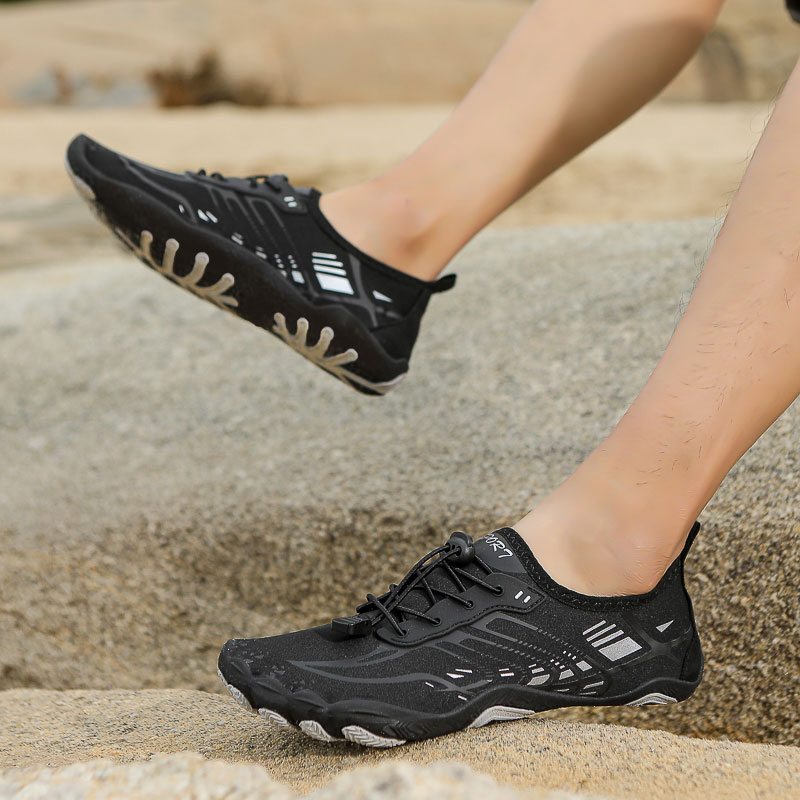
Tier four introduces the optimal hybrid solution. Multisport Hydro Shoes feature tight-weave, quick-dry mesh. They utilize a rigid, siped rubber outsole. They work best for seamless transitions. You can kayak, scramble across rocky coastlines, and walk casually on land without changing your footwear.
Evaluating specialized water footwear requires looking past external aesthetics. You must examine the mechanical properties of the shoe. Three critical dimensions determine whether the product will succeed or fail in the wild.
First, analyze the traction mechanics. Look specifically for outsoles featuring "sipes." Sipes are thin slits cut into the rubber. They look very similar to car tire treads. These slits actively channel water away from the contact point. This mechanism drastically prevents hydroplaning. You need this technology on wet boat decks or algae-slicked rocks.
Second, evaluate the balance between puncture resistance and foot-feel. The sole must strike a perfect compromise. Consider these crucial balance points during your evaluation:
The rubber must be thick enough to defend against jagged volcanic rock.
The sole must deflect broken glass and sharp shells found on public beaches.
The structure must remain flexible enough to bend naturally.
The shoe must allow your foot to grip uneven surfaces natively.
Third, prioritize fit and material integrity. A proper fit remains absolutely non-negotiable. The shoe must offer a snug, secure wrap around your foot. Manufacturers often utilize bungee laces to achieve this. Many also incorporate tight neoprene collars around the ankle. These design choices prevent the dreaded "bagging" effect. Bagging occurs when water fills a loose shoe. This creates immense drag during swimming. A secure wrap ensures the shoe functions like a second skin.
Knowing when to wear your gear maximizes its lifespan. It also ensures your personal safety. Let us examine the best environments for deployment. We will also outline strict boundaries where you should avoid them entirely.
These shoes excel in several high-value use cases. You can transition safely from unsanitary locker rooms directly into the pool. They provide immense value during paddleboarding, kayaking, and rafting. In these sports, slip-resistance and foot protection remain critical. Furthermore, they shine in therapeutic aquatic applications. Elderly users gain vital stability. Rehabilitating patients experience better grip during low-impact water workouts.
Trust-building transparency requires us to acknowledge limitations. You must observe specific hard exclusions for this footwear. Do not use them for freezing environments. Icy waters require dedicated thermal booties to prevent frostbite. Do not use them for heavy, multi-day dry backpacking. They simply lack the necessary rigid arch support. Carrying a heavy load-bearing pack in flexible water shoes will cause severe foot fatigue.
Proper maintenance extends the life of aquatic footwear by years. Neglect ruins them in a single season. You must adopt a strict care routine. We recommend following a structured lifecycle management approach.
A salt and debris flush is mandatory. You must execute an immediate rinse with fresh water after every use. Do this especially after saltwater or chlorinated exposure. Salt crystals tear apart synthetic fibers microscopically. Chlorine aggressively degrades rubber elasticity. A thorough fresh-water flush prevents textile degradation and neutralizes odor-causing bacteria.
Mold prevention requires strict discipline. You have a strict requirement to air-dry them completely. Neoprene components demand special attention. You must dry them in a well-ventilated area. Keep them entirely away from direct sunlight. UV rays bake the rubber. Sunlight causes the materials to crack and lose their structural integrity.
Here is a summary chart outlining your basic maintenance schedule:
Maintenance Action | Frequency | Primary Purpose |
|---|---|---|
Fresh Water Flush | Immediately after every use | Remove salt, sand, and harsh pool chemicals |
Ventilated Air-Dry | Post-rinse, until completely dry | Prevent mold and fungal growth in neoprene |
Sipe Brushing | Every 3-5 uses | Clear embedded micro-debris from traction slits |
Finally, practice consistent traction maintenance. You must conduct periodic brushing of the outsole sipes. Use a stiff bristle brush. Clear out embedded micro-debris. Small pebbles and hardened mud fill the traction slits over time. Cleaning them ensures the rubber maintains its slip-resistant coefficient.
We established firmly that aqua and water shoes are nominally the same. However, the engineering spectrum spanning from cheap socks to rugged hybrids is vast. True aquatic gear prioritizes outward drainage over waterproofing. It actively combats biological threats and mechanical failure.
Take action by evaluating your typical outdoor environments. Map your primary destination against our evaluation criteria. Determine if you face slick pool decks or jagged shorelines. We highly recommend multisport hydro shoes for users requiring cross-functional versatility. Invest in siped outsoles and secure bungee lacing. Maintain them diligently with fresh water rinses. This approach guarantees long-lasting comfort and superior foot protection.
A: Yes, you can actively swim in them. You must ensure they have a snug fit and a closed-toe design. This specific structure prevents water-ballooning and eliminates underwater drag. A tight fit keeps your feet streamlined while protecting your toes from accidental impact against pool walls or submerged rocks.
A: Most do not float by design. Added buoyancy on the feet disrupts your natural swimming posture. Floating footwear forces your legs upward artificially. This makes diving and proper swimming mechanics incredibly difficult. Manufacturers design them to sink slightly, helping you maintain optimal physical balance in the water.
A: Flip-flops work strictly for casual, dry sand lounging. Aqua shoes provide secure heel retention. They actively prevent sand friction blisters. Furthermore, they protect your entire sole from blistering hot sand and hidden sharp objects like broken glass. They remain vastly superior for any actual physical activity.
A: A streamlined water shoe or aqua sock works perfectly. It provides hygienic protection against harsh locker room bacteria. It also prevents dangerous deck slip hazards. These minimalistic options keep you exceptionally safe without violating standard public pool attire rules.


