 English
Views: 0 Author: Site Editor Publish Time: 2026-05-25 Origin: Site


Running exerts up to eight times your body weight on your feet. For a runner battling plantar fasciitis, taking 1,500 steps per mile is functionally equivalent to repeatedly tearing open a healing wound. We must establish an uncomfortable truth upfront. Running shoes cannot cure plantar fasciitis. The plantar fascia has notoriously low blood flow. This physiological reality makes healing inherently slow. You cannot simply lace up a new pair of sneakers and expect your heel pain to vanish overnight.
While shoes are not a medical cure, they remain absolutely essential. Specific geometric structures and measurable footwear metrics act as critical load-management tools. They prevent further micro-tears. They actively facilitate your body's recovery process. In this comprehensive guide, you will learn exactly how to evaluate footwear biomechanics. We will explore necessary structural metrics and debunk popular cushioning myths. You will also discover a practical self-test to determine your precise footwear needs before you ever set foot in a running store.
Shoes Manage Load, Not Cures: Proper footwear shifts mechanical stress from the inflamed fascia to larger muscle groups (calves and glutes).
Soft Does Not Equal Safe: Ultra-plush, highly flexible shoes actually increase strain on the plantar fascia by requiring more stabilizing effort.
Rigidity is Your Ally: Look for measurable metrics: an 8mm+ heel drop, firm midsoles, and high torsional rigidity.
Terrain Matters: Off-road options, like Coastal Trail Running Shoes, inherently possess the stiffness and stability required to protect a sensitive plantar fascia.
Holistic Support is Mandatory: Wearing supportive shoes during a run is useless if you walk barefoot on hard floors at home.
Many runners completely misunderstand the actual nature of their heel pain. The plantar fascia is a thick band of collagen fibers. It is not a traditional muscle. It degrades over time due to mechanical overload. It does not simply inflame. Because it lacks a robust blood supply, tissue damage accumulates quickly. It heals at a frustratingly slow pace.
The primary job of a running shoe in this context is purely mechanical. It must reduce toe dorsiflexion. Dorsiflexion refers to the severe upward bending of your toes. The shoe must also limit the stretching of your foot's arch. When you step forward and push off, your arch naturally flattens. Your toes bend upward simultaneously. This dual action places immense tension on already damaged collagen fibers. Proper footwear acts as a mechanical splint. It physically interrupts this damaging stretching cycle.
Redistributing impact is your ultimate goal. A higher heel drop physically alters your entire kinetic chain. By elevating the heel slightly, the shoe moves the burden away from the vulnerable heel. It shifts this mechanical load upward. The force transfers directly into your stronger calf muscles and glutes. These larger muscle groups can handle the intense force of running much better. They absorb the heavy shock so your damaged fascia does not have to bear the brunt of the impact.
When heel pain strikes, your first instinct is likely to seek out the softest, most heavily cushioned shoe on the market. This intuition is completely wrong. We need to dismantle several pervasive myths about running footwear. These misconceptions often prolong recovery and intensify daily pain.
Myth 1: "I need the softest cushion possible to protect my heel."
Overly soft foam bottoms out upon impact. It creates an highly unstable surface beneath your foot. Your foot's intrinsic muscles and fascia must work overtime. They constantly fire to stabilize your body on this squishy platform. Imagine running on a soft mattress. Your muscles fatigue rapidly. The excessive sideways motion places severe stretching forces on your plantar fascia. You need strict stability, not extreme plushness.
Myth 2: "Minimalist or zero-drop shoes will strengthen my feet naturally."
Zero-drop shoes place maximum eccentric load on the Achilles tendon. They stretch the plantar fascia to its absolute limit. During a healthy period, low-drop shoes might help build intrinsic foot strength. However, during an active flare-up, they accelerate micro-tears. You need to offload the vulnerable tissue right now. You must not force it to work harder under load.
Myth 3: "High arch support is universally good for heel pain."
Blindly adding aggressive arch support can easily backfire. For runners who naturally possess flat feet or low arches, rigid arch bumps create painful localized pressure points. Support structures must perfectly match your natural foot shape. Otherwise, you risk bruising the very structures you are trying to protect.
Let us summarize these mechanical differences in a quick reference chart to guide your shopping strategy.
Common Footwear Myth | The Biomechanical Reality | Actionable Advice |
|---|---|---|
Maximum Soft Cushioning | Bottoms out instantly and causes severe instability in the midfoot. | Choose firm, responsive foams to maintain alignment. |
Zero-Drop / Minimalist | Maximizes eccentric load on the Achilles tendon and plantar fascia. | Use a minimum 8mm to 10mm heel drop to offload the heel. |
Aggressive Arch Support | Creates painful pressure points for runners naturally possessing low arches. | Match medial support precisely to your unique foot shape. |
You need measurable criteria to evaluate your next pair of running shoes. Ignore marketing jargon about plush comfort. Focus intently on structural mechanics. Use these specific benchmarks to make your purchasing decision.
Measurable Heel Drop: Look for a minimum heel-to-toe drop of 8mm to 10mm. This specific geometry mechanically offloads the plantar fascia. It intentionally shifts the daily workload up to your calves.
High Torsional Rigidity: Your shoe should stubbornly resist twisting. If you grab the heel and toe and try to wring it like a towel, it should barely move. High torsional rigidity prevents your midfoot from collapsing inward during your stride.
Firm Midsoles & Stiff Heel Counters: Avoid squishy, low-density foams. Firm materials absorb shock perfectly without destabilizing your foot. Additionally, the heel counter must be exceptionally stiff. This is the rigid cup wrapping the back of your heel. It locks your ankle securely in place. It disperses impact forces evenly across the foot.
Forefoot Rocker Geometry: A pronounced rocker design acts like a rigid fulcrum. It heavily reduces the need for your toes to bend upward during toe-off. Limiting toe dorsiflexion dramatically reduces tension on the entire fascia band.
The Off-Road Advantage
Road runners often overlook trail shoes. However, trail models offer immense biomechanical benefits for heel pain. Off-road options often serve as an exceptional solution for managing mechanical load. Designed to navigate shifting sand and rocky coastal paths, Coastal Trail Running Shoes inherently feature wide, highly stable bases. They utilize stiff rock plates and extremely rigid midsoles.
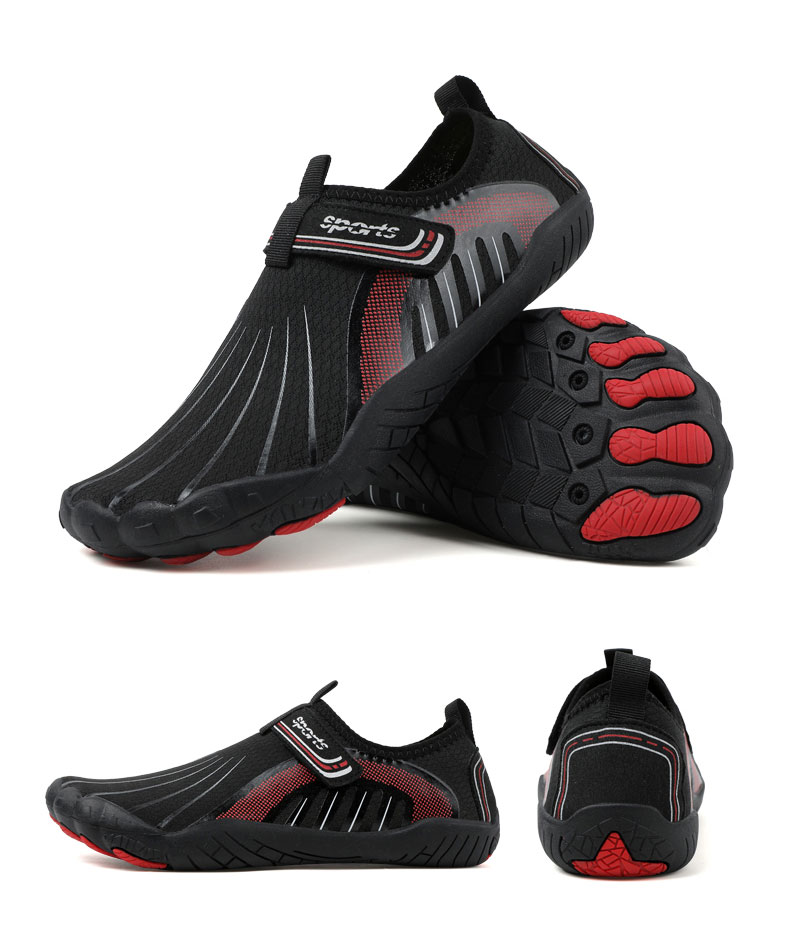
These are exactly the structural attributes needed to immobilize your foot. They protect an inflamed plantar fascia from over-flexing under pressure. By wearing Coastal Trail Running Shoes, you gain the firm support necessary to keep your midfoot perfectly aligned. This holds true even if you run entirely on flat neighborhood roads. Trail designs simply build in the extreme rigidity you desperately need during a flare-up.
Before buying any shoe, you must understand your personal biomechanical deficits. You cannot guess what your foot needs. Perform this three-step self-test at home. It will precisely determine your specific footwear requirements.
Test 1: The Knee-to-Wall Ankle Flex. This evaluates your ankle dorsiflexion. Stand facing a bare wall. Place one foot exactly four inches back. Try to touch your front knee to the wall without lifting your heel off the ground. If your ankle mobility is restricted and your heel pops up early, you must compensate structurally. Prioritize a maximum heel drop of 10mm or more to accommodate this restriction.
Test 2: The Single-Leg Heel Raise. This assesses muscle strength and identifies key pain triggers. Stand barefoot on one leg. Slowly push up onto your toes. Pay close attention to your pain levels. If lifting onto your toes causes sharp pain in your arch or heel, your fascia is under extreme strain during toe-off. Prioritize shoes featuring an aggressive forefoot rocker. The rocker physically does the bending for you. It shields the fascia from extreme tension.
Test 3: The 30-Second Hop Test. This checks your structural stability under dynamic impact. Hop gently on one foot for exactly 30 seconds. If hopping triggers midfoot pain or general instability, your foot requires maximum external bracing. Prioritize maximum torsional rigidity. You must completely avoid flexible or neutral daily trainers until your structural integrity naturally improves.
Even the perfect pair of shoes cannot overcome poor implementation habits. Many runners unknowingly sabotage their own recovery through easily avoidable mistakes. You must proactively protect your progress.
The Danger of Pre-Run Painkillers
Taking NSAIDs like Ibuprofen before a run is incredibly dangerous. We issue an explicit safety warning against this common practice. Anti-inflammatory drugs mask the pain without fixing the underlying mechanical stress. Pain serves as your body's vital early warning system. By silencing this internal alarm, you risk severe fascia ruptures. You might push blindly through a minor micro-tear. You could easily turn it into a catastrophic injury requiring surgery. Never medicate simply to get through a training run.
The Barefoot-at-Home Trap
Walking barefoot indoors completely undoes the protection your running shoes provide. Hardwood and tile floors are notoriously unforgiving surfaces. If you manage your load perfectly during a morning run but spend four hours barefoot in the kitchen, you will not heal. You must wear structured, supportive footwear inside the house at all times.
Rotation Logic
Running in the exact same shoe every single day applies repetitive stress to identical tissues. Alternating between two pairs of shoes subtly shifts the daily load. Select two pairs featuring slightly different geometries. For example, alternate a 10mm drop shoe with an 8mm drop shoe. This specific strategy alters the kinetic chain just enough. It prevents any single tissue band from being constantly overworked.
Recovery does not end when you take off your running shoes. You must build a comprehensive, 24-hour protocol. This holistic approach heals degraded collagen fibers efficiently and safely.
Active Recovery Tooling
Ice alone only treats the symptom by temporarily numbing the area. It does not solve the root cause. To facilitate true healing, you must actively address the degraded tissue. Use a dense lacrosse ball or dedicated foot massage tools. Roll your foot over the ball firmly. This action breaks down rigid scar tissue. It actively stimulates much-needed blood flow to the damaged region.
Night Time Intervention
Your foot naturally rests in a pointed position while you sleep. This allows the plantar fascia to shorten. It heals in a contracted state overnight. When you step out of bed, the sudden stretch forcibly tears the newly healed fibers. Use Strassburg socks or rigid night splints. These tools hold your foot securely in passive dorsiflexion. They encourage continuous blood flow. They keep the tissue properly lengthened while sleeping.
Recovery Footwear
You must transition immediately into structured recovery sandals post-run. Walking in unsupported flat shoes places immediate strain on fatigued foot muscles. Structured recovery footwear maintains your arch alignment. It actively protects your feet while your tissues recover from the grueling workout.
Finding the right footwear remains strictly an exercise in mechanical load management. You are not searching for a magical cure. You are building a robust system to shield vulnerable tissue from destructive impact. Use the data gathered from your self-assessment to make an informed decision. Combine your stiff, supportive footwear with active physical therapy. Regular calf stretching and total load reduction will significantly accelerate your healing timeline.
Start by executing the three-step home test today. Once you identify your mobility limits, measure your current shoes against the rigidity benchmarks discussed above. Discard any overly soft or flexible models that compromise your midfoot. Take full control of your recovery by managing every single step you take, both on the road and inside your home.
A: Mild discomfort during the first few minutes of a run is often manageable. However, sharp or escalating pain alters your natural gait. This compensation frequently causes secondary injuries in your knees and hips. You should always use sharp pain as a hard boundary. If the pain forces you to limp, stop running immediately.
A: Yes, but with strict caveats. The extreme stiffness of a carbon plate mimics a forefoot rocker. This dramatically aids the fascia by reducing toe bend. Unfortunately, many super-shoes pair these rigid plates with overly soft, highly unstable foams. This instability negates the plate's benefit. Choose plated shoes with firmer midsole materials.
A: Orthotics and shoes operate strictly as a coupled system. A custom insole requires a firm, neutral, and stable shoe to sit inside. If you place an expensive custom orthotic inside a worn-out or overly soft shoe, the platform will still collapse. Prioritize the shoe's structural integrity before investing in custom inserts.


