 English
Views: 0 Author: Site Editor Publish Time: 2026-05-27 Origin: Site


Running on the beach looks effortless in television commercials. You picture yourself gliding along the shoreline as the sun sets over the ocean. The reality involves shifting surfaces, severe blister risks, and hidden ankle-rolling hazards. Runners logically assume trail shoes will translate well to sand since they expertly handle dirt and rocks. However, the wrong trail shoe can quickly turn a peaceful beach run into a painful, sand-filled "sandpaper" experience.
Open mesh materials and ultra-soft foams quickly become your worst enemies on the coast. This guide evaluates the technical overlaps between trail running and beach running. We break down exactly what makes specific Coastal Trail Running Shoes effective for sandy environments. You will learn about the biomechanical risks of sand training and discover how to evaluate your current footwear lineup to ensure a safe, highly effective coastal run.
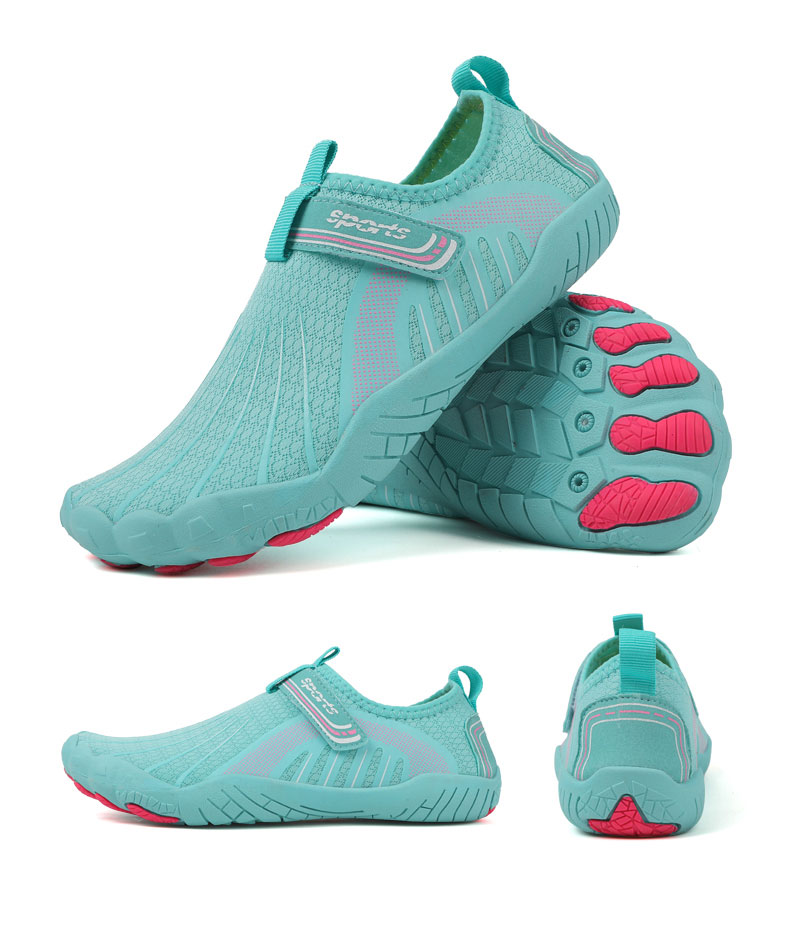
Yes, with caveats: Trail shoes *can* be excellent for beach running, provided they have a low stack height, a firm midsole, and a tightly woven upper.
The "Sandpaper" Effect: Breathable, open-mesh trail shoes will instantly fill with sand, leading to severe friction and blisters.
Cushioning is the enemy: Max-cushion or high-stack trail shoes create dangerous instability on already shifting sand, significantly increasing the risk of ankle sprains.
Waterproof trade-offs: While Gore-Tex (GTX) or tightly woven soft-terrain (ST) uppers block sand, they trap heat and water if fully submerged.
You can absolutely use trail running shoes on the beach, but your success depends entirely on the shoe's specific design profile. Not all trail footwear is created equal. Understanding the difference between hard-pack trail shoes and soft-terrain models dictates whether you finish your run feeling energized or hobbling home with raw feet.
Trail shoes explicitly designed for soft, muddy terrain perform incredibly well on dry sand. Brands often label these models with "ST" (Soft Terrain). They feature aggressive, deep lugs measuring around five millimeters. These deep lugs act like small paddles. They dig into the shifting granules and provide the necessary traction you need to push forward. Standard road shoes slip backward with every stride, but soft-terrain trail shoes grip the loose material efficiently.
Many modern trail shoes mirror road shoe trends. They feature high-stack profiles, ultra-soft foams, and highly breathable mesh uppers. Wearing these on the beach introduces significant risks. In sand, traditional open mesh acts as a sieve. Fine sand pours in immediately. Furthermore, soft foam compounds the natural instability of the beach. Every time your foot lands, the sand compresses. If your shoe also compresses, you create massive "power leaks." Your body expends excessive energy trying to stabilize the foot, leading to severe joint strain and potential ankle sprains.
Barefoot running remains popular among purists hunting for a natural stride on pristine sand. Stripping off your shoes entirely can strengthen intrinsic foot muscles. However, most running coaches and biomechanics experts strongly recommend wearing shoes. Even well-maintained beaches conceal broken glass, sharp shells, and hidden rocks beneath the surface. Shoes provide critical ankle support against sudden sand collapses and shield your soles from hazardous marine debris.
If standard road shoes lack grip and typical trail shoes let in too much sand, what exactly should you look for? Finding proper Coastal Trail Running Shoes requires evaluating three specific technical dimensions.
The upper material acts as your primary defense against the dreaded sandpaper effect. You must avoid standard engineered mesh at all costs. Instead, prioritize tightly woven synthetic materials. Look for Dyneema fabrics if you frequent rocky coastal trails, or closely knit nylon blends. A mandatory feature for any beach runner is a fully gusseted tongue. A gusseted tongue attaches directly to the sides of the shoe interior. This closed design eliminates the gaps where sand typically enters around the laces. Some runners even prefer models featuring integrated ankle gaiters for maximum protection.
The golden rule of trail running applies perfectly here: the softer the terrain, the firmer and lower your shoe needs to be. You want your foot as close to the ground as safely possible. Avoid carbon fiber plates and ultra-plush foams entirely. You need a firm, highly stable platform. Dense EVA-based foams counteract the shifting sand. They prevent your foot from sinking further into the ground during the toe-off phase, protecting your Achilles tendon from overstretching.
Traction requirements change based on the specific type of sand you encounter during your run.
Terrain Type | Optimal Outsole Feature | Biomechanical Outcome |
|---|---|---|
Dry / Loose Sand | Aggressive lugs (4mm - 6mm) | Prevents backward slipping; anchors the foot for a powerful push-off. |
Wet / Packed Sand | Standard trail or textured road outsole (1mm - 3mm) | Provides sufficient friction without uncomfortable underfoot pressure. |
Rocky Surf Lines | Sticky rubber compounds (e.g., Vibram Megagrip) | Prevents slipping on wet coastal rocks and hidden tide pool ledges. |
Shoppers frequently gravitate toward waterproof running shoes when planning coastal routes. The logic seems sound initially. You run near the ocean, so you want to keep your feet dry from rogue waves and sea spray. However, applying waterproof technology to beach running introduces significant complications.
Consumers naturally assume waterproof shoes represent the ultimate beach solution. They believe a Gore-Tex (GTX) membrane will perfectly block both moisture and microscopic sand particles, resulting in a pristine internal environment.
Field tests and laboratory evaluations reveal a harsh truth. Waterproof shoes boast incredibly poor breathability. A membrane designed to block water inevitably restricts airflow. More importantly, beach running involves unpredictable tides. If water overtops the ankle collar from an unexpected wave, that water cannot drain out. The shoe instantly transforms into a heavy, waterlogged "hot box." The trapped saltwater softens the skin, dramatically increasing friction. Blisters form within minutes under these conditions.
Base your decision on climate and terrain. If you run primarily on dry, loose sand during cooler weather, a GTX shoe is excellent. The membrane acts as an impenetrable shield against fine sand dust. Conversely, if you plan to run through the surf line, cross tidal pools, or train in peak summer heat, avoid waterproof models entirely. A non-waterproof shoe featuring a dense weave and built-in drainage capabilities represents a much safer choice.
Running on the coast changes how your body moves. Understanding these biomechanical realities helps you choose footwear that actively mitigates injury risks rather than amplifying them.
Scientific studies indicate running on sand demands approximately 1.6 times more energy than running on hard pavement. Your muscles work overtime to stabilize your joints on an unpredictable surface. Your shoes should never add to this heavy physiological burden. Heavy water retention or energy-sapping soft foams force your hip flexors and calves to work harder than necessary. Firm, lightweight footwear keeps your stride efficient.
Most beaches are not perfectly flat. They slope downward toward the water. This environmental camber forces your body into an unnatural alignment. One leg continuously strikes lower than the other, forcing it to over-pronate. Your hips tilt, and your lower back compensates for the uneven geometry.
Implementation Tactic: Always run out and back on the exact same path. If you run north for three miles, turn around and run south for three miles. This tactic balances the physical load on both sides of your body. Never run a continuous one-way loop on a slanted beach.
Footwear Need: Shoes featuring built-in "guide rails" or inherent lateral stability help mitigate this uneven stress. A wider base net prevents your ankle from collapsing inward on the lower side of the slope.
The tide dictates your running mechanics. Understanding the difference helps you plan your route and shoe choice.
Chart: Impact Dynamics by Tide Level
Condition | Impact Level | Stability Level | Ideal Footwear Approach |
|---|---|---|---|
Low Tide (Wet Sand) | High | High | Accommodates standard trail or stable road shoes. Surface behaves like packed dirt. |
High Tide (Dry Sand) | Low | Low | Demands aggressive grip, firm platforms, and strict sand-blocking upper meshes. |
Selecting the right shoe requires matching your specific runner profile to the correct gear category. Use the following frameworks to identify your next step.
Profile A: The Transitioning Road Runner
You typically run on pavement but want to add beach runs to your weekly routine. Your ankles are not yet adapted to shifting terrain.
Look for: "Door-to-trail" or hybrid shoes. You need a firm midsole, a moderate stack height, and a tightly knit upper. Prioritize structural stability to protect your unadapted ligaments from the unpredictable sand.
Profile B: The Pure Beach and Soft Sand Runner
You live near the coast and intend to log serious mileage entirely on the sand. You train frequently in the dunes.
Look for: Dedicated "ST" (Soft Terrain) trail shoes. Demand deep 5mm+ lugs to act as paddles. Insist on a fully gusseted tongue to block debris. Choose models featuring low heel-to-toe drops to keep your center of gravity grounded.
Profile C: The Minimalist and Natural Runner
You prefer feeling the ground and want to strengthen your foot mechanics using the forgiving nature of the beach.
Look for: Zero-drop, minimalist shoes or barefoot-style running models. They offer puncture protection while allowing maximum foot articulation.
Risk Warning: Minimalist shoes require massive calf and Achilles tendon adaptation. Transition incredibly slowly. Doing too much volume too soon frequently leads to severe plantar fasciitis and Achilles tendinopathy.
Trail running shoes are generally the best tools for tackling sandy terrain, provided you select the right variation. Success requires looking past marketing hype and focusing on specific structural components. You need a low stack height to maintain balance, a firm foam platform to prevent energy leaks, and a tightly woven upper to block abrasive sand.
Before making a purchase, evaluate your local beach environment. Determine whether you will mostly run on wet packed sand near the surf line or dry loose dunes further inland. Check for the presence of sharp rocks or broken shells. Always prioritize lateral stability over plush cushioning when conquering coastal terrain. By carefully matching your footwear to the environmental realities of the beach, you ensure a stronger, safer, and much more enjoyable running experience.
A: Yes. Even the most tightly woven trail shoes will eventually let in microscopic sand particles. High-quality, anti-blister synthetic socks act as a necessary second skin. They absorb the inevitable friction between the invading sand granules and your bare feet, preventing painful hot spots.
A: Saltwater and abrasive sand degrade EVA foams, rubber outsoles, and upper stitching much faster than standard dirt trails. The microscopic salt crystals cut through threads over time. Always rinse your shoes thoroughly with fresh, clean water immediately after every coastal run.
A: While barefoot running offers excellent biomechanical benefits for foot strengthening, it exposes your soles to hidden glass, sharp shells, and marine debris. If you choose to run barefoot, stick strictly to visually inspected, wet-packed sand at the water's edge, and keep your initial distances very short.


