 English

Views: 0 Author: Site Editor Publish Time: 2026-06-12 Origin: Site


Many outdoor enthusiasts love feeling the earth beneath their feet. They want to maintain natural foot movement during various aquatic activities. However, they often struggle to choose the right gear for their specific adventures. The ongoing debate between dedicated water shoes and minimalist footwear leaves many buyers feeling deeply confused. While these two distinct shoe categories overlap, they prioritize entirely different structural goals. Traditional models focus heavily on pure aquatic protection. Conversely, minimalist designs strictly champion natural anatomical movement. Picking the wrong type of footwear causes cramped toes, poor balance, or damaged gear. We will objectively evaluate the overall performance of minimalist aquatic models across different terrains. You will also discover if cheap big-box options make good minimalist alternatives. Finally, we provide a reliable, step-by-step evaluation framework to guide your next purchasing decision.
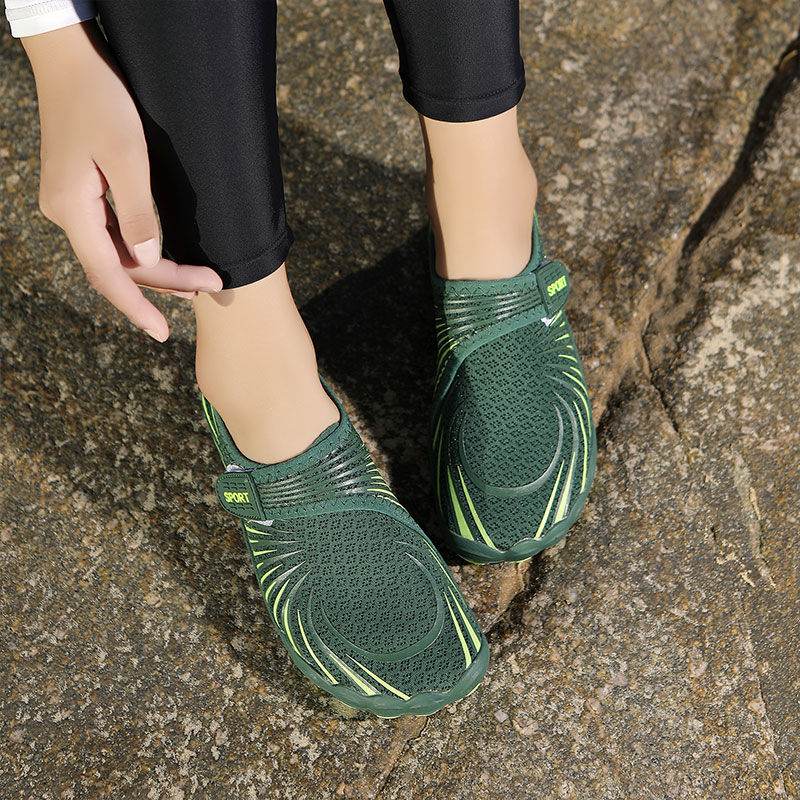
Barefoot water shoes combine zero-drop soles and wide toe boxes with aquatic materials, making them highly versatile for amphibious transitions (land to water).
Traditional water shoes often feature tapered toe boxes and arch support, which compromise natural foot mechanics but may offer superior sediment blocking.
Budget-friendly, standard water shoes can serve as an entry-level "barefoot hack" if buyers specifically verify zero-drop geometry and toe flexibility.
Key evaluation metrics for aquatic barefoot footwear include drainage efficiency, wet-surface grip, and material resistance to saltwater degradation.
When comparing these two footwear styles, you must look closely at their fundamental shapes. Manufacturers build them for entirely different purposes. They utilize distinct design philosophies to achieve their respective performance goals.
Traditional water shoes usually taper sharply at the front. Brands design them this way to significantly reduce water drag. They want swimmers to move faster through heavy currents. Unfortunately, this tapered shape causes severe toe compression. Your toes squeeze tightly together during movement. This limits your natural stability. You cannot grip the ground properly when traversing uneven riverbeds.
Conversely, Barefoot Water Shoes utilize strict "foot-shaped" geometry. They feature noticeably wider toe boxes. This extra room allows complete natural toe splay. Your toes spread out entirely flat inside the shoe. You achieve far better balance on slippery or highly uneven surfaces.
Feature | Traditional Water Shoes | Barefoot Water Models |
|---|---|---|
Toe Box Shape | Tapered and noticeably narrow | Wide and anatomically foot-shaped |
Primary Goal | Reduce water drag for swimmers | Enable natural toe splay |
Foot Mechanics | Restricts toe movement actively | Promotes natural balance and grip |
Conventional water shoes often include exceptionally thick rubber outsoles. They also feature stiff, built-in arch support. This rigid structure elevates the heel higher above the forefoot. It fundamentally alters your natural standing posture. It shifts your body weight forward unnaturally, changing how you walk.
Minimalist models offer a striking contrast. They feature a true zero-drop profile. The heel and forefoot sit at the exact same vertical height. These perfectly flat soles force immediate natural muscle engagement. Your foot muscles work much harder to stabilize your body. You also gain significantly better proprioception. You can physically feel the contours of rocky riverbeds beneath you. This instant sensory feedback actively prevents rolled ankles. It keeps you safe on unpredictable, submerged terrain.
Every footwear choice requires specific performance trade-offs. You must carefully weigh the core benefits against the inherent design limitations.
Minimalist aquatic footwear offers three major performance benefits.
Sensory Feedback: These models feature extremely thin soles. Thickness typically ranges strictly from 3mm to 5mm. You can clearly feel the exact texture of the terrain beneath you. This sensory input massively improves your stability on mossy rocks or slippery paddleboards.
Versatility: Standard water shoes feel incredibly clunky on dry land. Barefoot designs perform exceptionally well across multiple diverse environments. You can easily wear them for light hiking, intense gym workouts, or indoor Pilates. They adapt seamlessly to dry land activities.
Developmental Benefits for Kids: Growing toddlers desperately need unrestricted foot movement. It promotes highly proper sensory development. They build superior natural balance while safely exploring the sandy beach. Barefoot models actively facilitate healthy, natural growth patterns.
Despite their numerous benefits, you must consider a few objective drawbacks.
Sand Ingress: Barefoot models prioritize extreme flexibility above all else. They often use wider collars and highly breathable mesh fabrics. These specific materials easily collect fine sand. You might need to empty them frequently during long beach walks.
Thermal and Impact Protection: Extremely thin soles offer far less insulation against freezing water temperatures. They also provide minimal shock absorption. Walking across sharp reef structures can feel incredibly painful if you step too hard.
Saltwater Degradation: Many minimalist brands use barefoot-specific adhesives and delicate vegan materials. These components can degrade much faster in harsh ocean environments. You must rinse them meticulously using clean freshwater after every single use.
Common Mistake: Leaving wet, salty shoes baking in the direct sun destroys the eco-friendly glue. Always rinse them and air-dry them strictly in the shade.
Many outdoor enthusiasts genuinely want to try minimalist footwear. However, premium barefoot models often cost well over $100. Buyers frequently test a highly popular budget strategy. They purchase $15–$30 big-box store water shoes instead. They use these cheap, readily available models as a low-cost introduction to barefoot running or trail walking.
This budget strategy can work remarkably well. You just need to select the exact right pair.
Criteria for a Successful Budget Hack:
The shoe must absolutely lack rigid plastic heel counters. The heel area should collapse completely flat when pressed.
The interior insole must be entirely removable. You desperately need this removal to achieve a true, authentic zero-drop feel.
The toe area must measure noticeably wider than average standard athletic shoes.
Implementation Risks:
You will inevitably face certain distinct challenges using this budget approach. Manufacturers deliberately design these cheap rubber outsoles exclusively for soft sand and deep mud. They wear out exceptionally fast on hard asphalt or urban concrete. You might destroy the tread completely in just a few weeks. Furthermore, cheap neoprene fabric aggressively traps body heat. This easily causes painful friction blisters during extended dry-land use.
Best Practice: Keep your budget water shoes strictly on soft dirt trails or beach sand. Avoid hard pavement entirely to safely extend their lifespan.
You need a highly systematic approach to evaluate different footwear models. Focus intensely on four primary technical metrics to ensure a successful purchase.
You must evaluate a specific structural trade-off. Some shoes feature large physical drainage holes directly in the sole. They dry almost instantly upon leaving the water. However, these gaping holes easily allow fine silt inside. Other models use tightly woven mesh uppers instead. This mesh blocks sand particles perfectly. Unfortunately, it takes much longer to dry completely in humid environments.
Always check the specific lug pattern and rubber compound carefully. Extremely thin soles require highly specialized sticky rubber to maintain grip. Look closely for siped outsoles. Siping refers to tiny, razor-thin slits cut directly into the rubber bottom. These microscopic slits strongly prevent slipping on wet pool tile or smooth river rocks.
Establish a strict ideal benchmark for your next purchase. High-quality Barefoot Water Shoes should weigh nearly the exact same wet as they do dry. Premium brands achieve this remarkable feat using strictly non-absorbent materials. They completely avoid heavy, sponge-like padding fabrics.
Avoid traditional tying shoelaces entirely. They loosen rapidly and dangerously in strong water currents. We highly recommend quick-draw bungee laces instead. Sturdy hook-and-loop straps also provide excellent, highly secure alternatives. They keep the footwear firmly attached during rigorous aquatic movement.
Evaluation Metric | What to Look For | Trade-Off / Consideration |
|---|---|---|
Drainage Capability | Physical sole holes or mesh uppers | Fast drainage systems invite more sand and silt |
Wet-Traction | Siped outsoles and sticky rubber compounds | Aggressive lugs may feel clunky on flat paddleboards |
Water Retention | Hydrophobic (non-absorbent) synthetic materials | May lack the plush feel of padded traditional shoes |
Closure System | Bungee quick-laces or hook-and-loop straps | Traditional laces fail consistently in strong water currents |
Different aquatic environments clearly demand specific shoe features. Match your planned outdoor activity to the correct footwear profile.
We strongly recommend ultra-minimalist, sock-style barefoot shoes. They offer the highest possible flexibility for active swimming. You can pack them incredibly easily into tiny beach bags. They do allow some minor sand entry through the collar. However, this trade-off remains highly acceptable for casual ocean swimming or sandy lounging.
You urgently need rugged physical protection here. We recommend rugged barefoot water shoes featuring solid 5mm+ soles. Look specifically for closed mesh uppers. You also need an aggressive, deep tread pattern. This tough setup fully protects your vulnerable feet from sharp, jagged river rocks while maintaining zero-drop mechanics.
Focus primarily on board grip and intense sun protection. We recommend standard zero-drop water shoes here. Heavy hiking durability remains strictly secondary for this specific use case. You simply need excellent surface traction on smooth, wet fiberglass boards.
Barefoot shoes serve as truly excellent footwear for various water activities. They perform beautifully provided you specifically prioritize intimate ground feel over heavy-duty physical protection. They allow natural foot mechanics to flourish freely in harsh aquatic environments.
Take these specific, action-oriented steps before purchasing your next pair:
Define your primary aquatic environment clearly. Decide immediately between soft sand, rocky trails, or smooth paddleboards.
Measure your bare feet carefully at the end of the day to capture their maximum width.
Verify your specific foot width strictly against brand sizing charts. Shortlist footwear models matching your exact dimensions.
Examine the integrated closure system to ensure completely secure fastening in rapidly moving water.
A: Yes, but you must exercise significant caution. Rapid tread wear occurs frequently on hard pavement. These soft outsoles belong strictly on natural surfaces. Furthermore, models featuring cheap neoprene materials often cause severe heat buildup. This inevitably leads to friction blisters during extended running sessions.
A: Generally, no. Barefoot models feel best placed directly against your bare skin. However, you can pair them with thin merino wool or neoprene water socks in colder waters. This specific combination effectively prevents friction blisters and retains crucial body heat.
A: Always address the absolute necessity of fresh water rinsing. Rinse them immediately post-saltwater use. Air dry your shoes securely away from direct UV heat. This perfectly preserves the delicate eco-friendly glue. You may utilize gentle machine wash cycles if expressly permitted by the manufacturer.


