 English

Views: 0 Author: Site Editor Publish Time: 2026-09-09 Origin: Site


Ever stepped on a stretch of scorching hot sand, only to perform an awkward, painful dance to the water's edge? Or perhaps you have suffered a ruined vacation day after slicing your heel on a hidden, razor-sharp shell. Foot protection is undeniably essential for coastal adventures. Yet, choosing the right gear often feels confusing.
Both options on the market offer highly distinct types of physical protection. In this comprehensive technical guide, we will break down the structural differences, material properties, and practical applications of structured aquatic sneakers versus flexible foot coverings. By the end, you will know exactly which structural design fits your specific swimming, hiking, and travel requirements.
Best for Sand & Swimming: Flexible booties act as a second skin. They prevent abrasive micro-debris from creeping into the footbed while creating zero hydrodynamic drag during active swimming.
Best for Rocks & Hiking: Traditional structured shoes feature thick, puncture-resistant rubber outsoles. This makes them the superior choice for navigating sharp volcanic rocks or unpredictable riverbeds.
Best for Travel: Minimalist travelers strongly prefer foldable, frameless options. They roll up easily, dry rapidly, and occupy virtually zero luggage space.
The Verdict: Your ultimate selection depends entirely on environmental factors. Prioritize flexible closed-cell materials for thermal insulation and aquatic mobility. Opt for rigid soles for heavy-duty structural foot protection.
To make an informed decision regarding your amphibious gear, you must understand the material composition of both options. Each category is engineered from the ground up to solve highly specific environmental challenges. These range from thermal regulation in cold oceans to heavy impact absorption on jagged trails.
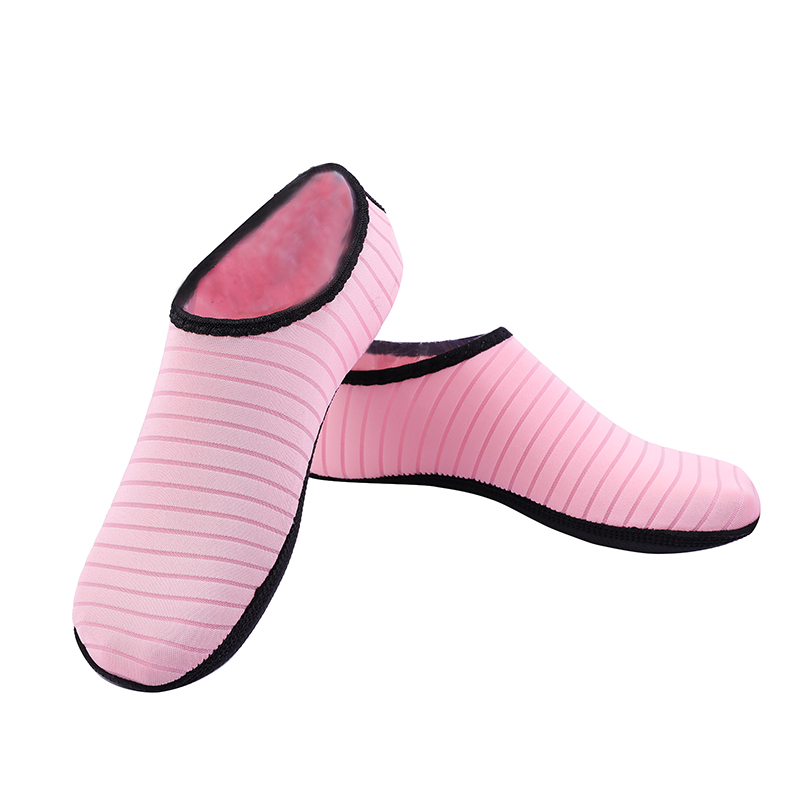
These are form-fitting, minimalist garments. They are specifically designed to mimic the natural biomechanics of the human foot. Primarily constructed from closed-cell foam, their core design philosophy relies on the "second skin" effect. Unlike rigid footwear, they contour tightly to your instep and ankle. Consequently, this tight mechanical seal prevents microscopic sand granules from entering the footbed.
Furthermore, they feature ultra-thin, highly flexible soles that provide excellent tactile feedback. When constructed as premium neoprene beach socks, they offer critical thermal protection. Similar to a professional diver's wetsuit, the material traps a microscopic layer of water against the skin. Your body then warms this layer to maintain a comfortable foot temperature, even in chilly coastal environments.
In stark contrast, water shoes are highly structured. They closely resemble traditional athletic sneakers but are built specifically to endure constant submersion. The defining characteristic of this footwear is its heavy-duty construction.
Engineers utilize thick, vulcanized rubber outsoles designed to absorb heavy impacts. This rigid barrier completely prevents punctures from sharp, unyielding objects like glass or coral. The upper sections are typically crafted from porous mesh materials that allow for rapid fluid drainage. Additionally, they often incorporate reinforced rubber toe guards to protect your phalanges from painful stubbing against submerged boulders.
Recent market analyses of outdoor recreational gear indicate a massive consumer shift toward minimalist, multi-purpose designs. As airline baggage fees continue to climb, the "one-bag" travel philosophy has become mainstream. Vacationers are actively ditching bulky, single-use items.
Consequently, the demand for adaptable, low-profile aquatic footwear has surged. Material science advancements now allow for ultra-thin soles that offer surprising durability without the weight of vulcanized rubber. Industry experts note that modern travelers increasingly favor packable designs over traditional heavy-duty sneakers. They prioritize items that can seamlessly transition from a morning paddleboard session to a compact carry-on backpack without adding unnecessary weight or bulk.
When evaluating footwear for dry, sandy environments, the primary engineering concerns are thermal burns, internal friction abrasion, and the restriction of athletic movement.
During peak summer months, dry coastal terrain can reach temperatures exceeding 120°F (49°C). This poses a severe risk of thermal burns to the soles of your feet. In this specific scenario, sand socks are objectively the superior choice. Their seamless, closed-cell construction creates a continuous, impenetrable barrier between your skin and the radiating heat.
While rigid shoes protect your soles from heat, their open mesh uppers are highly problematic on dry land. As you walk, dry sand easily sifts through the drainage ports. The granules become trapped between the rubber insole and your bare foot. In practice, this creates immediate, sandpaper-like friction, almost always leading to painful blisters within an hour.
Agility is paramount for coastal sports. Games like beach volleyball require explosive vertical jumping, rapid lateral movements, and sudden diving. Minimalist footwear facilitates these biomechanics perfectly.
Because they lack a stiff plastic midsole, they allow your toes to splay out and grip the earth naturally. This optimizes balance and power transfer. Conversely, trying to wear structured sneakers during these sports often results in a clunky, sluggish experience. The rigid soles restrict natural flexion and dig awkwardly into the soft terrain.
Transitioning from the shore into the ocean introduces the strict laws of hydrodynamics. The density of water amplifies the impact of your gear's weight and shape. Therefore, making the correct choice is critical for energy conservation.
Hydrodynamic drag is the resistance an object faces when moving through a fluid. Heavy rubber shoes, with their wide soles and bulky mesh uppers, create significant resistance. Swimmers frequently report that wearing traditional water sneakers feels like swimming with anchors tied to their ankles. This inevitably leads to rapid leg fatigue.
Because they closely match the natural contour of the human foot, aqua socks are highly streamlined. They allow water to flow smoothly over the surface without catching on bulky ridges. This creates near-zero drag, making them the optimal choice for active swimming, treading water, or fast-paced water aerobics.
For snorkelers and scuba divers, footwear must integrate flawlessly with other equipment. Hard plastic snorkeling fins frequently cause severe friction blisters on the heels during extended kicking sessions. Professional divers highly recommend wearing 2mm or 3mm flexible booties inside the fins.
The soft material acts as a frictionless gasket. It absorbs the rubbing action of the fin pocket. Standard wet shoes possess soles that are far too wide and bulky to fit inside standard fin pockets, rendering them useless for this specific application.
While minimalist gear excels in soft environments and open water, rugged topographies demand unyielding structural integrity. When the terrain turns hostile, the physical limitations of thin fabrics become glaringly apparent.
Real-world environments, such as volcanic lava rocks or sharp, calcified coral reefs, present severe hazards. In these high-risk scenarios, traditional structured footwear significantly outperforms flexible alternatives.
These shoes are engineered with thick rubber outsoles and deep, aggressive tread patterns. This rigid construction provides essential traction on slippery, moss-covered boulders. While a standard bootie provides excellent thermal insulation, its ultra-thin sole simply cannot bear the concentrated weight of a human stepping onto a sharp rock without tearing. For true amphibious hiking, heavy-duty puncture resistance is non-negotiable.
For moderate shell coverage or slick pool decks, modern manufacturing offers an excellent compromise. High-quality flexible options are now equipped with reinforced bottoms. For example, a short-cut design featuring a 3mm non-slip rubber sole provides enough tactile feedback to help you balance, while actively preventing dull shells from scraping your feet. Yet, in extreme conditions where broken glass or sharp metal is present, fully structured shoes remain the safest option.
In the era of strict airline baggage limits, the physical footprint of your gear is just as important as its functionality on the ground. Every cubic inch of luggage space must be meticulously calculated.
Bulky items are the natural enemy of the minimalist backpacker. Traditional water sneakers occupy roughly the same volume as a standard pair of running shoes. Packing them requires sacrificing valuable space. Furthermore, if they do not dry completely before a return flight, they add unnecessary water weight to your luggage.
This is where lightweight beach footwear becomes invaluable. Lacking a rigid structural frame or plastic heel counter, these items can be rolled up tightly or folded flat. A pair of flexible frameless booties usually weighs less than 4 ounces. For the traveler looking to reduce shoulder fatigue and maximize packing efficiency, this weight reduction is a substantial advantage.
Moisture management is a critical factor when living out of a suitcase. Footwear left damp in an unventilated bag will rapidly develop foul, odor-causing bacteria. Traditional shoes utilize closed-cell EVA foam and multi-layered mesh. Despite having drainage holes, the padded insoles can easily take 12 to 24 hours to dry completely in humid tropical environments.
Conversely, thin synthetic blends dry remarkably fast. By simply rinsing them with fresh water, turning them inside out, and hanging them over a hotel balcony, they are typically dry within a few hours.
Making an informed purchasing decision requires evaluating your specific use case against the mechanical properties of the gear. To ensure you select the optimal product, apply the following professional evaluation metrics.
Primary Terrain Assessment: If your itinerary consists of 80% soft sand and 20% water, flexible frameless options are the clear winner. If you are facing 80% rocky riverbeds, you absolutely need rigid rubber support.
Hydrodynamic Requirements: Heavy rubber soles act as anchors in the water. If you plan to swim laps, snorkel, or dive, form-fitting options are mandatory to maintain agility and conserve energy.
Luggage Constraints: If you are traveling with only a carry-on backpack, prioritize foldable, low-volume gear.
Thermal Insulation Needs: If you are entering cold coastal waters, standard mesh shoes provide zero insulation. You will require closed-cell neoprene that actively traps body heat.
Not all products are manufactured equally. When browsing, look for specific engineering features to ensure longevity and comfort. An adjustable velcro strap at the top collar ensures a watertight seal, preventing abrasive micro-debris from entering. Furthermore, pay attention to sole specifications. A 3mm non-slip rubber sole is the industry sweet spot for balancing ground feel with necessary puncture protection. Finally, ensure the product uses blind-stitched and glued seams; standard stitching creates tiny holes that allow cold water and fine grit to seep through.
Choosing the right gear depends entirely on your specific environment and planned activities. There is no single perfect shoe for every scenario. Instead, you must select the right tool for the specific job at hand.
Structured water shoes provide uncompromising protection for rugged rocks and river hiking. On the other hand, flexible booties are the undisputed champions for hot sand, active swimming, and preventing blistering friction. They are also the perfect companion for minimalist travelers needing compact, fast-drying packing options.
Evaluate your upcoming itinerary carefully before making a final decision. If you prioritize thermal protection, zero aquatic drag, and ultra-lightweight packability, explore the premium engineered options at SurgeWalk. By investing in quality footwear tailored to your environment, you can enjoy your coastal adventures to the fullest without worrying about painful blisters or ruined beach days.
Yes, they are highly recommended for pool use. Public pools often have rough, textured concrete bottoms designed to prevent slipping. This texture can quickly abrade bare feet during repetitive activities like water aerobics. Flexible aqua footwear protects your soles from this rough texture and provides excellent grip on wet tiles, all without creating drag while swimming laps.
When sized correctly, high-quality models are exceptionally effective at keeping out 99% of granular debris. The key is the ankle collar. Unlike traditional wet shoes that feature wide openings where dirt easily flows in, form-fitting garments create a tight mechanical seal against your skin. This makes them the superior choice for coastal sports.
No, this material is not inherently waterproof in the way a rubber rain boot is. Instead, it is designed to be water-resistant and thermally insulating. When submerged, a microscopic layer of water seeps inside. Your body heat rapidly warms this thin layer of water, creating a comfortable insulating barrier against the colder ocean. This is the exact same technology utilized by professional scuba diving wetsuits.
While you can comfortably walk short distances on pavement—such as the brief transition from your parked car to the boardwalk—they are not designed for extended pedestrian use. The soles are intentionally thin to maintain flexibility. Walking long distances on highly abrasive surfaces like rough concrete will rapidly degrade the fabric.
Absolutely. They are arguably the best footwear choice for stand-up paddleboarding. The thin, flexible soles allow your toes to grip the board naturally, providing crucial balance and proprioception. Additionally, if you fall into the water, they won't weigh you down while you swim back to your board.
It depends on the specific design and the terrain. High-end structured water shoes with thick EVA foam midsoles and arch support can be comfortable for all-day wear on trails or theme parks. However, if they get wet and stay wet, the constant moisture combined with walking friction can lead to severe blisters. For all-day dry walking, standard athletic shoes are still vastly superior.
Both types of footwear should fit very snugly, but flexible gear requires an even tighter fit. They are engineered to function exactly like a second skin. If they are too loose, the fabric will bunch up, causing uncomfortable chafing. Furthermore, loose footwear will fill with excess water, creating a "ballooning" effect that makes swimming incredibly difficult. Always consult the manufacturer's sizing chart and consider sizing down if you are between sizes.


