 English
Views: 0 Author: Site Editor Publish Time: 2026-05-08 Origin: Site


Many players drop hundreds of dollars on premium racquets, only to step onto the court wearing generic athletic sneakers. You might think any sports shoe works fine for a quick match. Unfortunately, ignoring your footwear often leads to delayed court coverage, painful ankle injuries, and premature material degradation. It is incredibly easy to view sport-specific footwear as just another marketing gimmick. However, padel presents distinct biomechanical demands. The constant interaction between aggressive artificial turf and tight glass walls requires specialized structural support. If you ignore this reality, your joints will ultimately pay the price. This guide breaks down the true biomechanical realities of padel footwear and evaluates the hidden risks of alternative shoes. We also provide a strict, actionable framework for choosing the absolute best pair. You will learn how to match your shoe to specific court surfaces and perfectly complement your unique movement style.
Court specific demands: Padel requires rapid pivots and short bursts (agility), unlike tennis which requires long lateral glides (coverage).
The danger of alternatives: Using running shoes or water-specific footwear elevates the risk of rolled ankles due to high centers of gravity and lack of lateral reinforcement.
Surface dictates grip: Selecting the right outsole (Herringbone, Omni, or Hybrid) depends entirely on whether you play on traditional sandy courts or modern, sand-free Mondo turf.
Better ROI: A properly fitted padel shoe prevents knee and tendon overload, offering a higher return on investment for your game and health than a high-end racquet.
Padel never lets you stand still. The sport involves constant micro-adjustments and sudden stops. You frequently execute rapid backward-to-forward pivots. This becomes especially obvious when you defend lob shots off the back glass. You sprint backwards, plant your foot, rotate your hips, and explode forward. This specific kinetic chain puts immense rotational stress on your feet and ankles. Standard sneakers simply cannot handle this unique force distribution. They buckle under lateral pressure.
Running shoes are built purely for linear momentum. Brands design them to propel you forward in a straight line. They feature high heel drops and thick, compressible midsoles. These design choices create a high center of gravity. On a padel court, this high center of gravity combined with zero lateral support drastically increases your risk of severe ankle sprains. When you attempt a hard lateral stop in a running shoe, the soft foam compresses unevenly. Your foot rolls over the edge of the sole, often taking your ankle ligaments with it.
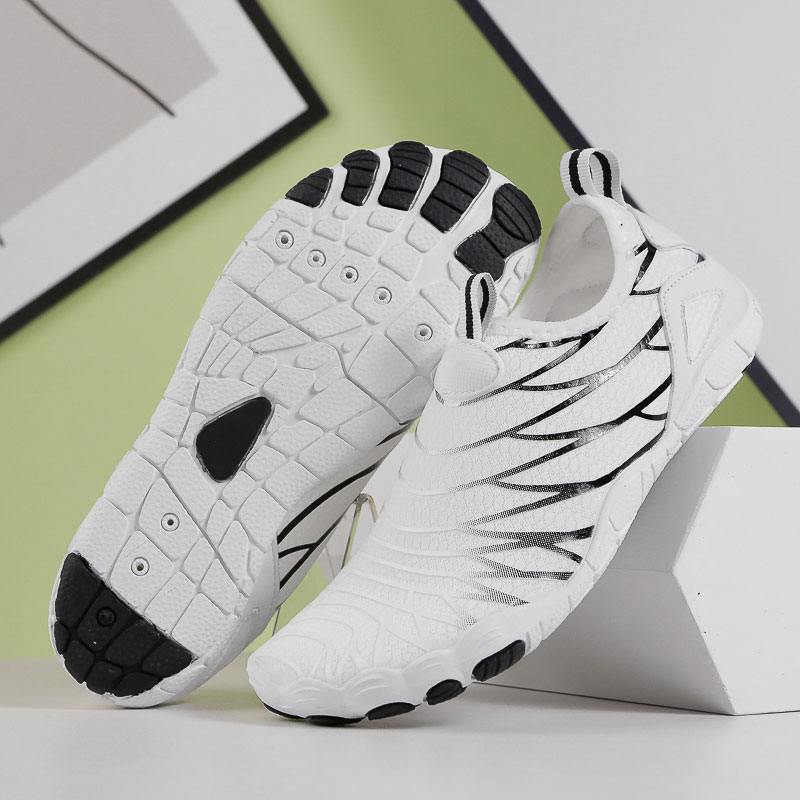
Players often prioritize weight over structural integrity. They want to feel fast on their feet. While searching for Lightweight Paddle Board Shoes or minimalist running shoes makes perfect sense for aquatic sports or track use, bringing unreinforced footwear to a padel court is a massive mistake. Padel courts use highly abrasive sand and artificial turf. This combination leads to immediate sole destruction for standard shoes. More importantly, ultralight minimalist shoes compromise your joint stability during aggressive split-steps and sudden changes of direction.
Many people assume tennis and padel are virtually identical. The footwork tells a completely different story. Tennis requires players to absorb high impacts across long distances. You need exceptional court coverage. Tennis players utilize heavy heel striking during long baseline rallies. Padel occurs in a confined, caged space. The game demands explosive vertical jumps, incredibly short dashes, and tight bodily rotations. Agility matters far more than straight-line top speed.
Feature | Tennis Footwear Focus | Padel Footwear Focus |
|---|---|---|
Primary Movement | Long lateral glides across baseline | Short bursts, vertical jumps, rapid pivots |
Court Size Impact | Large area requires sustained sprinting | Confined space requires explosive agility |
Flexibility Needs | Rigid sole for maximum stability | High forefoot flex for quick split-steps |
Many players substitute clay-court tennis shoes for their padel matches. This swap remains acceptable on older, heavily sanded traditional courts. The deep clay treads bite through the loose sand perfectly. However, using these deep treads on modern, low-sand Mondo turf creates a massive hazard. You experience excessive grip. When your foot locks aggressively into the synthetic turf, your body often continues to turn. This rotational force skips the ankle and transfers directly into the knee joint. This specific scenario leads to severe ligament strains and meniscus tears.
Because the movement patterns differ, the cushioning must adapt. Padel involves frequent aerial smashes (the "bandeja" or "vibora"). You jump and land repeatedly on your toes or midfoot. Therefore, padel shoes direct their primary cushioning toward the midfoot and forefoot. This absorbs the localized impact effectively. Tennis shoes heavily bias their shock absorption toward the heel. Wearing tennis shoes for padel leaves your forefoot exposed to repeated bone-jarring impacts.
Optimal grip in padel is rarely about sticking to the floor like glue. It is entirely about controlled sliding. Your shoe must hold the turf when you push off, but it must release smoothly when you need to slide into a defensive stance. The industry standardizes outsoles into three specific geometric patterns.
Herringbone (Zig-Zag): This pattern features deep, continuous zig-zag grooves. It performs best for heavy-sand courts. The design allows loose sand to pass freely through the deep grooves. You maintain essential traction on the base turf beneath the sand.
Omni-Court (Dotted/Pegs): Brands design this specifically for modern artificial grass. The sole features hundreds of small rubber dots or pegs. It provides superior multidirectional traction without locking your foot dangerously into the fibers.
Hybrid & Pivot Points: The most modern outsoles blend different patterns. They typically feature Omni pegs on the inside edge and Herringbone on the outside. Crucially, they include circular pivot zones under the ball of the foot. These smooth circles facilitate friction-free turning during fast wall defenses.
Your shoe must flex naturally at the toes. This flexibility enables explosive forward sprinting. Simultaneously, the shoe must remain rigidly stable across the midfoot to protect your arch. You can easily verify this in any store using the bend test. Pick up the shoe and try to fold it entirely in half using both hands. If the toe touches the heel easily, put the shoe back on the shelf. It completely lacks the necessary rigid shank support required for aggressive lateral stops.
Padel destroys fragile shoe materials. The artificial turf acts like sandpaper against fabric. Look for shoes featuring heavily reinforced toe boxes. These rubberized patches, known as drag guards, withstand the highly abrasive nature of the court. When you lunge low for a defensive dig, you inevitably drag your trailing toe across the grit. Without an aggressive drag guard, you will tear a hole through the upper mesh within a matter of weeks.
Older clubs and many outdoor facilities still use traditional sandy courts. You can easily identify them by the visible layer of loose white sand resting on top of the green or blue turf. Playing here feels slightly slippery. These environments require deep Herringbone treads. The zig-zag pattern bites aggressively through the slippery top layer. It finds solid traction on the dense base turf hidden underneath.
Professional venues and newer clubs install modern Mondo courts. These feature curly, dense fibers with integrated or highly minimal sand. You rarely see loose sand resting on the surface. These pristine courts require Omni or Hybrid outsoles. Using aggressive Herringbone treads here accelerates shoe wear drastically. More importantly, the deep grooves grip the curly fibers too tightly, increasing dangerous joint torque every time you turn.
Outdoor courts introduce complex weather variables. Courts prone to heavy morning dew severely compromise standard grip. The wet synthetic fibers become incredibly slick. During these unpredictable scenarios, some casual players mistakenly turn to non-traditional footwear. They might even consider utilizing Lightweight Paddle Board Shoes hoping the water-ready rubber provides better traction. This remains a dangerous workaround. Instead, you must rely on hybrid outsoles formulated with softer rubber compounds. These specialized soles offer a much safer baseline for variable outdoor moisture conditions without sacrificing necessary lateral support.
Players routinely spend over $300 on professional-tier carbon fiber racquets. They mistakenly believe the stiffer face will instantly improve their game. In reality, a high-end racquet offers only marginal technical benefits to an amateur player who arrives late to the ball. Conversely, a $150 pair of specialized padel shoes directly mitigates severe orthopedic risks. Proper shoes enable you to reach the ball faster and in a better stance. Investing in your foundation always yields a vastly superior return on investment for your health and performance.
Shoe degradation goes far beyond visible tread wear. The EVA foam inside the midsole loses its rebound capabilities over time. Every jump and hard landing compresses the foam cells. Eventually, these cells rupture and fail to spring back. This happens even if the outer rubber tread looks perfectly intact. Relying on visually fine old shoes drastically increases tendon overload. Your knees and Achilles tendons end up absorbing the shock the dead foam can no longer handle.
You can maximize the lifespan and protective qualities of your footwear by following two professional strategies.
The Two-Pair Rotation: Never wear the same pair of shoes two days in a row. Alternating between two pairs gives the EVA foam crucial time to fully decompress. It also allows trapped internal moisture and sweat to evaporate. This simple rotation extends the usable lifespan of both pairs exponentially.
Custom Insoles: Factory insoles generally provide minimal support. Swapping them for custom orthotics or high-quality aftermarket insoles drastically improves your arch support. A rigid arch insert prevents dangerous overpronation during deep, lunging lateral movements.
Padel shoes represent a strict biomechanical requirement, not a simple cosmetic upgrade.
Assess your local court conditions carefully. Identify whether you play on loose sand or modern Mondo turf before purchasing.
Always perform the manual midfoot bend test when trying on new models to guarantee adequate lateral shank support.
Prioritize lateral lockdown features and rotational pivot points over thick, linear heel cushioning.
Replace your shoes based on midsole foam compression rather than just exterior tread wear to protect your joints long-term.
A: No. Running shoes completely lack lateral stability. They feature high centers of gravity and soft soles. These soles will degrade rapidly on abrasive artificial turf. Wearing them poses a severe risk of rolled ankles during sudden stops.
A: Only on older, heavily sanded padel courts. On modern, sand-free Mondo courts, clay treads provide too much traction. This locks your foot into the turf while your body turns, which can cause severe knee injuries during rotational movements.
A: High-quality modern padel shoes utilize flexible upper materials, such as engineered mesh with TPU overlays. They should offer immediate comfort straight out of the box. They require minimal to zero break-in time before your first match.


