 English

Views: 0 Author: Site Editor Publish Time: 2026-08-11 Origin: Site


Navigating wet, muddy terrain presents significant physical and safety risks for outdoor enthusiasts. Standard footwear rapidly loses traction in these conditions, transforming from a protective asset into a dangerous liability. When you step into deep mud, the soil compresses and fills the gaps between the tread lugs on the bottom of your shoe. This mechanical failure is known as "packing out." Once the tread is completely packed with debris, the textured outsole effectively becomes a smooth, frictionless surface. This loss of mechanical grip directly causes slips, falls, and injuries on steep inclines and slick, wet rocks. To combat this loss of friction, footwear engineers rely on specific design elements to actively shed mud and displace water. Outsole channels, strategic lug spacing, and specialized rubber compounds form the foundation of high-performance trail runners and amphibious footwear. By understanding how these components work together, you can select footwear that maintains a reliable grip, ensuring stability and safety across unpredictable, saturated landscapes.
Channel Geometry Dictates Clearance: Wide, strategically angled outsole channels are required to allow mud to escape during the natural flex of the foot, preventing tread pack-out.
Rubber Hardness is a Trade-off: Softer rubber compounds provide superior grip on wet, slick surfaces but suffer from accelerated wear on hard-packed trails or asphalt.
Terrain Dictates Footwear Category: Deep, muddy trails require aggressive, widely spaced lugs, whereas environments with frequent water crossings and slick surfaces demand specialized non slip water shoes with siping and drainage capabilities.
Flexibility Enhances Shedding: A rigid sole traps mud; a sole designed with biomechanical flex points actively breaks apart clay and mud clumps with every step.
Toes Splay Promotes Lateral Stability: Wide-toe box designs that allow natural toe splay complement aggressive outsole channels by increasing the ground contact area on slick, unpredictable mud.
Weight Control is Critical: Mud and water retention quickly fatigue the runner; active drainage channels and hydrophobic materials are vital for keeping the footwear light and stable.
Soil compaction within tight tread patterns is the primary reason standard shoes fail on muddy trails. When downward pressure is applied, wet soil is forced into the narrow voids between the lugs. If the spaces are too tight, the mud compresses and locks into place. This packed mud effectively neutralizes the lug depth. The coefficient of friction drops to near zero because the shoe can no longer bite into the ground. Instead of rubber gripping the earth, you have mud sliding against mud, resulting in immediate traction loss. Different soil types exacerbate this issue. Clay-heavy soils are highly cohesive and stick to rubber surfaces stubbornly. Loam and sandy muds might shed easier, but without proper channel geometry, even loose mud will eventually pack out a dense tread pattern. You need mechanical space for the earth to move out of the way.
Water displacement is just as critical as mud shedding. A lack of dedicated water channels causes a micro-layer of water to remain trapped between the rubber outsole and the ground surface. This trapped water leads to hydroplaning, where the shoe glides over the surface rather than gripping it. The baseline success criteria for wet-condition footwear require the ability to simultaneously pierce soft mud with deep lugs and channel away surface water through integrated grooves. When you step on a wet rock, the water must go somewhere. If the lugs form a closed loop or a tight grid, the water is trapped under the foot, creating a frictionless barrier. Open channels allow the water to jet out from the sides of the shoe, allowing the rubber to make direct contact with the solid surface beneath.
Saturated uppers and poor drainage drastically increase the overall weight of the shoe. This added mass causes rapid stride degradation, early muscle fatigue, and increased slip risks. Keeping the shoe light is a mechanical necessity for maintaining precise foot placement on technical, slippery trails. When footwear holds water and heavy mud, the runner loses agility, making it difficult to react to sudden changes in terrain or unstable ground. Consider the biomechanical cost: adding just a few ounces to your feet increases energy expenditure exponentially over miles. A shoe caked in mud can weigh twice its dry weight. This pendulum effect on your legs alters your natural gait, leading to clumsy footfalls and a higher likelihood of rolling an ankle on uneven, slick surfaces.
The engineering behind wide lug spacing relies on a high void-to-lug ratio. This increased open space provides the necessary volume for mud to escape rather than compress and stick. Directional angling of these channels, often utilizing chevron or V-shaped patterns, actively pushes debris outward toward the edges of the shoe. This clearing action occurs naturally during the footstrike and toe-off phases of your stride, ensuring the lugs remain exposed and ready to grip the next step. The angle of the lugs matters immensely. A 45-degree angle on a lug face helps slice into the mud, while a wider, flared base prevents the mud from suctioning onto the rubber. This geometry ensures that as you lift your foot, gravity and the mechanical release of pressure allow the mud to fall away cleanly.
Biomechanical bending of the shoe at the forefoot plays a crucial role in maintaining traction. As the foot flexes, it stretches the outsole channels. This dynamic expansion and contraction physically dislodges sticky mud and clay from the sole. A rigid shoe will hold onto debris, while a flexible sole acts as a self-cleaning mechanism, breaking apart clumps of mud with every step you take. Stiff mountaineering boots often struggle in sticky mud for this exact reason; without the flex, the mud forms a solid brick on the bottom of the boot. Trail runners and amphibious shoes utilize segmented rock plates or flexible EVA midsoles that allow the outsole to bend deeply at the metatarsals, forcing the mud channels to open wide and eject trapped soil.
High-performance non slip water shoes integrate external traction channels with internal drainage ports. This dual-channeling system evacuates internal water weight while maintaining external grip. By preventing water from pooling underfoot, these designs reduce internal slippage, ensuring your foot remains securely locked in place even when fully submerged. Internal channeling often involves perforated insoles that sit above a grooved midsole. When you step down, your body weight pumps the water through the insole, into the midsole grooves, and out through the side drainage ports. This active pumping mechanism is vital for keeping the shoe lightweight and preventing the skin maceration that occurs when feet remain soaked for hours.
Allowing toes to splay naturally expands the foot's footprint, providing a wider base of support. A wider outsole platform works in tandem with peripheral mud channels to prevent lateral ankle rolls on slick cambers. When the toes can spread, the foot can make micro-adjustments to the terrain, enhancing balance and maximizing the effectiveness of the outsole's grip on unpredictable mud. Narrow toe boxes force the foot into a rigid, unstable point. A wide toe box allows the big toe to anchor the foot during the push-off phase, distributing the sheer forces across a larger surface area of the outsole. This distribution prevents the lugs from tearing through the mud, maintaining a solid platform for forward propulsion.
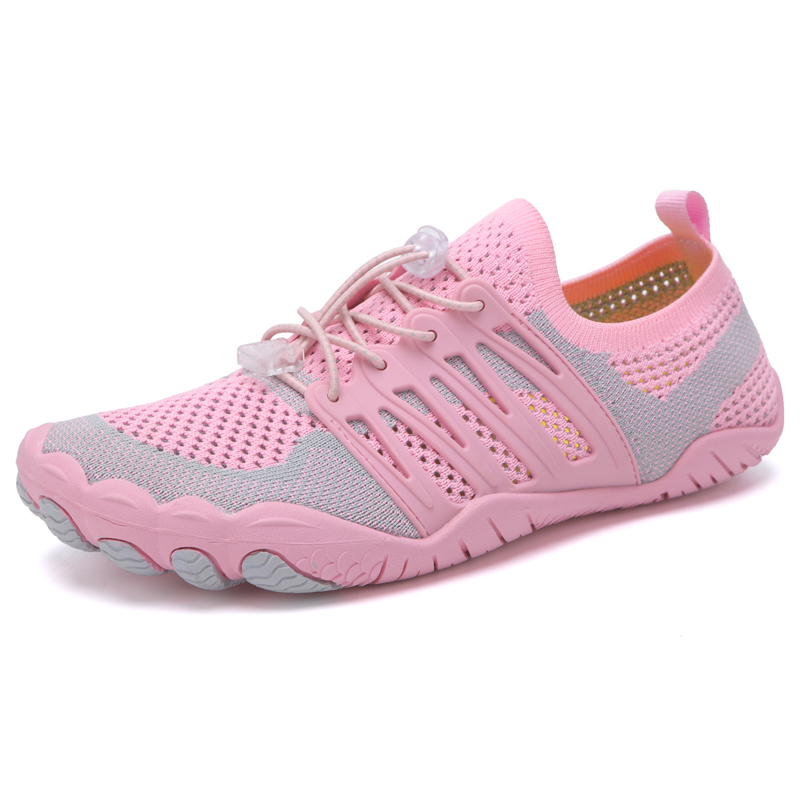
Soft rubber compounds offer high friction and a tacky feel, allowing the shoe to conform to micro-textures on wet rocks and roots. However, the primary risk of soft rubber is rapid degradation when exposed to abrasive surfaces like asphalt. Conversely, hard rubber outsoles provide excellent longevity and the rigidity needed to penetrate hard-packed dirt. The trade-off is poor adhesion on wet, smooth surfaces, making them less ideal for river crossings or slick rock scrambles. The durometer rating measures this hardness. A lower durometer indicates softer, stickier rubber. When navigating a wet boulder field, you want a low durometer rubber that can smear across the rock face, maximizing contact area. If you take that same shoe onto a paved road, the soft lugs will literally erase themselves within a few dozen miles.
Premium wet rock traction footwear often utilizes multi-density outsole mapping to balance grip and durability. These designs feature softer rubber in the center of the sole for maximum grip on wet obstacles, surrounded by harder rubber on the perimeter. This perimeter provides durability, structural support, and precise edging capabilities on technical terrain. By mapping different rubber compounds to specific strike zones, manufacturers can extend the lifespan of the shoe without sacrificing safety. The heel strike zone might feature a highly durable carbon rubber to absorb the impact of descents, while the forefoot utilizes a blown rubber compound for sticky, flexible ascents.
Siping involves cutting razor-thin slits into the rubber lugs. These cuts create additional biting edges specifically designed to displace water on smooth, wet rocks. Siping complements deep mud channels by providing micro-traction on surfaces where large lugs cannot penetrate. As the foot flexes, the sipes open up, gripping the microscopic variations in the rock surface and preventing slips. This technology was originally developed for maritime and automotive tires to prevent hydroplaning on wet roads. In footwear, siping transforms a flat, slippery lug into a dynamic gripping surface. When the shoe hits a wet, mossy log, the sipes expand, squeegee the water away, and allow the raw rubber to bite into the wood grain.
Selecting the right footwear requires evaluating the ratio of deep mud to river crossings and slick rock scrambles you expect to encounter. For heavy mud and fell running, you need 6mm to 8mm deep lugs with maximum channel spacing to ensure penetration and debris shedding. For amphibious environments and canyoneering, rubber outsole aqua shoes with moderate lugs, extensive siping, and rapid water drainage are far more effective. You must honestly assess where you spend the majority of your time. Buying a shoe designed for deep bogs when you primarily hike rocky, wet riverbeds will result in poor performance and a higher risk of injury.
Feature | Aggressive Trail Runners (Mud Focus) | Rubber Outsole Aqua Shoes (Wet Rock Focus) |
|---|---|---|
Lug Depth | 6mm - 8mm | 2mm - 4mm |
Channel Spacing | Very Wide (High Void Ratio) | Moderate with Siping |
Rubber Compound | Medium to Hard | Soft and Tacky |
Primary Benefit | Piercing deep, soft mud | Gripping smooth, wet surfaces |
Wearing highly specialized mud-shedding outsoles on hard pavements or asphalt transition zones introduces performance and safety risks. Deep, widely spaced lugs reduce the surface area in contact with the ground, which can cause slips on hard, wet surfaces. Additionally, the soft rubber compounds often used in these shoes will experience extremely high wear rates when subjected to the friction of pavement. The tall lugs can also create a lever effect, increasing the torque on your ankles when running on flat, hard surfaces. This instability is a direct result of using a tool outside of its intended environment.
Using mud-specific outsoles on hard-packed roads creates a feeling of instability or a "floating" sensation, as the tall lugs bend under pressure. Conversely, hybrid shoes designed for mixed terrain often lack the lug depth and channel width necessary to shed debris in extreme, knee-deep mud conditions. Understanding these limitations is crucial for matching your footwear to the specific demands of your route. A hybrid shoe is a compromise. It will perform adequately across a variety of terrains but will fail in the extremes. If your route involves miles of deep, sticky clay, a hybrid shoe will pack out just as quickly as a standard road shoe.
Over time, the sharp edges of outsole lugs become rounded due to friction and wear. This rounding drastically reduces the outsole's ability to bite into mud, even if the channels between the lugs remain intact. You should monitor your footwear for uneven wear patterns or significant loss of lug height. Once the lugs lose their defined edges, the shoe should be retired from technical trail use to maintain safety. A lug that has worn down to a rounded nub cannot pierce the soil crust. It will simply slide over the top of the mud, regardless of how wide the channels are. Regular inspection of the high-wear areas, typically the heel strike and toe-off zones, will dictate when it is time to replace the footwear.
Proper maintenance prevents clay and mud from drying and hardening in the micro-textures of the rubber. After a hike, use a stiff brush and water to scrub the outsole channels clean. Avoid exposing the shoes to direct, high heat sources like radiators or campfires for drying, as excessive heat can degrade the structural integrity of soft rubber compounds and cause the sole to delaminate. Leaving mud to dry on the shoe draws moisture out of the rubber, accelerating dry rot and cracking. A simple rinse with a hose and a quick scrub with a nylon brush immediately after your hike will preserve the tackiness of the rubber and ensure the channels are clear for your next outing.
Rinse the outsoles with high-pressure water immediately after leaving the trail to remove loose dirt.
Use a stiff-bristled nylon brush to dislodge compacted clay from the deep channels and sipes.
Inspect the lugs for rounding, tearing, or delamination from the midsole.
Air dry the shoes in a well-ventilated area, away from direct sunlight or artificial heat sources.
Grip on muddy trails relies heavily on the geometric ability of outsole channels to dynamically shed debris and displace water, rather than just lug depth alone. Prioritize wide channels and deep lugs for pure mud environments, but shift your focus to sticky rubber, siping, and drainage systems for wet rock and amphibious settings. To ensure you maintain optimal traction on your next outing, follow these actionable steps:
Audit your current footwear's tread pattern to identify if the lugs are rounded or if the channels are too narrow for your local mud type.
Assess your most frequent trail conditions, calculating the percentage of time spent in deep mud versus wet rock.
Select a specialized shoe profile with the correct rubber durometer and lug geometry that directly matches your specific traction requirements.
Implement a strict post-hike cleaning routine to preserve the rubber's integrity and keep the mud channels clear.
A: The ideal lug depth for muddy trails ranges from 5mm to 8mm. This depth, combined with wide spacing between the lugs, allows the shoe to penetrate soft ground while providing enough open space to shed mud dynamically with each step.
A: It depends on the specific lug pattern. Hybrid models with aggressive rubber outsoles and moderate lugs work well on mixed trails. However, traditional flat-soled aqua shoes lack the necessary tread depth and will slip easily in deep mud.
A: Deep lugs actually reduce the surface area of rubber in contact with the ground. Wet rocks require maximum surface contact, softer rubber compounds, and siping to displace water and grip the rock, rather than just deep lugs.
A: Softer rubber conforms better to micro-textures on wet surfaces, providing superior grip, but it wears down quickly on hard trails. Harder rubber lasts longer and penetrates dirt well, but it tends to slide on slick, wet obstacles.
A: An outsole channel is the engineered void space between the tread lugs. These channels are designed to route water and mud away from the contact patch of the shoe, preventing debris from packing into the sole and causing slips.


