 English
Views: 0 Author: Site Editor Publish Time: 2026-05-01 Origin: Site


Nothing ruins a multi-day outdoor trip or daily commute faster than slipping your feet into damp, foul-smelling footwear. Imagine packing up camp on a chilly morning. You expect your outdoor gear to elevate your experience. Wet shoes quickly turn your adventure into pure misery. Counterintuitively, shoes built to keep water out are notoriously the hardest to dry once fully saturated. Thick neoprene booties trap internal moisture relentlessly. Gore-Tex membranes block rain effectively from the outside. Once breached, however, these defensive layers prevent internal evaporation. You end up walking in personal puddles. Drying time is not just a passive environmental process. It is a direct function of material architecture, airflow mechanics, and proper care. By understanding how water interacts with different fabrics, you can drastically reduce downtime. You will learn the science behind drying speeds in this guide. We will explore safe acceleration methods. You will discover crucial maintenance mistakes to avoid. Ultimately, you will see how structural choices dictate performance and comfort.
Baseline Timelines: Natural air drying takes 24–48 hours; active safe drying (fans/silica) takes 3–8 hours; dedicated boot dryers take 3–4 hours.
The Heat Warning: Applying direct heat (radiators, hair dryers, tumble dryers) is the number one cause of adhesive failure, membrane delamination, and material warping.
The Odor Equation: Slow drying times lead to bacterial growth. Bacteria feed on trapped sebum and dead skin cells, which is the actual root cause of "water shoe stench."
The Equipment Upgrade: Transitioning from traditional absorbent materials to purpose-built Multisport Hydro Shoes drastically reduces drying time by prioritizing physical drainage over basic water resistance.
Drying times vary exponentially in the real world. They depend heavily on ambient humidity, internal airflow, and upper material density. A warm, dry room accelerates evaporation efficiently. A humid garage stifles it completely. Understanding your specific footwear material sets realistic baseline expectations. We must look at how features translate directly to outcomes.
Standard Neoprene / Closed-Toe Water Shoes: Expect 24 to 48 hours for a complete dry naturally. Neoprene naturally retains moisture by design to insulate your foot. Let us look deeper into why standard neoprene behaves this way. Neoprene is essentially a synthetic rubber foam. It traps a thin layer of water against your skin. Your body heat warms this water, keeping you comfortable during cold submersion. However, once you exit the water, this exact thermal trapping mechanism becomes a massive liability. The thick foam refuses to let go of the moisture. These shoes trap water deeply in their porous structure. They are highly prone to micro-pooling in the heel area. It requires significant time and ambient dry air to finally evaporate.
Waterproof Membranes (e.g., Gore-Tex): These take 2 to 3 days if fully breached. Impermeable layers stop external water brilliantly. However, they equally trap interior moisture. Gore-Tex operates on a microscopic porous membrane. Water vapor can escape, but liquid water cannot enter. The flaw emerges when water floods in from the top ankle collar. Once inside, the liquid water cannot pass back out through the membrane. It pools at the bottom. You literally have a waterproof bucket wrapped around your foot. You must use forced air extraction to dry them out. Otherwise, they remain damp for days.
Multisport Hydro Shoes (Hydrophobic Mesh): These require only 2 to 4 hours. Manufacturers engineer them utilizing non-absorbent synthetic fibers. They also feature physical drainage channels. These channels expel water instantly upon stepping on dry land. For a superior upgrade, consider trying Multisport Hydro Shoes for rapid recovery times.
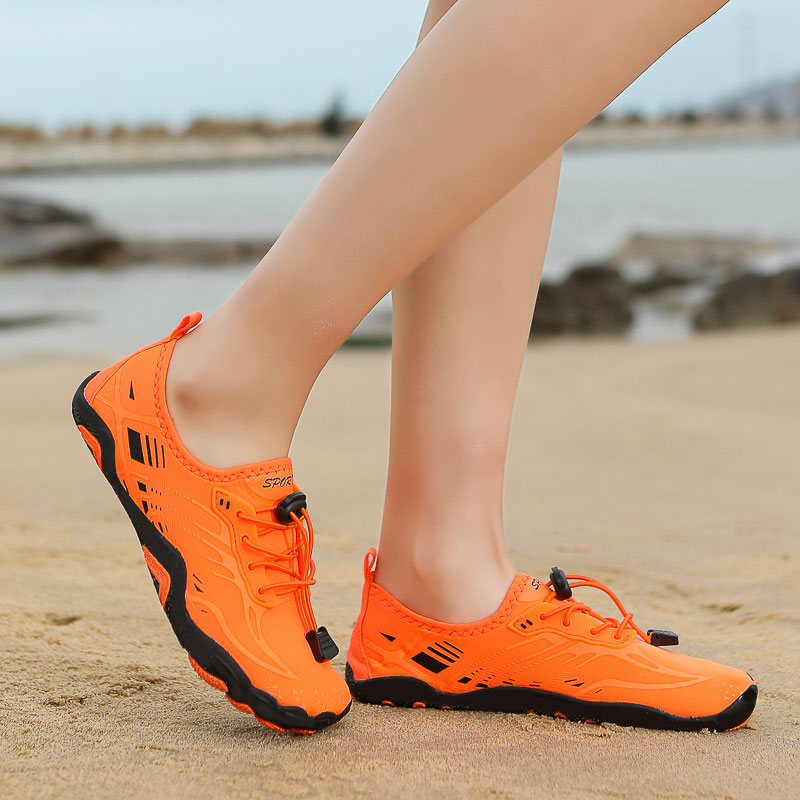
Let us look at how different interventions compare practically. Use this chart to manage your expectations.
Drying Method | Estimated Time | Safety Profile |
|---|---|---|
Natural Air Dry (High Humidity) | 48+ hours | High (Very Slow) |
Natural Air Dry (Low Humidity) | 24 - 36 hours | High |
Uncooked Rice / Silica Packets | Overnight (12 - 18 hours) | High (Good for delicate materials) |
High-Velocity Box Fan | 2 - 4 hours | Extremely High (Optimal choice) |
Dedicated Shoe Dryer (No Heat) | 3 - 4 hours | High (Convenient) |
You cannot magically make water disappear. You can, however, manipulate airflow and absorption. Safe drying requires active intervention. Here are four proven ways to speed up the process without ruining your gear.
The Targeted Airflow Method: Place your wet shoes on an elevated wire rack. Position them directly in front of a high-velocity box fan. This remains the safest, most effective zero-heat method available. The rack allows 360-degree air circulation. Constant breeze strips away moisture rapidly. It poses absolutely no risk of structural damage. Professional guides utilize this specific method. Outfitters who manage dozens of wet boots daily rely exclusively on high-volume fans. They avoid heat because they cannot afford replacing gear constantly. If you lack a wire rack, you can improvise. Lay down a plastic milk crate instead. Alternatively, place the shoes sideways on a tiled floor to maximize air exposure around the sole.
The Newspaper/Silica Desiccant Method: First, remove the insoles completely. Set them aside to dry independently. Stuff the toe box tightly using crumpled newspaper. Alternatively, use heavy-duty silica gel packets. Pro Tip: Wrap the exterior in paper as well. Secure it tightly using rubber bands. This creates dual-sided moisture extraction. Change the internal paper after one hour for maximum efficiency. Avoid pages with heavy, dark ink. Dark ink can bleed into light-colored shoe linings. Always opt for standard black-and-white text sections. If you live in a particularly humid climate, silica desiccant packets are vastly superior to newspaper. You can buy these heavy-duty packets in bulk online. They pull moisture actively from the surrounding air and fabric.
The Gravity Drain (Immediate Action): Post-activity care must start instantly. Do not leave soaking shoes flat on the floor. Elevate the toe box significantly higher than the heel. Place the footwear in a well-ventilated area. This forces gravity-assisted drainage of any internal pooling. It prevents stagnant water from soaking deeply into the midsole cushioning.
The "Door-Hang" Dryer Hack (High Risk/High Reward): Tie your shoelaces together securely. Open your tumble dryer door. Trap the laces in the top of the closed door. This suspends the shoes inside the drum against the glass. They will not bounce around. Strict Compliance Rule: Use the "Air-Dry / No Heat" setting only. Run it for a maximum of 20 minutes. Check them frequently to ensure they remain secure.
People often panic when trying to dry their gear quickly before a morning hike. This urgency usually leads to destructive choices. High heat is the ultimate enemy of modern footwear architecture. Let us break down the exact failure points.
The Thermal Delamination Trap: Placing shoes near radiators or campfires is fatal. Hair dryers cause identical damage. Direct heat softens the industrial adhesives. Shoe manufacturing relies heavily on vulcanization and chemical adhesives. The glues used in running and hiking shoes activate at specific temperatures during assembly. When you place a wet shoe near a roaring campfire, you inadvertently recreate those manufacturing conditions. The glue returns to a viscous, sticky state. As you walk the next day, the sole simply peels away. We call this catastrophic delamination. Once delamination begins, it rarely stops.
Material Warping: High heat physically alters fabrics. It causes synthetic meshes to shrink permanently. It strips leather and suede of their vital natural oils. This extreme moisture loss results in irreversible surface cracking. Your shoes will feel stiff and uncomfortable afterward. Furthermore, the internal EVA foam used for cushioning reacts poorly to thermal stress. EVA foam contains tiny air bubbles for shock absorption. High heat causes these bubbles to expand and rupture. Once the foam collapses, your shoes lose their supportive bounce permanently. You might successfully dry the shoe, but you will ruin the ride.
UV Degradation: Leaving shoes outside in intense sunlight seems natural. Sunlight does evaporate water quickly. However, UV rays break down synthetic fibers chemically. They fade vibrant colorways rapidly. Extended sunlight also bakes rubber outsoles. The rubber eventually becomes brittle and loses its gripping traction.
The Tumble Dryer Catastrophe: Allowing heavy wet shoes to bounce freely inside a heated dryer is disastrous. The violent tumbling impacts destroy the shoe's structural heel counter. The heat melts the glue. Furthermore, it risks heavily damaging the appliance drum itself.
Common Mistake: Placing wet boots over a forced-air heating vent overnight. It feels like a brilliant life hack. Unfortunately, it guarantees subtle adhesive failure over several months.
We must dispel a persistent outdoor myth. The river water itself rarely smells bad long-term. Odor results from a predictable biological mechanism occurring inside the dark toe box.
Extended dampness combines with trapped skin cells and human body oils. This dark, wet environment creates a perfect storm. It encourages rapid bacterial proliferation. Bacteria feed on the microscopic organic matter left behind by your feet. Their metabolic waste products cause the notorious water shoe stench. Understanding the bacterial lifecycle changes how you care for your gear. When you hike through a stagnant marsh, you pick up diverse organic matter. Mud, algae, and micro-organisms soak into the fabric. If you throw those shoes directly into a dark car trunk, you create a biological incubator. The temperature rises. The bacteria multiply exponentially overnight.
To tackle this effectively, we evaluate mitigation versus prevention strategies.
Reactive Fixes (Mitigation):
Rinse thoroughly using clean, fresh water immediately after use. This step is mandatory for saltwater or muddy environments. Salt crystals degrade fabrics quickly. Rinsing dilutes the organic load significantly. It flushes away the algae and salt before it dries.
Apply a dilute white vinegar spray inside the shoe. Combining a physical flush with a chemical intervention provides a potent one-two punch. Vinegar drops the pH level inside the shoe. Bacteria struggle to survive in acidic environments. Vinegar acts as a safe, natural antifungal agent.
Pack the interior full of dry baking soda once fully dry. Leave it overnight. This powder neutralizes any lingering acidic odors effectively.
Proactive Prevention (Stopping it at the source):
Wear thin merino wool liner socks during water activities. Synthetic athletic liners also work exceptionally well.
These socks create a reliable physical barrier between your foot and the shoe.
They prevent dead skin and sebum from embedding deeply into the shoe's inner lining.
Stopping the primary food source starves the odor-causing bacteria completely.
If you constantly battle 48-hour drying times, pause and reflect. If persistent odors plague your closet, your drying method is not to blame. The structural design of your footwear is the actual bottleneck. Upgrading your gear eliminates the root cause of moisture retention.
When evaluating new options, look for specific engineering outcomes. Do not settle for basic water resistance.
Active Drainage Ports: Seek out specialized outsole designs featuring integrated channels. These ports physically expel water outward with every single step. They prevent internal pooling entirely. Gravity and pressure work together to push liquid out mechanically as you walk.
Hydrophobic Uppers: Modern designs utilize tightly woven, non-absorbent mesh. This advanced material sheds water efficiently at the surface level. It refuses to soak moisture into a sponge-like interior. You can easily wipe it dry with a simple microfiber towel.
Versatility & Scalability: Assess the true return on your investment. Transitioning from single-use neoprene booties makes long-term economic sense. You gain capable, trail-ready hybrid shoes. They transition seamlessly from submerged riverbeds to dusty dry land. You never need a footwear change mid-hike again.
For those seeking this exact performance profile, you should explore Multisport Hydro Shoes. They provide the ultimate solution for active outdoor enthusiasts. They combine rapid drainage mechanics with durable trail traction. Upgrading to Multisport Hydro Shoes transforms a frustrating daily chore into a complete afterthought.
Safe and effective footwear recovery boils down to patience and proper airflow. Heat is never the correct answer. To keep your gear ready for the next adventure, follow these actionable steps:
Always default to elevated wire racks and high-velocity fans for the safest moisture extraction.
Intervene immediately post-activity by elevating the toe box to drain excess pooling.
Use preventative physical barriers, like thin liner socks, to starve odor-causing bacteria.
Evaluate your current footwear lifecycle honestly. If maintenance feels like a constant burden, consider upgrading to purpose-built, rapid-drainage models.
Stop wasting days waiting for outdated materials to dry. Embrace modern hydrophobic designs and reclaim your time outdoors.
A: Absolutely not. Microwaves and ovens pose a severe fire hazard. They will rapidly melt synthetic meshes and instantly destroy industrial adhesives. Your footwear will be irreparably ruined within minutes. Always stick to zero-heat airflow methods to ensure safety and longevity.
A: The rice method works well for mild dampness. You must place the shoes in a completely sealed container. However, it is highly inefficient for fully saturated water shoes. Active airflow from a high-velocity fan will dry wet shoes much faster than passive desiccants like uncooked rice.
A: For synthetic materials, gentle mechanical flexing usually restores flexibility. Wear them around the house for an hour. For natural materials like leather or suede, apply specific conditioning oils. Water strips away natural oils. Replenishing them prevents the material from cracking and breaking down prematurely.


