 English

Views: 0 Author: Site Editor Publish Time: 2026-08-13 Origin: Site


Losing footwear in dynamic water environments presents immediate safety risks. A shoe slipping off during a river crossing or an intense pool workout exposes your foot to laceration hazards, physical discomfort, and compromised balance. Water fundamentally alters both the physical volume of your foot due to temperature changes and the friction dynamics of shoe materials. Standard terrestrial shoe sizing protocols fail completely in these environments. Buyers routinely purchase aquatic footwear that feels perfectly fine on dry land, only to find the material balloons, slips off the heel, or causes severe friction blisters the moment it becomes submerged.
Achieving a reliable fit requires a different technical framework. Evaluating Swimming Shoes means analyzing retention mechanisms, material stretch rates, drainage efficiency, outsole traction, and specific sizing tolerances. Understanding how hydrodynamic drag interacts with different closure systems ensures your footwear remains securely attached, providing necessary protection and traction without restricting circulation or causing abrasions.
Snugness is Mandatory, Restriction is a Flaw: Proper fit requires a zero-slip heel lock and minimal internal volume; out-of-the-box swimming shoes should feel tighter than standard athletic shoes without restricting circulation.
Drainage and Quick-Drying Properties Dictate Stability: Shoes without adequate water evacuation (mesh, grommets) will trap water, increasing hydrodynamic drag and causing the shoe to sag and slip off during movement.
Closure Systems Prevent Material Stretch Failures: Slip-on designs degrade faster; adjustable systems like bungee lacing, hook-and-loop straps, or secure upper wraps provide the necessary micro-adjustments as materials wet-stretch.
Context Defines Fit and Sole Architecture: Flexible pool footwear requires different lateral stability and sole thickness compared to open-water swimming shoes, paddleboarding footwear, or rocky-shore protective shoes.
A failed fit in aquatic environments manifests through specific mechanical breakdowns. Heel slippage, internal foot sliding, toe box friction, and the complete loss of footwear all stem from a mismatch between the shoe's design and the physical forces of water. Recognizing these forces helps identify why a shoe that fits well in the store fails in the pool. We see this constantly when outfitting teams for swift-water rescue training; a shoe that feels great in the locker room becomes a liability in the current.
Moving your foot through water creates substantial drag forces that actively pull against the shoe's heel and upper. During a flutter kick or high-impact aquacise movements, water resistance targets the weakest point of the shoe's retention system. If the collar is loose or the instep lacks tension, the water will catch the rim of the shoe and peel it backward off the heel. The faster the movement, the exponentially higher the drag force becomes.
The physical properties of neoprene and synthetic mesh change drastically when wet. Water acts as a lubricant between your skin and the shoe lining while simultaneously causing the materials to temporarily expand. This wet-stretch phenomenon alters the internal volume of secure fit swim shoes. A shoe that feels comfortably snug dry will gain internal space once saturated, leading to immediate instability. You have to account for this expansion during the initial fitting.
Physiological realities compound material expansion. Human feet slightly contract in cold water due to vasoconstriction. This minor reduction in foot volume, paired with the expansion of wet shoe materials, exacerbates loose-fitting issues. Dry-fitted shoes that lack adjustable tension mechanisms will suddenly slip as the foot shrinks and the shoe stretches. It is a dual-action problem that ruins the fit.
Lack of outsole grip on slick pool decks or mossy rocks creates sudden shear forces. When the sole grips a surface but the upper fails to hold the foot securely, the foot twists inside the shoe. This internal rotation pulls the heel out of the heel cup. A perfectly secure upper fit is necessary to transfer the traction of the outsole directly to the foot without internal slippage. If the upper rolls, the traction is useless.
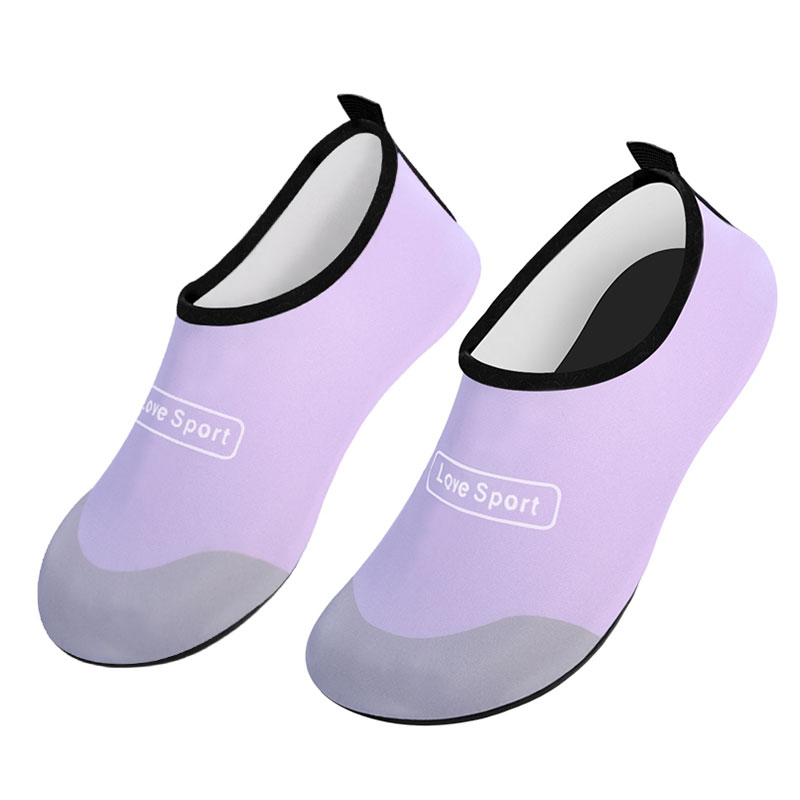
Establishing exact physical tolerances during the initial try-on phase prevents downstream failures. You must evaluate specific dimensions to ensure the shoe will perform correctly once submerged and subjected to hydrodynamic drag. Do not treat this like buying a pair of street sneakers.
Out of the box, aquatic footwear should feel approximately half a size tighter than a standard running shoe. If the shoe feels perfectly comfortable and spacious while dry, it will undoubtedly be too loose when wet. The material needs to stretch into a comfortable fit upon saturation, rather than starting comfortable and stretching into a sloppy fit. Expect a break-in period where the shoe conforms to your foot under wet conditions.
Your toes should touch the end of the shoe without painfully curling. Excess space in the toe box creates a pocket for water to pool. This pooling increases drag and allows the foot to slide forward during sudden stops. Forward sliding jams the toes into the front of the shoe, which can tear up the big toe on rough pool textures or cause bruised toenails during rocky descents. Keep the toe box tight.
A snug heel hold is non-negotiable. The heel must not lift independently of the shoe sole during a walking stride or a simulated flutter kick. If you can pull the heel of the shoe down with minimal effort while dry, the hydrodynamic drag of swimming will strip the shoe off your foot instantly. Look for designs that aggressively cup the Achilles tendon.
Many manufacturers only offer whole sizes for aquatic footwear. When falling between sizes, always size down rather than up. Synthetic uppers and neoprene collars will stretch and adapt to the foot's contours when wet. Sizing up guarantees excess internal volume, leading to water trapping, increased drag, and inevitable heel slippage. A slightly tight shoe is functional; a loose shoe is garbage.
Put the shoes on dry and stand up.
Check that your toes lightly touch the front material.
Perform a hard walking stride to check for heel lift.
Simulate a kicking motion to test instep security.
The hardware and design choices that keep the shoe securely attached to the foot dictate its performance lifespan. Different retention systems offer varying levels of security, adjustability, and durability depending on the aquatic environment. You need to match the hardware to the application.
Slip-on designs rely entirely on material elasticity to maintain a hold on the ankle and instep. They offer a seamless, low-profile fit with minimal snag hazards and exceptional lightweight performance. However, they are prone to permanent stretching over time as the elastane fibers break down. These are best reserved for light pool use, stationary aquatic therapy, or beach walking where high drag forces are absent.
Bungee systems allow for even pressure distribution across the midfoot. They are quick to adjust in the water, allowing you to tighten the shoe as the material saturates and expands. The primary drawback is that toggles can occasionally slip under high hydrodynamic pressure, requiring periodic retightening during aggressive swimming or surfing sessions. They offer a good middle ground for active users.
Hook-and-loop straps provide the highest level of mechanical lockdown. They are excellent for securing the instep and preventing lateral sliding during directional changes. The mechanical hold does not rely on material stretch. However, velcro can degrade in harsh chlorinated or saltwater environments if not rinsed thoroughly, and the straps can catch on underwater weeds or debris. Use these for high-impact activities.
Premium models utilize engineered uppers that hug the contours of the arch and midfoot. This structural design distributes tension evenly across the foot without creating localized pressure points. A strong upper wrap prevents the foot from sliding off the footbed during lateral movements, maintaining the alignment between the foot and the traction outsole. It acts like a second skin.
Structural additions like reinforced heel counters physically cup the calcaneus (heel bone). This rigid or semi-rigid structure prevents vertical slippage during active kicking. Without a defined heel cup, the soft upper material simply folds under the pressure of the water, allowing the heel to escape the shoe. You need that mechanical block at the back of the foot.
Retention System | Security Level | Adjustability | Best Application |
|---|---|---|---|
Slip-On Collar | Low | None | Light pool use, beach walking |
Bungee Lacing | Medium | High (Quick) | Swimming, kayaking, general use |
Hook-and-Loop Strap | High | High (Secure) | River crossings, aquacise, surfing |
A shoe's water management capabilities directly influence its ability to stay on the foot. Retaining water alters the weight and fit dynamics, turning a protective garment into a cumbersome anchor. You have to get the water out of the shoe as fast as it gets in.
Trapped water adds significant weight and volume to the shoe. As the shoe fills with water, it balloons outward, pulling the collar away from the ankle and destroying the heel lock. Grommets, sole drainage ports, and engineered mesh panels are critical features. They allow water to evacuate instantly as the foot moves, maintaining the shoe's low profile and secure fit. If the shoe holds water, it will fall off.
Soggy, waterlogged materials sag and lose their structural integrity. Quick-drying fabrics prevent the shoe from losing its snug wrap during transitions from wet to dry environments, such as wet wading to shore walking. Materials that hold moisture will stretch downward under the weight of the water, causing the shoe to flop and slide. You want materials that shed water weight immediately.
Understanding the stretch and recovery rates of different materials is necessary for selecting the right footwear for specific temperatures and activities. Solid neoprene offers high stretch and moderate recovery, holding water against the skin for thermal protection. It is excellent for cold water but stretches significantly. Synthetic mesh offers zero stretch, maintains its structural shape, and provides rapid drainage. It holds minimal water and is highly breathable, making it ideal for warm water wading and pool aerobics.
Sole rigidity directly impacts how the upper behaves. Highly rigid, thick soles required for rocky trails do not bend easily with the foot's natural articulation. When walking, a stiff sole causes the heel to lever off the foot. Therefore, a highly secure upper system with robust straps is required to compensate for a rigid sole. Conversely, thin, flexible soles bend seamlessly with the foot, requiring less mechanical lockdown to maintain upper-to-skin contact.
Mapping fit and protection requirements to specific aquatic activities ensures the footwear performs its intended function without introducing new hazards. You cannot use the same shoe for a tiled pool and a jagged riverbed.
Activities on artificial surfaces demand high lateral stability to prevent the foot from sliding off the footbed. flexible pool footwear must feature protective toe caps to prevent abrasive pool bottoms from scraping and tearing the big toe. Anti-chafing ankle collars are also necessary to protect against the repetitive friction caused by water-resistance motions. The focus here is on grip and lateral support.
These environments require ultra-low-profile, lightweight designs to minimize hydrodynamic drag during kicking. A highly secure midfoot wrap is essential to prevent the shoe from peeling off in strong currents or during a wipeout. Sole thickness should be minimal to allow for maximum board feel and ankle mobility. You want the shoe to feel like a thick sock with a rubberized bottom.
Navigating natural, rugged environments necessitates combining thick, puncture-resistant soles with robust, adjustable mechanical straps. The sole must prevent cuts from sharp rocks, glass, and shells. Because the heavy sole resists bending, the retention system must physically lock the heavy sole to the foot when wading through rapid, unpredictable currents. Slip-ons will fail immediately in this environment.
Over-correcting for slippage or prioritizing one feature heavily over another introduces new functional problems. Balancing these trade-offs is key to long-term comfort and safety. You have to know what you are willing to sacrifice.
Buying excessively small shoes or over-tightening bungee cords to prevent slippage leads to severe abrasions. When wet, tight materials create high-friction points, particularly on the Achilles tendon, the top of the toes, and the instep. The fit must be snug enough to hold, but not so tight that it restricts blood flow or aggressively rubs the skin during repetitive motion. Test the tension before hitting the water.
Highly porous mesh shoes drain water perfectly, maintaining a lightweight fit. However, large mesh pores allow sand, silt, and small rocks to enter the shoe. This debris alters the internal fit, causes severe friction, and requires you to frequently remove the shoe to clear out the grit. Tighter weaves prevent debris ingress but slow down water evacuation. Choose based on the bottom composition of your environment.
UV rays, saltwater, and pool chlorine rapidly degrade bungee cords, elastane collars, and neoprene. As these materials break down, they lose their elasticity, resulting in a loose, sloppy fit. Implementing strict maintenance protocols—specifically immediate freshwater rinsing after every use and drying out of direct sunlight—preserves the shoe's original elasticity and extends the life of the fit. Neglect ruins aquatic gear fast.
A successful fit in aquatic footwear requires a precise balance between a zero-slip heel lock, a secure upper wrap, and rapid water drainage. These elements work together to prevent hydrodynamic ballooning and dangerous slippage during activity. Standard sizing rules do not apply; the unique physical forces of water demand specific material and structural evaluations.
Buyers should filter their choices first by the intended environment, deciding between flexible, low-profile soles for pools or thick, puncture-resistant soles for rocky shores. Next, select the appropriate closure system based on activity intensity, favoring adjustable bungees or straps for high-drag environments over simple slip-on designs.
Filter your shoe choices by the specific aquatic environment and bottom composition you will encounter.
Test the shoes dry to ensure they feel half a size tighter than standard athletic shoes.
Perform a controlled wet test in a bathtub to verify the heel lock and material stretch.
Rinse footwear thoroughly with fresh water immediately after use to preserve elasticity.
A: They must fit snugly and feel slightly tighter than standard dry-land shoes out of the box. Loose shoes will trap water, balloon, and slip off your feet due to hydrodynamic drag and material expansion when wet.
A: Yes. Materials like neoprene and elastane-blended synthetics expand when saturated. Water also acts as a lubricant, reducing friction against your skin. This is why a snug dry fit is required to ensure a secure wet fit.
A: Ensure the shoe features a dedicated heel cup and an anti-chafing collar. If friction persists, utilize an adjustable retention system like bungee laces to lock the midfoot down, preventing the heel from sliding vertically inside the shoe.
A: Regular cotton socks will hold water, increase friction, and destroy the shoe's fit. If insulation or blister protection is needed, wear thin neoprene water socks designed specifically for aquatic use.
A: For high-movement activities like aquacise, adjustable hook-and-loop straps or locking bungee laces are best. They allow you to tighten the shoe as the material saturates, preventing the foot from sliding laterally on the footbed.


