 English

Views: 0 Author: Site Editor Publish Time: 2026-06-28 Origin: Site


Purchasing footwear online often stalls the moment you glance at the sizing chart. Finding the right fit for water environments brings unique challenges. A poor fit easily leads to chafing, painful blisters, or footwear slipping off entirely mid-swim. The reality of water dynamics complicates things further. Water acts as a natural lubricant. It causes most common shoe materials to expand slightly upon submersion. What feels perfectly comfortable in your living room may become excessively loose during a dive. The right fit ensures safety and mobility.
This guide provides an evidence-based framework for evaluating, sizing, and testing your gear. You will learn how materials behave underwater and how to select the right pair for your specific environment. It ensures confident, risk-free purchasing decisions for your next aquatic adventure. Knowing exactly how your Swimming Shoes should feel dry saves you from frustration when wet.
Swimming shoes should fit snugly, much like a pair of socks, with zero heel slippage.
If you are between sizes and the brand does not offer half sizes, sizing down is generally the safest approach to account for material stretch in water.
The ideal fit varies by use case: active swimming requires a low-profile, glove-like fit, while amphibious hiking requires a wider toe box and rigid sole.
High-quality aqua shoes are evaluated on three critical dimensions: drainage efficiency, outsole traction, and collar security.
Water environments demand a different sizing approach than everyday walking shoes. You must prioritize stability and zero movement. When submerged, excess space becomes an immediate liability. Hydrostatic drag will pull at loose material. This drag easily strips ill-fitting footwear right off your feet during a flutter kick.
Aquatic footwear must fit tighter than standard everyday sneakers. Many consumers fall for the common misconception regarding "room to grow." Parents often buy larger sizes for children. Adults often seek wide gaps at the toe for comfort. You must abandon this strategy for water environments. Extra space allows water to pool inside. This pooling creates dead weight. A true glove standard means the upper material wraps closely around the instep and midfoot. You should feel gentle, even pressure across the top of your foot. No excess fabric should bunch up when you flex your ankle.
You must lock the heel firmly in place. Friction in wet conditions causes severe blisters rapidly. Wet skin softens. Soft skin tears easily under repeated rubbing. A secure heel prevents the foot from sliding forward on declines. Imagine walking down a steep, wet boat ramp. If your heel lifts or slides, your toes will smash into the front bumper.
Best Practice: Push your foot forward slightly while unlaced. You should not be able to slide a finger easily behind your heel.
Common Mistake: Accepting minor heel lift indoors. Submersion will multiply this lift tenfold.
Your toes should touch the end of the shoe without curling. They should not feel crushed. Standard running shoes require a thumb's width of space at the front. Runners need this space because feet swell during heavy impact. Swimming involves buoyancy rather than blunt impact. Therefore, you do not need excessive toe clearance. Your longest toe should gently graze the interior toe bumper.
Most aquatic footwear brands simplify production by eliminating half sizes. This practice frustrates many buyers. Understanding material science helps you make the right choice when you fall between standard sizes.
Common aquatic materials behave uniquely when submerged. Neoprene features microscopic nitrogen bubbles. These bubbles provide excellent insulation. They also allow the material to stretch significantly when wet. Spandex and mesh blends relax almost immediately upon water contact. Water lubricates the woven fibers. This lubrication reduces tension. A shoe fitting perfectly dry will expand and loosen in the pool.
If you wear a half size, you should size down to the nearest whole size. We consider this the golden rule of aquatic sizing. Sizing down compensates for underwater expansion. It also accounts for reduced skin friction. Water removes the natural grip between your skin and the footbed. A smaller size ensures the upper material maintains enough tension to hold your foot securely.
Your Foot Measurement | Brand Sizing Options | Recommended Action | Why? |
|---|---|---|---|
Size 9.5 (Standard Width) | Whole Sizes Only (8, 9, 10) | Purchase Size 9 | Compensates for underwater material relaxation. |
Size 9.5 (Exceptionally Wide) | Whole Sizes Only (8, 9, 10) | Purchase Size 10 | Width constraints override length rules. |
Size 9.0 (Standard Width) | Whole Sizes Only (8, 9, 10) | Purchase Size 9 | True-to-size fits correctly for whole numbers. |
You will find a few edge cases requiring you to size up. Exceptionally wide feet often require the larger size to prevent painful side-crushing. Neoprene does stretch, but it cannot safely accommodate severe width discrepancies without cutting off circulation. Additionally, you might plan to wear thick neoprene diving socks underneath. A 3mm or 5mm diving sock adds significant bulk. You must size up to accommodate this extra layer.
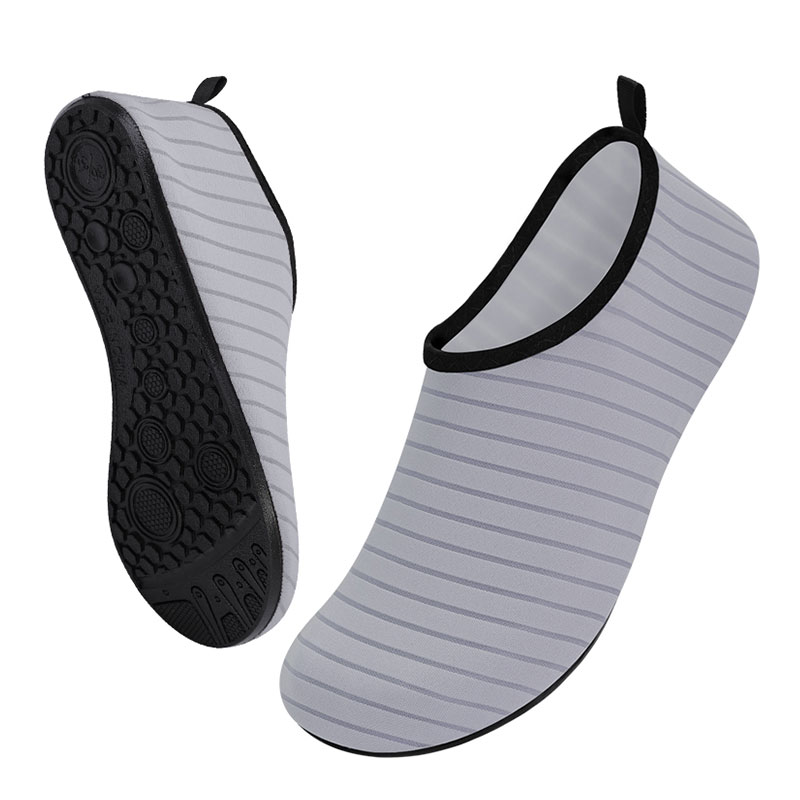
Not all water environments demand the exact same fit profile. You must tailor your selection to your primary activity. Aqua Shoes come in various styles optimized for different threats and terrains.
These environments involve high water movement and minimal impact protection needs.
Fit Requirement: Maximum snugness and ultra-lightweight construction. You want a slip-on design resembling a heavy-duty sock.
Success Criteria: The footwear should feel barely noticeable during rapid flutter kicks. The ankle collar must sit flush against the skin to prevent fine sand ingress. Loose collars act like scoops, filling the footbed with abrasive sand.
Riverbeds introduce uneven, slippery, and potentially sharp hazards.
Fit Requirement: Tighter midfoot lockdown requires adjustable features. Look for Velcro straps or bungee laces. You also need moderate toe bumper space. The toe box remains snug, but features reinforced rubber armor.
Success Criteria: The design prevents your foot from rolling over the edge of the sole. Stepping on an angled, mossy rock applies intense lateral torque. If the upper is too loose, your foot slides sideways off the footbed, risking severe ankle sprains.
These activities involve carrying backpacks over long distances, crossing streams intermittently.
Fit Requirement: The fit sits closer to a standard trail runner. You must accommodate natural foot swelling. Long miles on hard terrain cause feet to expand. You need a slightly wider toe box here compared to pure swimming models.
Success Criteria: Rigid sole protection proves critical. You need a highly secure lacing system. Drainage ports must sit low on the midsole to evacuate water rapidly after a crossing.
Category | Primary Terrain | Lockdown Mechanism | Sole Rigidity |
|---|---|---|---|
Active Swimming | Pools, Sandy Beaches | Elastic Collar / Slip-on | Highly Flexible (Rollable) |
River Walking | Wet Rocks, Muddy Banks | Bungee Laces / Straps | Moderate (Protective Shank) |
Amphibious Hiking | Trails, Slot Canyons | Standard Lacing | Rigid (Trail-Shoe Grade) |
Beyond basic sizing, you must evaluate the structural components. A shoe might fit perfectly in the store but fail miserably in the ocean. Focus on three critical engineering dimensions.
You must evaluate both the sole and the upper drainage systems. Waterlogging compromises the most carefully chosen fit. Canvas or untreated heavy mesh absorbs water and holds it. This trapped water adds dead weight. Dead weight exerts downward force during every swim stroke, eventually pulling the shoe off your foot. Premium models utilize non-absorbent synthetics and feature integrated drainage holes through the midsole. Water should pour out instantly when you lift your foot.
Assess the rubber quality carefully. A good fit proves useless if the outsole slips uncontrollably. Aquatic outsoles require specific engineering to grip mossy or slick surfaces. Look for "siping" on the bottom. Siping consists of microscopic razor slits cut into the rubber lugs. When you step down, these slits expand. They push water out from underneath the tread, allowing the rubber to make direct contact with the rock. Hard, plastic-feeling soles offer zero grip on wet surfaces. Soft, sticky rubber works best.
Examine the ankle opening. A high-quality collar acts as a specialized gasket. It seals out sand, pebbles, and sharp shells. Debris ruins the internal fit instantly. Once a pebble enters a tightly fitted water shoe, you cannot easily shake it out. You must remove the entire shoe to clear it. Look for neoprene or spandex collars featuring high elastic recovery. The collar should snap back tightly against your skin after you stretch it.
Do not wait until your beach vacation to discover sizing errors. You can perform three definitive tests in your living room to guarantee aquatic success.
The "Tug Test": Put the shoes on dry. Do not wear socks. Plant your foot flat on the floor. Reach down and pull gently but firmly on the back of the heel. If the heel lifts away from your foot easily, the shoe is too large. It will definitely come off in the water. You should feel strong resistance.
The Incline Walk: Find a carpeted staircase or a sloped driveway. Walk up and down several times. Pay strict attention to internal foot sliding. Walking downhill forces your foot forward. If your toes smash painfully into the front, the midfoot lockdown is too loose.
Seam and Stitching Check: Remove the footwear. Run your bare fingers along the entire inside of the upper. Pay special attention to the toe box and the heel cup. Ensure no rough synthetic seams press directly inward. Water softens your skin and exacerbates any minor rubbing. A small internal ridge will become a bleeding blister after an hour of swimming.
Selecting the perfect aquatic footwear requires understanding the unique dynamics of water. You must shift your mindset away from everyday sizing rules.
Determine your primary environment first. Sand demands snug slip-ons, while river rocks require secure lacing and rigid soles.
Apply the snug-fit sizing rule aggressively. If caught between sizes, always size down to account for underwater material expansion.
Prioritize drainage and collar seals. An elastic gasket keeps abrasive debris out, while midsole ports prevent dead weight from ruining your swim.
Your next step involves precise measurement. Measure your feet late in the day. Feet naturally swell by the afternoon, giving you your largest true measurement. Compare those exact millimeter dimensions against the manufacturer's specific sizing chart. Relying strictly on standard shoe sizes often leads to poor aquatic fits. Armed with this knowledge, you can confidently purchase footwear ready for any wet environment.
A: Yes. Materials like neoprene and mesh relax with repeated exposure to water and sun. Starting with a snug fit extends the functional lifespan of the shoe. If you buy them slightly loose, they will become unwearable after a few active sessions.
A: Generally, no. They are designed for barefoot wear. However, if using them for cold-water diving or rigorous hiking, specialized neoprene socks can be used—in which case, you must factor the sock thickness into your sizing.
A: If your toes are curled, circulation feels restricted, or the upper material is visibly straining and turning white at the seams, the shoe is too small. You should feel firm pressure, but never sharp pain or numbness.


