 English
Views: 0 Author: Site Editor Publish Time: 2026-04-06 Origin: Site


Consumers and workers often assume any shoe labeled "safe for wet floors" offers identical protection. You might see two shoe boxes on a shelf. One claims it completely stops falls. The other uses technical testing jargon. This linguistic difference hides a massive gap. In high-risk environments, this confusion becomes dangerous. You face different hazards in an oily restaurant kitchen compared to a wet pool deck. A minor slip in these areas can result in severe injury.
Words matter deeply when personal safety is on the line. "Non-slip" is predominantly an unverified marketing descriptor. Brands use it loosely. In contrast, "slip-resistant" is a measurable, engineered, and certified technical standard. It requires rigorous laboratory testing.
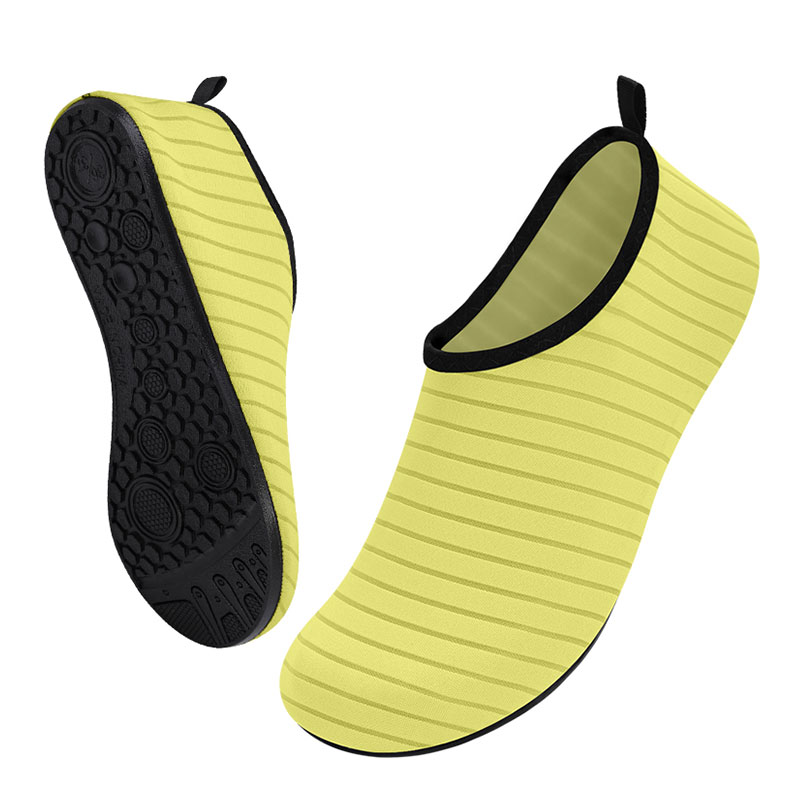
We will explore how understanding traction physics and industry standards evaluates footwear safely. You need this objective knowledge. It guides you whether you procure hospital personal protective equipment or buy Striped Non-Slip Swim Shoes for recreational water safety. Let us examine the true science behind staying on your feet.
Terminology: "Nonslip" implies an absolute (and impossible) guarantee against slipping; "slip-resistant" accurately describes a shoe engineered to minimize risk by maintaining a specific Coefficient of Friction (COF).
The Physics of Grip: True slip resistance relies on mechanical interlocking, fluid displacement, and surface conformity, not just a "rough" texture.
Industry Standards: Authentic slip-resistant footwear is backed by objective third-party testing (e.g., ASTM F3445 or ISO 20345:2023).
Visual Verification: Buyers can identify engineered safety through specific outsole patterns (hexagonal, multi-directional) and high-grade rubber compounds.
Manufacturers often use misleading language on product packaging. They rely on consumer assumptions. We must separate marketing claims from engineered realities to protect ourselves.
You see "non-slip" on hundreds of consumer products. It is often a generic marketing term. Companies use it to indicate a shoe has basic rubber soles. They want to distinguish it from smooth leather bottoms. It rarely signifies advanced engineering.
We must acknowledge the legal and safety reality. No footwear can completely eliminate the risk of slipping. Environmental variables always exist. Ice, thick grease, and extreme inclines challenge any material. Claims of being 100% "non-slip" are scientifically inaccurate. They create a false sense of security. You cannot defy physics. If a brand promises an absolute guarantee against falling, they are misleading you.
Professionals approach traction differently. "Slip-resistant" is a technical, measurable designation. It means engineers actively designed the shoe to reduce slip risks. They target specifically hazardous surfaces. These include water, cooking oil, industrial grease, and glycerin.
This label is tightly regulated in professional sectors. It is generally reserved for footwear passing independent sliding resistance tests. The shoe must prove its capability in a laboratory. It must achieve specific metric thresholds. You buy a scientifically validated tool, not just a piece of clothing.
Feature | "Non-Slip" (Marketing Term) | "Slip-Resistant" (Engineered Standard) |
|---|---|---|
Definition | Suggests an impossible absolute guarantee. | Minimizes slip risk to an acceptable safety threshold. |
Testing | Rarely undergoes independent verification. | Tested by ISO, ASTM, or SATRA standards. |
Material | Basic rubber or synthetic plastics. | High-grade, temperature-resilient rubber compounds. |
Application | Everyday consumer fashion and casual wear. | Occupational safety and high-risk environments. |
Traction does not happen by accident. True safety footwear relies on specific physical principles. Engineers combine material science and geometry to keep you upright. Here is how they achieve it.
The compound matters just as much as the shape. High-grade soft rubber conforms to microscopic floor textures better. It molds into the tiny imperfections of a tile. Stiff polyurethane (PU) or standard plastics cannot do this. They glide over the surface instead of gripping it.
Temperature resilience plays a massive role here. Specialized rubber maintains its dynamic Coefficient of Friction (COF) in extreme conditions. Imagine walking into a sub-zero freezer. Standard plastic hardens and becomes as slippery as glass. High-quality rubber stays pliable. It grips cold tile perfectly. It also resists chemical breakdown from harsh floor cleaners.
Water and oil form dangerous barriers between your shoe and the floor. If a shoe cannot clear these liquids, you hydroplane. You lose all contact with the ground.
Slip-resistant shoes combat this using geometry. They feature deep, non-parallel grooves. These act exactly like automotive tire treads. As your foot strikes the ground, pressure builds. The grooves channel liquids out from under the foot. They push water and oil toward the edges of the shoe. They prevent the liquid from trapping beneath your heel. This fluid displacement is a critical engineering requirement.
Your floor looks flat. Under a microscope, it resembles a mountain range. It has peaks and valleys known as asperities.
Slip-resistant outsoles use complex micro-patterns to exploit this. You will see hexagonal, circular, or multi-directional lugs on the bottom. These tiny shapes act like microscopic hooks. They catch onto the floor's asperities. They anchor the foot securely during the walking gait cycle. The leading edge of the shoe bites into the ground. It provides immediate stability before you transfer your full weight.
Marketing copy cannot protect you from a wet floor. We need objective data. Independent safety organizations provide this proof. They test footwear under rigorous, standardized conditions.
The Coefficient of Friction is the ultimate metric for grip. It measures the resistance to movement between two surfaces. We look at two types.
Static COF: The force required to start moving from a standstill.
Dynamic COF: The force required to keep moving once in motion.
Safety experts prioritize dynamic COF. Most slips happen while a person is already walking. A higher dynamic COF means better grip on contaminated surfaces.
Different regions use different testing methodologies. You must know what codes to look for on product tags. Here are the most prominent global frameworks.
Region / Authority | Standard Code | Key Characteristics |
|---|---|---|
North America | ASTM F2913 & ASTM F3445 | F2913 dictates the test method. F3445 sets the minimum performance requirement for the label. |
Europe/International | EN ISO 20345:2022 | Replaced old SRA/B/C marks. Slip resistance is now a fundamental requirement marked by "SR". Tested on ceramic tile with glycerin. |
United Kingdom | HSE GRIP Scheme | Uses a transparent 1-to-5 star rating system. It allows buyers to match the shoe to their specific risk assessment grade. |
Testing standards seem geared strictly toward industrial workers. However, everyday consumers face similar physical hazards. We must adapt these professional evaluations for daily use.
Different environments throw different challenges at footwear. A commercial kitchen represents a severe occupational risk. The floors consist of hard quarry tile. They are constantly coated in hot grease and oil. Kitchen staff need maximum mechanical interlocking and oil-resistant rubber compounds.
A wet pool deck represents a severe recreational risk. Here, the floor is usually smooth ceramic tile or polished concrete. It is covered in chlorinated water. You do not worry about grease. You worry about severe hydroplaning. The hazard profiles differ, but the need for proven traction remains identical.
Consumer products often blur technical terminology. Many brands label casual water shoes as perfectly safe for wet tiles. You must look past the aesthetic pattern. You must apply industrial evaluation criteria.
Consider the process of evaluating Striped Non-Slip Swim Shoes. Do not just look at the colors. Examine the sole closely. Does it feature multi-directional water-channeling grooves? Will it push pool water outward? Is it made of pliable rubber rather than rigid PVC plastic? Applying B2B procurement logic to B2C purchases prevents injuries. It ensures safety in high-risk recreational environments.
You cannot always take shoes to a laboratory. You need practical ways to assess traction before buying. Follow this visual and tactile framework to ensure safety.
Stop reading the bold marketing copy on the box. Flip the shoe over or check the interior label. Look specifically for ASTM, ISO, or SATRA testing codes. If you see EN ISO 20345 or ASTM F3445, independent engineers have verified the grip.
The bottom of the shoe tells the real story. Use your eyes to analyze the tread patterns.
Reject flat soles entirely. They act like surfboards on water.
Reject shallow grooves. They offer no space for liquid displacement.
Reject purely parallel lines. Fluid gets trapped in the channels.
Look for micro-textures. Tiny bumps increase the contact area.
Look for tread patterns pushing outward. The design must force water toward the edge of the shoe.
Press your thumb firmly into the outsole. Drag it across the material. The outsole should feel pliable. It should feel slightly "tacky" or sticky to the touch. This indicates a softer rubber compound capable of surface conformity. If it feels like hard, smooth plastic, put the shoe back on the shelf. Hard plastics fail immediately on wet tile.
Buying the right shoe is only the first step. You must maintain it. Even the highest-rated slip-resistant shoe loses efficacy if ignored. Treads become packed with mud, food debris, or small stones. Once the grooves fill up, the fluid displacement physics stop working.
Regular cleaning is a non-negotiable safety requirement. Use a stiff brush and warm soapy water to clear the channels. Inspect the micro-patterns weekly. If they wear completely flat, the shoe becomes dangerous. You must discard it.
Best Practices and Common Mistakes
Best Practice: Always test new work shoes on a slightly wet, controlled surface before starting a busy shift.
Best Practice: Keep a dedicated brush near your entryway specifically for clearing outsole treads.
Common Mistake: Assuming thicker soles mean better slip resistance. Sole thickness provides cushioning, but only the tread geometry provides grip.
Common Mistake: Ignoring worn-out heels. Most slips initiate at the heel strike. If the back edge is smooth, the shoe is unsafe.
We must change how we evaluate footwear for hazardous environments. Stop shopping for the impossible promise of "non-slip" shoes. Start procuring verified "slip-resistant" footwear. The difference lies in engineering, material science, and rigorous laboratory testing. Marketing claims cannot prevent a fall. Objective dynamic friction coefficients can.
Apply these principles everywhere. Evaluate the material compound. Look for proper fluid displacement designs. Demand independent testing certifications. Whether you equip a restaurant staff or buy reliable gear for a family vacation, these standards apply. Evaluating technical properties is the only reliable path to safety. Make informed, evidence-based purchasing decisions to protect yourself and your team.
A: No. It means the shoe is engineered to maximize friction and significantly minimize risk. However, severe environmental factors like black ice or extreme grease spills still pose hazards. You must always exercise caution in dangerous environments.
A: Generally, no. Standard sneakers lack the specific tread geometry needed to displace oil or fluids. They rarely undergo formal CoF testing. Their flatter soles often trap liquids under your foot, which quickly leads to hydroplaning on wet surfaces.
A: The lifespan depends entirely on usage intensity and floor abrasiveness. Once the micro-treads wear smooth, you lose protection. This typically occurs in 6 to 12 months under heavy occupational use. Once compromised, the shoe must be replaced immediately.


