 English

Views: 0 Author: Site Editor Publish Time: 2026-09-29 Origin: Site


Have you ever lost your footing on a slick pool deck? That sudden jolt of panic as the ground vanishes beneath you is unforgettable. Slipping near water is not just an embarrassing moment. It is a major safety hazard. A single fall can instantly ruin a vacation or cause severe injury. While countless brands claim their outsoles provide real traction, many fail to deliver when exposed to standing water.
The raw material beneath your feet dictates your safety. In this comprehensive breakdown, we will compare the two titans of aquatic outsoles: TPR (Thermoplastic Rubber) and traditional rubber. By understanding the material science behind these compounds, you will discover exactly how to choose the best gear to keep you upright and secure during your next aquatic adventure.
Material Science Matters: The chemical differences between TPR and vulcanized rubber directly dictate their slip resistance in varying aquatic environments.
Rubber Dominates Smooth Surfaces: Traditional rubber generally offers superior, professional-grade traction on slick surfaces like wet tiles and fiberglass boat decks due to its natural tackiness.
TPR Excels in Utility: Exceptionally lightweight and resistant to UV degradation, TPR is a highly cost-effective choice for casual recreation and beachgoers.
Design Equals Performance: The actual effectiveness of your footwear depends heavily on engineered tread patterns, specifically siping and water-channeling lugs.
Use-Case Dependency: Choosing the right sole comes down to your specific environmental demands. Casual vacationers require completely different features than extreme water sports enthusiasts.
To make an informed purchasing decision, you must first grasp the underlying material science. As footwear engineers often note, the outsole acts as the primary interface between your foot and a potentially hazardous wet surface. Consequently, its physical properties directly influence your balance, comfort, and the lifespan of the shoe.
Recently, industry analysts have observed a significant evolution in the aquatic footwear market. Driven by a rising consumer focus on sustainable travel and versatile "amphibious" gear, manufacturers are transitioning away from heavy, single-use designs. There is a massive surge in demand for hybrid shoes that perform equally well in water and on dry land. This trend heavily favors advanced injection-molding technologies, pushing materials that offer both eco-friendly recyclability and high-performance wet traction.
Thermoplastic Rubber (TPR) acts as a highly versatile bridge between rigid plastics and flexible natural rubbers. During manufacturing, styrene and butadiene are blended through a precise copolymerization process. This yields a compound that boasts the lightweight, moldable nature of plastic while retaining the impact-absorbing bounce of rubber.
Because TPR melts under high heat, it can be precision-injected into complex sole molds at a lower production cost. More importantly, it is fully recyclable and requires less energy to produce than traditional thermoset rubbers. For instance, modern pool shoes frequently utilize TPR to achieve an ultra-lightweight profile. TPR is also inherently resistant to harsh weather conditions. It will not easily crack or degrade when left baking in the summer sun.
In the context of high-performance aquatic gear, traditional rubber typically refers to either natural latex harvested from rubber trees or synthetically engineered vulcanized rubber. Unlike TPR, which melts and reshapes under heat, traditional rubber undergoes vulcanization. This chemical reaction adds sulfur and applies immense pressure to create permanent cross-links between the polymer chains.
The result is a thermoset material with extraordinary elasticity and a naturally "tacky" surface texture. This inherent tackiness provides a high coefficient of friction, allowing the shoe to resist sliding. Even when submerged in freezing river water, vulcanized rubber remains highly pliable. It micro-adapts to the microscopic textures of the ground beneath it, delivering professional-grade traction in the most challenging environments.
When evaluating footwear for water parks or beach resorts, TPR has become the dominant material on the market. Its unique physical traits make it highly suitable for specific recreational activities, though it does have limitations when pushed to the extreme.
Weight is a critical factor in fluid dynamics. Heavy footwear causes hydrodynamic drag. This increases muscle fatigue and alters a swimmer's natural biomechanics. A lightweight TPR sole ensures that the shoe feels almost imperceptible while you swim.
In practical terms, TPR also offers excellent resistance to harsh managed-water chemicals like chlorine and bromine. While natural latex might stiffen or discolor over time when exposed to pool chemicals, TPR maintains its structural integrity. Economically speaking, the streamlined injection-molding process makes these shoes highly affordable. They offer fantastic commercial value for casual users planning a seasonal getaway.
Despite its utility, TPR exhibits specific limitations regarding raw friction, particularly on ultra-smooth surfaces. The structural nature of thermoplastic means it responds to temperature changes more dramatically than vulcanized rubber. When submerged in cold water, TPR tends to become slightly stiffer.
This localized stiffening subtly reduces the material's ability to micro-deform. For a shoe to grip a glazed pool tile effectively, the sole must compress and push the water boundary layer out of the way. Because cold TPR is less pliable, its surface-area contact drops marginally. While the grip is more than sufficient for walking carefully around a resort, it may not provide the absolute maximum traction required for high-intensity, dynamic movements on slick concrete.
For professional aquatic athletes, offshore boaters, and outdoor enthusiasts navigating treacherous terrain, traditional rubber remains the undisputed gold standard. Its performance metrics in wet conditions are deeply rooted in its flexible chemical structure.
The superior performance of rubber sole water shoes comes down to consistent flexibility and mechanical interlocking. Vulcanized rubber does not stiffen significantly in cold environments. When you step onto a wet surface, the soft rubber sole immediately compresses. This allows the material to mold itself around microscopic imperfections—whether it is the subtle grit of a boat deck or the smooth finish of wet tile.
By maintaining maximum surface contact, rubber effectively displaces the thin layer of water that causes hydroplaning. In high-stakes environments where a single slip can result in a severe injury, such as balancing on slippery river rocks or a pitching surfboard, this micro-adaptability is crucial. Furthermore, the material's natural abrasion resistance ensures the sole does not wear down rapidly when subjected to jagged stones.
However, traditional rubber is not universally perfect. The most notable drawback is its weight profile. Vulcanized rubber is denser and noticeably heavier than TPR. For activities that involve prolonged swimming rather than just wading, this added weight can create drag, causing your legs to tire more quickly.
Additionally, the labor-intensive manufacturing process translates to a higher retail price. Finally, certain types of traditional carbon-black rubber can leave dark scuff marks on light-colored surfaces. Consumers must specifically seek out "non-marking" rubber compounds if they intend to use the shoes on expensive fiberglass boat decks.
To simplify your decision-making process, we have compiled the technical specifications into a direct comparison matrix. This will help you identify which material aligns with your specific needs.
Feature | TPR (Thermoplastic Rubber) | Vulcanized Rubber |
|---|---|---|
Weight Profile | Ultra-lightweight (Reduces swim drag) | Moderate to Heavy |
Wet Grip (Smooth Surfaces) | Good (Sufficient for casual use) | Excellent (Professional Grade) |
Chemical Resistance | High (Resists chlorine and salt well) | Moderate (Prone to oxidation if unwashed) |
Cold Water Flexibility | Stiffens slightly, reducing micro-grip | Remains highly pliable and tacky |
Best Use Case | Resort pools, sandy beaches, casual swimming | Boating, river trekking, surfing, extreme sports |
While the chemical composition of the outsole is foundational, material alone does not guarantee safety. Relying solely on material properties without considering structural engineering is a critical error.
The most advanced rubber compound in the world will still slip if water becomes trapped between the sole and the ground. To combat this hydroplaning effect, engineers utilize a technique called "siping." Inspired by the anatomy of dog paws and automotive rain tires, siping involves cutting razor-thin slits into the outsole.
When you apply weight to the shoe, these microscopic slits expand. This action creates channels that actively squeeze water out from beneath the foot, allowing the actual sole material to make dry contact with the surface. A meticulously engineered TPR shoe featuring deep water-channeling grooves will frequently out-perform a premium rubber shoe that has a flat, featureless sole. Therefore, evaluating the tread pattern of your wet grip footwear is absolutely essential.
External traction is completely irrelevant if internal slippage occurs. If a shoe fits loosely, your foot will slide forward inside the shoe, leading to a loss of balance. An effective design must feature a snug, sock-like fit that locks the heel in place.
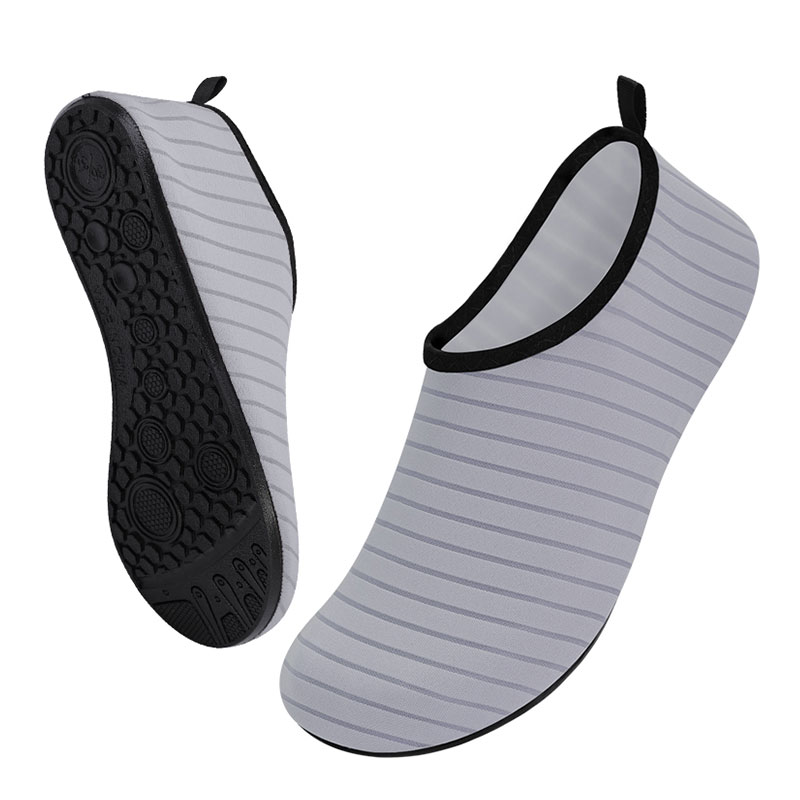
Look for products designed with breathable, high-stretch uppers. For example, modern striped fashion swimming shoes utilize an elastic Roman cloth upper combined with a flexible TPR sole. This specific combination ensures the shoe weighs very little while providing a secure fit. Built-in drainage systems—such as mesh uppers or perforated sole ports—are also vital. If a shoe cannot drain rapidly, it becomes waterlogged. A waterlogged shoe acts as an ankle weight, altering your center of gravity.
Selecting the optimal footwear requires an objective assessment of your primary environment and physical activity level. Use the following criteria to match the engineering to your exact needs.
If your itinerary includes lounging by resort pools, walking on paved waterpark paths, or enjoying sandy beach vacations, extreme high-friction performance is rarely required. Comfort, weight, and convenience take precedence. In these scenarios, TPR sole swimming shoes are highly recommended. They are budget-friendly, exceptionally light to pack in a suitcase, dry quickly, and offer excellent rigid protection against hot sand or hidden shells.
If your pursuits involve unpredictable, high-stakes environments—such as river trekking on slimy rocks or maintaining balance on a pitching fiberglass boat deck—safety margins are much tighter. For these users, investing in traditional rubber outsoles is necessary. The enhanced micro-adaptability and rugged durability easily justify the slightly heavier weight and higher price point.
The longevity of your footwear is heavily dependent on post-use maintenance. Both materials are susceptible to chemical degradation if neglected.
Swimming pools utilize chlorine as a sanitizing agent. While highly effective at killing bacteria, chlorine is a harsh oxidizer. If left unwashed, it will gradually extract plasticizers from TPR and break down the polymer chains in natural rubber, causing the sole to become brittle. Similarly, ocean saltwater leaves behind abrasive salt crystals as it dries. The most critical maintenance step is to thoroughly rinse your footwear with clean, fresh water immediately after every use.
It is a common misconception that placing wet shoes in direct, intense sunlight is the best drying method. In reality, ultraviolet (UV) radiation causes severe photo-oxidation, leading to discoloration and warping of the soles. Always air-dry your shoes in a well-ventilated, shaded area. Never place them in a mechanical tumble dryer, as artificial heat can melt the industrial adhesives.
Both TPR and rubber soles offer excellent safety profiles when engineered correctly. Traditional rubber provides the highest level of raw wet grip available, making it indispensable for extreme water sports and marine environments. In contrast, TPR delivers an unbeatable balance of lightweight comfort, UV durability, and affordability for casual vacationers.
Before making a purchase, carefully evaluate your primary water activities. Always check the tread pattern for proper siping, ensure a snug fit, and invest in footwear that keeps you safely on your feet. Ready to upgrade your aquatic safety? Explore the high-performance collection of non slip swim shoes at Surgewalk to find the perfect engineered fit for your next adventure.
Yes, TPR provides excellent slip resistance on wet tiles, provided the shoe is engineered correctly. While the material itself offers a solid baseline of friction, its true non-slip capabilities are unlocked by the tread pattern. When TPR soles feature siping, they effectively channel standing water out from beneath the foot, preventing hydroplaning in standard pool environments.
Absolutely. Rubber is highly durable and provides exceptional grip on submerged pool floors. However, rubber is susceptible to oxidation from prolonged chemical exposure. To prevent the chlorine from breaking down the rubber polymers and causing the sole to harden over time, you must rinse the shoes thoroughly with fresh, unchlorinated water immediately after exiting the pool.
From a fluid dynamics standpoint, Thermoplastic Rubber (TPR) has a lower specific gravity than traditional vulcanized rubber. This makes TPR inherently lighter. When you are actively swimming, heavy footwear can alter your natural buoyancy and cause drag, leading to fatigue. If your primary activity involves swimming rather than walking, TPR is the superior choice for conserving energy.
It is vital to understand that algae acts as a biological lubricant, practically eliminating static friction. No material can offer a 100% slip-proof guarantee on thick algae. However, rubber soles equipped with deep, aggressive lugs offer the best possible traction in these extreme conditions because the lugs can physically penetrate the algae layer to grip the hard rock beneath it.
The lifespan depends heavily on usage frequency and maintenance. With proper care—such as rinsing with fresh water after chlorine or saltwater exposure—a quality pair of TPR or rubber water shoes can last 1 to 3 seasons. Inspect the tread pattern annually; if the siping is worn flat, it is time for a replacement.
While some TPR models with durable cloth uppers can survive a gentle, cold-water cycle, hand washing is strongly recommended by footwear engineers. Machine washing can degrade the adhesives binding the sole to the upper and prematurely break down the elasticity of the fit, leading to internal foot slippage.


