 English
Views: 0 Author: Site Editor Publish Time: 2026-04-20 Origin: Site


You buy a pair of shoes labeled "comfortable" and head out for the day. Within hours, your feet ache and you find yourself sliding dangerously on wet pavement. This common frustration occurs frequently when everyday footwear fails in high-risk or specialized environments. Everyday sneakers simply cannot handle wet surfaces, grueling 8-hour standing shifts, or uneven coastal terrain.
It is time to dismantle the myth of the all-in-one shoe. Standard athletic shoes prioritize lightweight forward motion. They deliberately sacrifice lateral stability to save weight. They do not offer sustained heavy-load shock absorption. More importantly, they lack certified slip resistance for hazardous floors.
We will provide an evidence-backed framework to help you navigate these choices. You will learn how to match specific outsole technologies to your environments. We will also show you how to align structural support systems to your exact biomechanical needs.
True slip resistance requires specific outsole certifications (like SATRA standards), not just deep rubber treads.
Workplace needs (oil/chemical resistance) differ drastically from outdoor coastal needs (water channeling and drainage found in non-slip beach walking shoes).
Thick cushioning without torsional rigidity accelerates foot fatigue and joint pain during long-duration standing or walking on concrete.
Choosing the right shoe requires aligning your primary environment, specific foot pathology (e.g., plantar fasciitis), and required outsole durability.
Standard running or walking shoes rely heavily on EVA foam or basic rubber compounds. These materials harden dangerously on wet or cold surfaces. They also deteriorate rapidly under harsh chemical cleaners found in kitchens or hospitals. This degradation compromises your safety almost immediately. It also leads to premature wear, forcing you to buy replacements frequently.
You need a proven baseline to evaluate actual traction. Look for shoes tested under rigorous SATRA protocols. The SATRA TM144 and TM63 standards scientifically measure grip across various contaminated surfaces. A friction coefficient above 0.77 generally indicates exceptional slip resistance. Do not trust generic non-slip labels lacking this specific certification.
The actual geometry of the tread matters immensely for your safety. Deep lugs alone do not guarantee grip on flat wet floors.
Water/Oil Channeling: Look for micro-siping across the sole. These tiny slits expand under your body weight. They actively push liquid outward as you step. This action keeps the raw rubber firmly in contact with the ground.
Clog-Resistant Design: Debris ruins traction instantly. This feature proves essential for environments littered with debris. Wide lug spacing prevents mud or food scraps from packing into the sole. A clean tread maintains vital ground contact and nullifies slip risks.
TripGuard Transitions: Moving from slick floors to carpet creates a sudden friction change. Tapered toe-box rubber minimizes these dangerous tripping hazards. You transition smoothly between different surface textures without stumbling.
You must match the outsole and upper material directly to your specific terrain. This strategy prevents you from overpaying for unnecessary technical features. It also keeps you from under-speccing your footwear for harsh environments.
Industrial floors and commercial kitchens demand robust protection. You need high shock absorption capabilities, often measured by SA scores. Look for oil and slip-resistant proprietary rubber outsoles. Choose chemical-resistant uppers made of treated leather or specialized synthetics. These materials deflect hot liquids and corrosive cleaners. The primary trade-off involves weight. These shoes typically weigh more. They offer massive durability but sacrifice breathability to protect your feet.
Concrete destroys soft rubber rapidly. You need high-abrasion outsoles designed specifically for pavement. Seek lightweight construction weighing around 9 ounces. Moderate cushioning absorbs the repetitive impact of city walking. However, the cushioning must remain firm enough to avoid sacrificing ankle stability. Soft foam bottoms out on concrete, sending impact shocks directly into your knees.
Coastal exploration demands specialized aquatic gear. You need high-friction wet traction provided by deeply siped outsoles. Quick-draining and highly breathable mesh uppers keep your feet from pruning. A wide toe box accommodates natural foot splay on loose sand. Choosing reliable Non-Slip Beach Walking Shoes transforms a rocky shoreline walk into a safe experience. However, these water-friendly shoes have limitations. They lack heavy puncture resistance. They rarely meet strict closed-toe workplace compliance standards. They remain optimized strictly for wet, uneven, and natural outdoor surfaces.
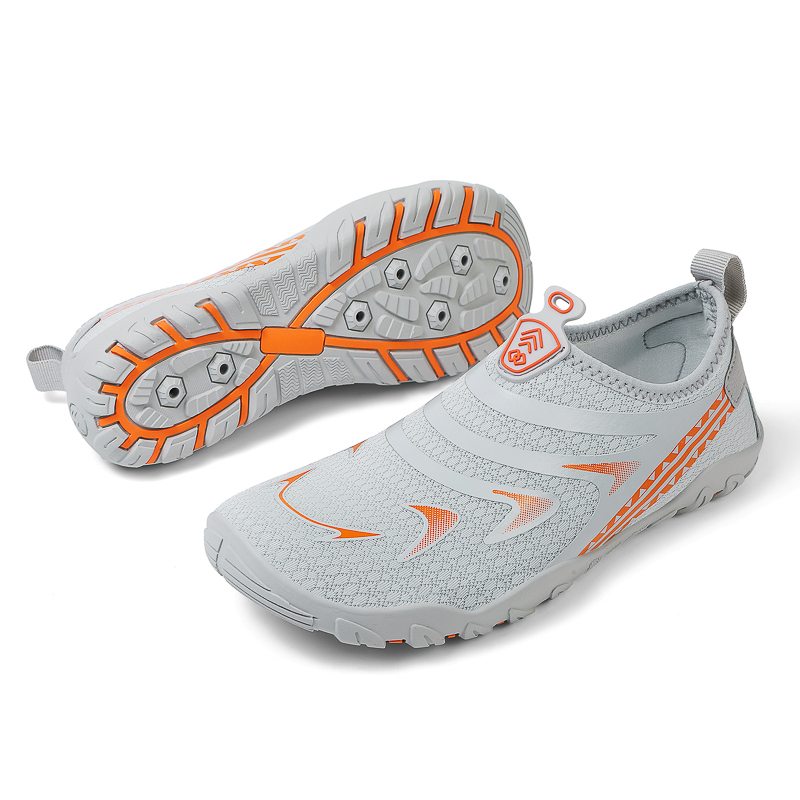
Environment and Footwear Matching Chart
Primary Environment | Core Requirement | Ideal Outsole Technology | Preferred Upper Material |
|---|---|---|---|
Service & Industrial | Chemical & Oil Resistance | SATRA-certified, Clog-resistant | Treated Leather / Polyurethane |
Urban & Concrete | Abrasion Resistance & Shock Absorption | High-density Carbon Rubber | Breathable Knit / Synthetic Suede |
Coastal & Aquatic | Water Drainage & Wet Rock Grip | Micro-siped Soft Rubber Compound | Quick-dry Open Mesh |
A highly slip-resistant sole is completely useless if the shoe hurts. It should never exacerbate existing joint or arch pain after an hour of use. You must align the shoe architecture closely to your specific biomechanics.
If you have flat feet or suffer from overpronation, avoid ultra-soft uppers. Highly flexible uppers allow your ankles to roll inward. Instead, look for rigid heel counters to lock the heel in place. Medial posts provide necessary inner arch support. High torsional rigidity ensures the shoe resists twisting right in the middle. This rigidity keeps your foot aligned perfectly during long shifts.
Plantar fasciitis and heel pain demand immediate structural intervention. Prioritize anatomical insoles engineered specifically for arch support. A firm shock-absorbing midsole handles the brunt of each heavy step. Look for a slight heel-to-toe drop, usually around 8mm to 12mm. This small elevation relieves severe Achilles tension and reduces pulling on the plantar fascia.
Wide feet and bunions require spatial accommodations. Tight shoes create friction blisters almost immediately. You require shoes featuring a verified wide toe box. Seamless interior linings prevent harsh rubbing against sensitive joints. If you are diabetic, verify the footwear meets Medicare A5500 compliance. This standard ensures the shoe lacks internal seams, preventing dangerous friction ulcers.
Ultra-lightweight foam clogs and slip-ons dominate service and casual walking environments. This popular trend carries significant orthopedic risks. You must evaluate these foam materials carefully before wearing them for long periods.
Pure foam shoes feel instantly comfortable right out of the box. The soft material yields pleasantly to your foot. However, they rapidly compress under your constant body weight. Under a grueling 8-hour load, this structural support vanishes entirely. The foam bottoms out against the hard floor. This rapid compression leads directly to severe foot fatigue and aching lower joints.
Foam-only designs lack a dedicated external rubber outsole. This exposed foam wears smooth rapidly on rough surfaces like asphalt or concrete. The shoe entirely loses its non-slip properties within mere months. You face a drastically increased risk of slipping as the original molded tread disappears.
Sometimes you find a shoe featuring a perfect non-slip outsole but completely flat interior support. In these cases, you must accommodate aftermarket orthotic inserts. Brands like Superfeet provide the necessary arch structure. Always ensure the shoe features removable factory insoles. You can easily pull the flimsy factory pad out. This leaves adequate internal volume to insert your robust structural orthotic without cramping your toes.
You must verify your choice carefully before taking new shoes outside or into the workplace. Once you scuff the sole outdoors, you officially own them. Use this safe evaluation framework to test your purchase.
The Torsion Test: Grab the shoe firmly by the heel and the toe. Twist the shoe forcefully in opposite directions. It should bend cleanly at the ball of the foot. This is where your toes naturally flex during walking. However, it must remain rigid through the midfoot. This midfoot stiffness protects your delicate arch ligaments from collapsing.
The Fit Protocol: Try the shoes on late at the end of the day. Your feet swell naturally as blood pools over hours of standing. Wear the exact socks intended for the specific activity. This protocol ensures an accurate volume fit when your feet reach their maximum size.
Surface Check: Test the grip safely on an indoor smooth surface. Use a tiled kitchen floor alongside a damp paper towel. Step lightly onto the damp towel to feel the bite of the tread. This safe method verifies traction without voiding the return policy. If you bought Non-Slip Beach Walking Shoes, testing them on damp indoor tile provides a great proxy for slippery wet rocks.
The best non-slip walking shoe does not exist as a single universal model. Instead, it operates as a highly individualized matrix. You must balance the objective outsole rating, your specific environmental hazards, and your personal biomechanics.
Traction relies entirely on rubber compound freshness. The materials degrade over time and distance. Even top-tier non-slip shoes require strict replacement schedules. Plan to swap them out every 300 to 500 miles. For heavy daily standing or walking, replace them every 6 to 8 months.
Prioritize structural integrity over aesthetic appeal every single time. A stylish shoe offers no comfort if it ruins your arches. Identify your primary walking surface before making any purchase. Lastly, measure your feet annually to account for age-related arch collapse and sizing changes.
A: Generally no. Running shoes have rocker bottoms designed specifically for forward momentum. They often feature exposed foam for weight reduction. This design compromises your lateral stability. It also severely reduces slip resistance on wet or oily surfaces.
A: Standardized testing protocols define true slip resistance. SATRA TM144 is a primary standard. It scientifically measures the coefficient of friction on specific wet and oily tiles. A shoe must meet a strict numerical threshold to earn this critical safety certification.
A: Yes, they function reasonably well. However, the softer rubber compounds are designed to grip wet rock and sand. These specialized outsoles wear down much faster on high-friction concrete. You should use dedicated urban walking shoes for daily city commuting.
A: Advise against using harsh corrosive chemicals. Instead, use a stiff bristle brush paired with a mild detergent. Scrub the lugs gently to dislodge debris. This simple maintenance routine preserves the integrity of the specialized rubber compound for long-term safety.


