 English
Views: 0 Author: Site Editor Publish Time: 2026-04-10 Origin: Site


Crossing slippery, wet terrain requires more than just a waterproof upper. It demands highly specialized gear tailored for aquatic environments. Without the right footwear, you risk debilitating blisters and dangerous slips on mossy rocks. Prolonged dampness can even cause severe medical conditions like immersion foot. Traditional hiking boots quickly become heavy waterlogs on river trails. Conversely, casual beach sandals lack the structural integrity to survive strong currents. Technical water hiking sandals effectively bridge this gap. Product engineers design them specifically for rapid water drainage and high-friction grip. This guide provides an evidence-based framework for evaluating aquatic trail footwear. We explore crucial mechanics from lug depth to midsole load capacity. You will also read a detailed performance breakdown of ShoreFlex Hiking Sandals. This comprehensive analysis will guide your upcoming footwear decision, ensuring maximum safety on wet trails.
Traction in water relies on "siping" (razor cuts in rubber) and lug depths of 0-4mm, not just deep treads.
Closed-toe designs offer protection but can become dangerous "pebble traps" in scree or sandy riverbeds.
ShoreFlex Hiking Sandals excel in "town-to-trail" versatility and wet-rock grip, though pack-weight limits should be observed.
Midsole material dictates capacity: EVA foam is for day hikes (under 30 lbs); PU (polyurethane) is required for heavy backpacking.
True aquatic sandals utilize precise outsole physics. Deep treads do not work underwater. Instead, water sandals rely heavily on "siping." This engineering technique involves tiny razor cuts in the rubber. Siping disperses water rapidly from beneath the shoe. It perfectly mimics how winter tires grip icy roads. The micro-cuts break the surface tension of water. This action allows the rubber to contact the rock directly. For wet rocks, you need blunt, shallow lugs. Ideal lugs measure between zero and four millimeters deep. They provide maximum surface contact area. Deep mud lugs actually reduce friction on slick slabs. The tall rubber spikes bend and slip under pressure.
Midsole material directly determines your maximum load capacity. We evaluate footwear using the standard 30-pound rule. A heavy backpack drastically alters your walking gait. Your feet endure significantly higher impact forces. EVA foam offers excellent lightweight comfort. It absorbs zero water during casual day hikes. However, EVA compresses quickly under heavy loads. The foam loses its rebound over long distances. Polyurethane (PU) provides essential structural rigidity. You must choose PU midsoles for multi-day backpacking trips. PU resists compression far better than EVA. It supports your arch completely during heavy descents.
Feature | EVA Foam Midsole | PU (Polyurethane) Midsole |
|---|---|---|
Ideal Pack Weight | Under 30 lbs | Over 30 lbs |
Cushioning Profile | Soft, highly compressible | Firm, rigid structural support |
Water Absorption | Near zero | Low, but takes slightly longer to dry |
Best Use Case | Day hikes, frequent stream crossings | Multi-day canyon backpacking |
Strap architecture requires strictly hydrophobic synthetic materials. Product engineers typically utilize dense polyester webbing. Polyester retains its structural shape when wet. Nylon webbing tends to stretch in water. Cotton or leather straps retain moisture constantly. Prolonged dampness creates severe friction points against your skin. In extreme cases, hikers develop immersion foot. This painful medical condition occurs when feet remain wet for hours. Blood vessels constrict, causing numbness and tissue damage. Hydrophobic webbing sheds water instantly upon emerging. Your feet dry much faster in the breeze. This keeps your skin healthy and resilient.
Best Practice: Always inspect your outsole siping before a major hike. Ensure small pebbles have not wedged into the razor cuts.
Common Mistake: Purchasing sandals with deep, aggressive mud lugs for slickrock environments. You will slip frequently on wet slabs.
Many hikers mistakenly choose closed-toe sandals for maximum protection. They fear stubbing toes on underwater rocks. This seems logical at first glance. However, real-world canyon environments expose a counter-intuitive reality. Closed-toe designs quickly become dangerous silt traps. Picture hiking through a sandy riverbed. Every step pushes abrasive sand into the toe box. Many professional canyon guides actually ban these shoes. These sandals scoop up sharp gravel continuously. Once inside, the debris cannot wash out in the current. The rubber toe cap blocks the exit route. You must stop repeatedly to empty your footwear. This halts the group and causes endless frustration.
Closure systems also dictate safety in moving water. Hikers frequently debate hook-and-loop (Velcro) versus mechanical buckle systems. Velcro offers incredibly rapid size adjustments. Yet, river environments expose its critical design flaws. Algae, river mud, and fine silt quickly clog Velcro fibers. The microscopic hooks fill up with river debris. The straps lose their adhesive grip completely. This failure causes dangerous mid-river blowouts. A loose shoe in rapids poses a severe tripping hazard. Mechanical buckles guarantee significantly higher security. Ladder-lock buckles loop the webbing securely through plastic teeth. They lock tightly regardless of mud or dense algae.
Water grip requires highly viscous "sticky rubber." Manufacturers use specific chemical compounds to soften the tread. This material acts like a suction cup on wet slate. The soft compound morphs over tiny rock textures. However, this chemical reality introduces a durability trade-off. Sticky rubber degrades significantly faster on hot asphalt. Friction from concrete tears the soft rubber apart. You cannot expect years of daily pavement use. Users must balance trail longevity against essential water safety. Prioritize the sticky grip if you frequently cross swift rivers. Keep these shoes off the city sidewalks when possible.
Best Practice: Choose open-toe designs for sandy canyons. Your foot naturally kicks debris out as you walk.
Common Mistake: Relying on old Velcro closures for whitewater rafting. The straps will likely fail under intense water pressure.
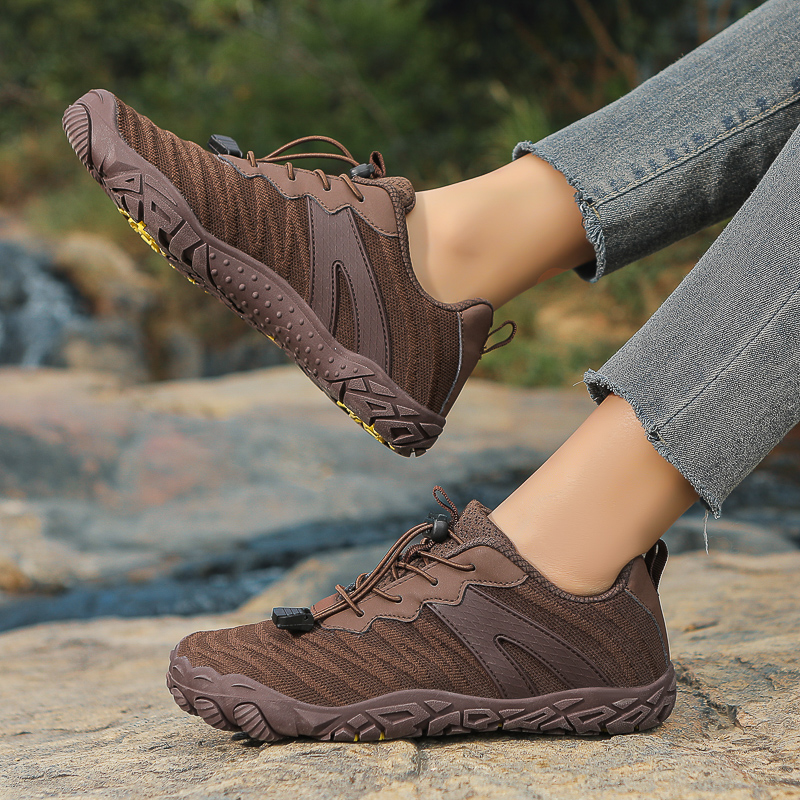
Let us examine how these engineering principles apply practically. We can look at ShoreFlex Hiking Sandals as a prime example. These shoes prioritize advanced grip and drainage architecture. They utilize specialized blunt lug shapes across the sole. Deep water-channeling grooves run directly between these lugs. This specific geometry maintains high friction on mossy riverbeds. Water escapes rapidly from beneath your foot. The outsole compound balances sticky grip and moderate durability. You feel secure stepping onto slick, slanted boulders.
Strap security remains robust in harsh aquatic conditions. The ShoreFlex closure system strongly resists algae accumulation. It bypasses the common pitfalls of cheap Velcro. You can confidently navigate deep, muddy river banks. Furthermore, the design accommodates widely varying instep volumes. Your foot naturally swells during long, hot hikes. The adjustable straps adapt easily when wet. They lock the heel down firmly. This prevents the foot from sliding forward on steep descents. Secure heel lock eliminates the dreaded toe-bang injury.
Aesthetic versatility defines the modern "town-to-trail" transition. Nobody wants aggressively utilitarian footwear at a casual diner. ShoreFlex Hiking Sandals bridge this visual gap nicely. They handle technical stream crossings highly effectively. Afterward, they transition smoothly to casual town use. The styling remains understated and practical. They utilize muted earth tones instead of flashy neon colors. The webbing profile sits flush against the foot. They do not look bulky or overly technical.
However, we must state transparent performance limitations. Every piece of outdoor gear has a specific utility spectrum. These sandals excel during day hikes and light water sports. They provide excellent breathable comfort for casual adventures. Conversely, expedition-weight backpackers must exercise extreme caution. Carrying a 50-pound pack pushes the midsole compression limits. Assess your typical trail load before tackling a multi-day trek. Heavier loads might require a fully enclosed hiking boot. We always recommend matching the tool precisely to the task.
Best Practice: Adjust your straps loosely during the dry approach hike. Tighten them significantly right before entering swift water.
Common Mistake: Buying sandals too small. Always leave a quarter-inch buffer at the toe to prevent stubbing on unseen rocks.
Your unique biomechanics should always dictate your footwear choice. Hikers often prefer zero-drop minimalist sandals. A zero-drop profile promotes a highly natural footstrike. Your heel and forefoot sit at the exact same height. This geometry encourages stronger lower leg muscle engagement. It forces a softer midfoot landing. However, some hikers suffer from painful plantar fasciitis. They require entirely different biomechanical support structures. Max-cushion designs feature deep heel cups. They utilize rigid arch support shanks. They absorb heavy impacts during long, punishing descents. Ignoring your biomechanics leads to rapid foot fatigue.
We must also acknowledge extreme environmental alternatives. Sometimes, an open sandal simply reaches its functional limit. Imagine wading through miles of deep, abrasive saltwater. Picture hiking through heavy volcanic scree fields. In these harsh environments, open designs invite severe skin abrasion. Sharp rocks easily penetrate the open gaps. A combination of lightweight mesh trail runners and neoprene socks performs better here. The mesh shoe drains water very quickly. The neoprene sock blocks microscopic sand from destroying your skin. It acts as an impenetrable armor layer. You must know exactly where the sandal's utility ends.
Flat feet: Seek rigid midfoot shanks. They prevent overpronation.
High arches: Require sculpted footbeds. They distribute weight evenly.
Natural runners: Benefit from zero-drop platforms. They allow unhindered ankle mobility.
Heel strikers: Need maximum heel cushioning. They absorb heavy downhill forces.
Best Practice: Transition slowly to zero-drop sandals. Wear them for short intervals to build Achilles tendon strength.
Common Mistake: Ignoring arch pain. Switch to a PU midsole immediately if your feet ache after three miles.
Proper preparation prevents painful trail injuries. Never assume any water sandal is entirely blister-proof. Wet skin softens rapidly in river environments. Soft skin blisters very easily against rigid nylon webbing. You must systematically map your personal foot "hot spots." Wear the sandals on a short neighborhood walk first. Identify exactly where the straps rub your skin. Apply specialized kinesiology tape to these areas before your hike. Standard bandages simply wash off in the river. Zinc-oxide athletic tape provides a waterproof barrier. Preemptive taping saves your feet during wet river crossings.
Post-hike decontamination directly extends your footwear lifespan. River crossings expose sandals to microscopic silt and bacteria. This fine debris embeds itself deeply inside strap hinges. It also hides within mechanical buckle mechanisms. Left untreated, this dry silt acts like rough sandpaper. It shreds synthetic fibers and rots the webbing material. Bacterial buildup also causes severe odor issues.
Rinse the sandals thoroughly using high-pressure clean tap water.
Flex the buckles and strap hinges repeatedly while fully submerged.
Scrub muddy outsoles using a stiff-bristled cleaning brush.
Apply a mild baking soda solution to neutralize river bacteria.
Air dry the footwear entirely in a shaded, well-ventilated area.
Never dry sticky rubber soles in direct, baking sunlight. Extreme heat permanently warps EVA midsoles. It shrinks the footbed and accelerates rubber degradation. Treat your water sandals like highly technical gear.
Choosing the best aquatic footwear completely transforms your outdoor experience. A true water hiking sandal expertly balances rapid drainage and wet-grip rubber. It must feature a robust closure system immune to aquatic debris. Remember to avoid closed-toe silt traps in sandy rivers. Match your midsole material directly to your typical backpack weight. Prioritize EVA for light days and PU for heavy hauls.
Evaluate your primary trail terrain carefully before your next trip. Calculate your average pack weight accurately. If you plan mostly day hikes, review the sizing guide for ShoreFlex Hiking Sandals. Plan a short, dry break-in walk near your home. Map your hot spots and adjust the straps perfectly. You can then confidently commit to remote, challenging river crossings.
A: Canyon guides often ban closed-toe sandals because they act as dangerous pebble traps. In fast-moving rivers or sandy canyons, these shoes scoop up abrasive gravel. The closed toe prevents the current from naturally flushing this debris out. This trapped sand causes severe skin abrasions. Hikers must constantly stop to remove their shoes, slowing down the entire expedition.
A: Yes, you certainly can. Wearing socks offers distinct functional benefits in abrasive environments. Fine sand easily causes friction under wet straps. A thin pair of merino wool or neoprene socks creates a protective barrier. They prevent severe blisters during long desert canyon hikes. While some hikers dislike the aesthetic stigma, experienced adventurers prioritize skin protection over trail fashion.
A: Their suitability depends entirely on the midsole material. Standard aquatic sandals feature soft EVA foam. This material lacks the necessary lateral support for heavy loads. It compresses quickly under weights exceeding 30 pounds. If you carry expedition-weight backpacks, you need sandals featuring a rigid polyurethane (PU) midsole. Soft EVA designs cannot provide adequate shock absorption for heavy backpacking.


