 English
Views: 0 Author: Site Editor Publish Time: 2026-04-01 Origin: Site


Ever wonder what you call the footwear people wear at the beach or public pools? The footwear designed specifically for wet environments is broadly called "water shoes." However, specific variations exist based entirely on the use case. Common variations include aqua socks, paddling shoes, or water sandals. A major misconception is assuming these shoes exist to keep your feet dry. They do not. Instead, engineers build them to provide essential traction, defend against sharp objects, and drain rapidly when fully submerged. Choosing the right Water Park Shoes or technical aquatic footwear requires balancing underfoot protection against efficient water evacuation. In this guide, you will learn how to identify the exact style you need for your activity. We will explore key design features, fit requirements, and proper maintenance protocols to help your gear last.
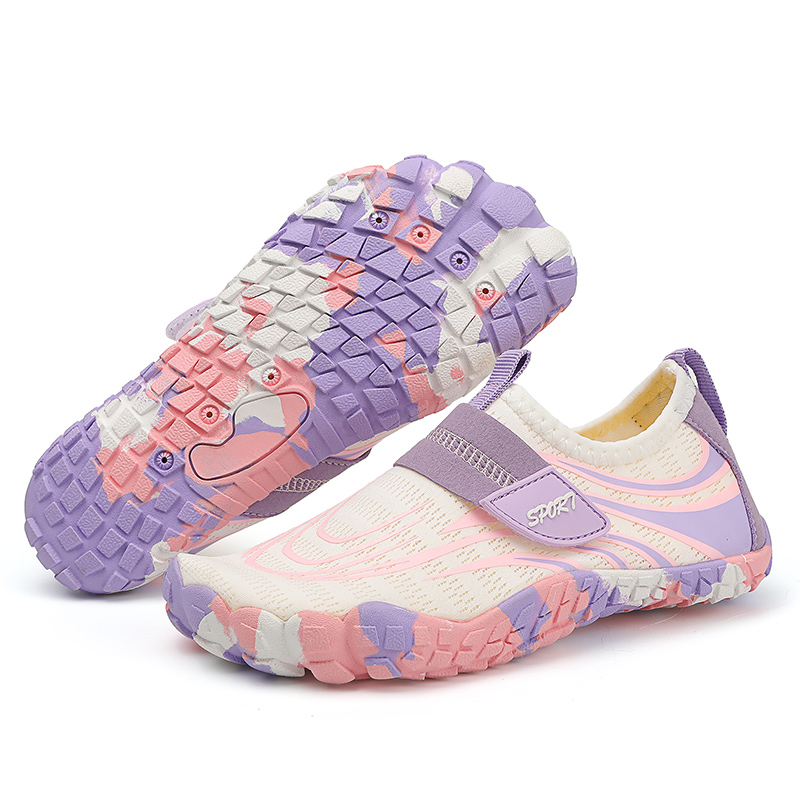
Categories dictate performance: Footwear ranges from thin, barefoot-style aqua socks (for swimming) to rigid, deep-lugged canyoneering boots (for rocky riverbeds).
Protection over waterproofing: The primary function is defending against sharp hazards (like jagged rocks or zebra mussels) and slippery surfaces (like boat decks or slick concrete).
Fit is a safety feature: Water shoes require a uniquely snug fit to prevent them from being pulled off by water currents or wave action.
Maintenance prevents degradation: Heat and UV exposure destroy aquatic footwear materials faster than saltwater or chlorine.
Consumers often use terms interchangeably when shopping for wet-environment gear. Understanding the specific vocabulary helps you match the product to your actual needs.
This serves as the umbrella term for the entire category. Traditional water shoes feature a closed-toe design. They utilize mesh uppers and incorporate non-absorbent drainage systems. These robust designs make them ideal for high-impact activities. You want this style when navigating rocky rivers or hiking muddy trails. They protect your toes from submerged impacts while allowing water to flow freely out the sides.
Aqua socks prioritize minimalism. These ultra-lightweight, skin-tight slip-ons usually consist of neoprene or spandex. They mimic natural barefoot movement. Their flexible soles offer minimal protection against sharp impacts. However, they excel as thermal liners. They work best for swimming, snorkeling, or casual beach walking. They also fit easily inside diving fins.
Water sandals feature open-toe or semi-open designs. They often secure to the foot using robust webbing or straps. They offer excellent breathability. They perform exceptionally well for casual wear, flatwater fishing, and light boat use. However, they lack full protection against debris. You should avoid them in high-velocity water, as fast currents can easily trap debris against your bare skin.
Buying the wrong category of footwear leads to poor performance. You must align the shoe's engineering directly to your environment.
When navigating slick concrete around pools, specialized Water Park Shoes provide the best balance of safety and convenience.
Success Criteria: They require slip-on ease. Look for antimicrobial properties to prevent odors from chlorinated water. Quick-drying mesh uppers are essential. Finally, they need shallow-lug rubber outsoles. Shallow lugs maximize surface contact on smooth, wet concrete to prevent dangerous slips.
Paddlers face unique space and balance constraints.
Success Criteria: You need thin midsoles. Thin soles help you maintain balance and tactile feedback on stand-up paddleboards. They also feature sleek, low-volume profiles. A bulky shoe simply will not fit inside tight kayak cockpits. Flexibility matters more than heavy impact protection here.
Cold water changes the core requirement from drainage to thermal retention.
Success Criteria: Neoprene booties prioritize insulation over drainage. They utilize "self-heating" properties. When water enters the bootie, your body heat warms the trapped layer of water. The thick neoprene then insulates this warm water against the colder ocean, keeping your feet functional.
Amphibious hiking demands serious structural support.
Success Criteria: Look for thick midsoles to provide arch support under heavy backpacks. Durable toe-bumpers protect against hidden boulders. They use ultra-sticky rubber formulas. They feature deep lugs designed to grip mud, loose dirt, and mossy rocks.
Footwear Category | Primary Environment | Key Success Feature | Drainage Priority |
|---|---|---|---|
Water Park Shoes | Pools, Splash Pads, Boats | Shallow lugs, quick-drying mesh | High |
Paddling Shoes | Kayaks, Paddleboards | Thin sole, low-profile fit | Medium |
Neoprene Booties | Cold Oceans, Deep Dives | Thermal insulation, tight seal | Low (Retains water) |
Canyoneering Boots | Rivers, Rugged Trails | Deep lugs, heavy toe bumpers | High |
Understanding technical specifications helps you look past marketing claims. Focus on these three major evaluation criteria before purchasing.
The bottom of the shoe dictates your safety on wet surfaces.
Assessment: You need deep, aggressive lugs (greater than 3mm) for muddy riverbanks or loose trails. Deep lugs punch through soft terrain to find solid ground. Conversely, shallow, siped outsoles are mandatory for smooth surfaces. Siping refers to microscopic razor cuts in the rubber. When you step, these cuts open up to channel water away. This dramatically increases surface area on boat decks or pool tiles. Wearing deep lugs on smooth tiles reduces surface contact and increases slip risk.
Midsole thickness dictates your comfort and agility.
Assessment: A hard, puncture-resistant sole is a hard requirement in many lakes. It protects you against sharp hazards like invasive zebra mussels or broken glass. Thicker midsoles increase hiking comfort by shielding your arches from jagged rocks. However, thick soles reduce your agility in swimming. If you plan to swim long distances, choose a highly flexible, thin sole.
Water retention equals heavy feet. Proper drainage mitigates this.
Assessment: Simply using mesh is rarely enough. Look for advanced drainage features. Micropore sidewalls push water out quickly. You want non-absorbent tongues made from materials like EVA foam. The best shoes feature specific drainage ports strategically placed at the lowest points of the foot. You will often find these ports engineered right near the pinky toe or directly through the bottom of the sole.
Even the most advanced footwear fails if worn incorrectly. Proper fit and moisture management prevent painful injuries.
Buying your normal street shoe size often leads to problems in the water.
Water shoes must fit tighter than standard running shoes. Excess volume inside the shoe allows water to pool around your foot. This pooling creates heavy drag. More dangerously, loose shoes increase the risk of the shoe being sucked off in moving water or heavy surf. Your heel should never slip when walking.
Sizing note: The rules change slightly for thermal gear. When buying thick neoprene booties or wearing them with heavy liners, sizing up by a half-size is often required to maintain proper circulation. Poor circulation leads to numb toes.
Many users wonder if they should wear socks with amphibious footwear.
Risk: Never wear cotton socks with water footwear. Cotton actively retains water. It quickly saps your body heat. As wet cotton bunches up, it causes severe friction blisters across your heels and toes.
Solution: You do not strictly need socks for most casual applications. However, if socks are necessary for warmth or chafing prevention, you must choose carefully. Strictly use synthetic blends or microfleece. These materials are explicitly designed for rapid moisture wicking and maintain their shape when wet.
Aquatic environments are incredibly harsh on synthetic materials. Salt crystals, chlorine chemicals, and organic matter quickly break down adhesives. Following a strict maintenance routine protects your investment.
Do not throw wet gear directly into your closet or trunk. Follow this sequence after every trip:
Rinse immediately: Flush the footwear heavily with fresh water. You must remove microscopic salt crystals, abrasive sand, and harsh pool chlorine. Left untreated, these elements act like sandpaper on the seams.
Clean gently: Wash them using mild soap only. Strictly avoid bleach or harsh laundry detergents. Harsh chemicals break down synthetic mesh and weaken structural threads.
Air dry appropriately: Always dry your shoes in a shaded, well-ventilated area. Good airflow prevents mold and mildew buildup.
Applying artificial heat destroys aquatic footwear faster than almost anything else.
Warning: Never place your Water Park Shoes or neoprene boots in a clothes dryer. You must also avoid leaving them baking in direct sunlight or inside a hot car. Artificial heat and intense UV radiation rapidly degrade specialized sticky rubber. Heat also causes the structural adhesives binding the sole to the upper to fail prematurely. Your shoes will quite literally fall apart at the seams.
Selecting the right aquatic footwear drastically improves your safety and comfort. Do not assume any single shoe excels in all wet environments. Keep these final steps in mind before your next purchase:
Shortlisting Next Steps: Base your final decision on the 80/20 rule of your activity.
If 80% of your time is on slippery concrete or light swimming, prioritize lightweight Water Park Shoes with shallow traction. They offer the necessary grip without unwanted bulk.
If 80% involves portaging kayaks over rocks or navigating muddy riverbanks, invest in a dedicated water-hiking hybrid. You need a rigid midsole and a secure lacing system to handle uneven terrain.
Always prioritize a snug fit to prevent water drag and loss of footwear in strong currents.
Protect your investment by rinsing them with fresh water immediately and keeping them away from extreme heat sources.
A: No. They are built to let water in and flush it out rapidly while protecting the sole of the foot. They utilize breathable mesh and drainage ports so water evacuates almost instantly once you step onto dry land.
A: It is not recommended. Standard running shoes use foams that absorb water, becoming heavy and losing their structural integrity. Furthermore, traditional fabrics take days to dry, which frequently leads to mold, mildew, and foul odors.
A: Slip-ons are sufficient for calm environments and water parks where strong currents do not exist. Laces or robust webbing straps are non-negotiable for moving water, rivers, and heavy surf to ensure the shoe remains firmly attached to the foot.


