 English

Views: 0 Author: Site Editor Publish Time: 2026-06-15 Origin: Site


Many people view aqua shoes as a simple fashion accessory for summer beach trips. This common misconception ignores their true value. They are actually purpose-built safety gear engineered for unpredictable aquatic environments. You face hidden dangers when you rely on old athletic sneakers or walk entirely barefoot. Bare feet invite nasty bacterial infections and expose you to razor-sharp hazards like zebra mussels. Meanwhile, repurposed sneakers quickly become heavy waterlogged anchors that introduce dangerous snagging risks underwater. Understanding the technical mechanics of a water shoe protects you from these threats. This knowledge is the first crucial step in evaluating aquatic footwear. We will explore how modern designs enhance your performance and keep your feet safe during any water activity.
Active Drainage over Waterproofing: Unlike rain boots, aqua shoes are designed to be worn wet, utilizing specialized mesh and drainage ports to continuously expel water and prevent heavy "waterlogging."
Critical Hazard Protection: They provide vital biomechanical support and physical shielding against sharp rocks, hot sand, unseen marine life, and locker room fungi.
Slick-Surface Traction: Purpose-built rubber soles with siped patterns mimic tire treads to channel water away, offering grip on wet boat decks, SUP boards, and pool tiles.
Elimination of Snag Risks: Slip-on or bungee-cord closures remove the drowning and tripping hazards associated with the loose laces of traditional sneakers underwater.
Many beginners try to save money by wearing old athletic shoes into the water. Others prefer feeling the natural ground and go entirely barefoot. Both methods introduce severe risks to your health and safety. Aquatic environments demand specialized equipment. Using the wrong gear leads to fatigue, injury, and hygiene issues.
Standard running shoes simply cannot handle water submersion. They rely on thick foam and heavy fabrics for land-based cushioning. When these materials enter the water, they fail immediately.
Weight and Drag: Standard sneakers absorb massive amounts of water. They create a "waterlogged" anchor effect on your feet. This drastic weight increase impairs your movement. You will experience severe leg fatigue much faster than usual.
The Snag Risk: Traditional shoelaces pose a massive safety threat. Laces easily loosen and untie underwater. Loose strings present a severe snagging hazard. They can catch on submerged rocks, stray branches, or pool grates. This creates an immediate drowning risk if you become trapped.
Going barefoot feels natural on clean sand. However, stepping onto wet pool tiles, public showers, or wild lakebeds exposes you to hidden dangers. You strip away your only line of defense against biological and physical threats.
Biological and Chemical Threats: Locker rooms harbor microscopic dangers. Walking barefoot exposes you to severe fungi like athlete’s foot. Furthermore, you introduce outside dirt into public pools. This outside contamination disrupts delicate pool chemistry. It forces chlorine to work harder and encourages algae growth.
Physical Trauma: Natural terrain is unpredictable. You remain highly vulnerable to razor-sharp zebra mussels in freshwater lakes. Coastal areas hide broken shells and jagged coral reefs. Additionally, extreme surface temperatures cause severe damage. Scalding summer sand can burn your soles in seconds. Freezing boat decks strip heat away from your body instantly.
Aqua shoes are not just thin socks. High-quality designs incorporate complex engineering to solve specific environmental challenges. They serve four primary functions for water enthusiasts. Understanding these purposes helps you choose better gear for your next adventure.
Your feet need structural defense against impacts. Premium water shoes feature robust toe shields. These thick rubber bumpers protect your toes from unseen rocks under murky water. They also utilize puncture-resistant outsoles. This rigid barrier protects your plantar fascia from sharp impacts when you navigate unpredictable riverbeds. It significantly reduces heel strike pain during high-impact pool aerobics.
Algae-covered boat ramps and wet pool tiles are incredibly slippery. Standard rubber soles cannot grip these surfaces. Water shoes solve this by utilizing "siped outsoles." This slotted rubber design mimics automotive tire treads. When you step down, the siping actively channels water outward and away from the shoe. This mechanism guarantees firm grip on wet paddleboards, slippery boat decks, and slick tiles.
Water pulls heat away from your body twenty times faster than air. Aqua shoes provide critical double-duty temperature control. High-grade neoprene and synthetic mesh layers trap a thin layer of water. Your body heats this water, insulating your feet in cold conditions. This is essential for cold-water paddleboarding or river kayaking. On land, these same materials block harmful UV rays and insulate your skin from radiant ground heat.
You must understand one crucial concept. Water shoes are designed to flush water instantly, not block it. Rain boots keep water out. Water shoes let water flow freely through specialized ports. This prevents heavy pooling inside the shoe. Additionally, their slightly bulky profile adds controlled resistance underwater. This safely amplifies lower-body workout intensity during aquatic fitness classes.
Choosing the wrong style ruins your aquatic experience. You must match the footwear to your specific activity. Buying cheap, generic gear often leads to frustrating and dangerous situations.
Many swimmers fall victim to the "parachute effect." They buy ultra-thin, low-quality neoprene water socks. They wear them for active swimming or deep wading. The loose material rapidly fills with water. Because there are no rigid drainage ports, the water stays trapped. The socks bulge out heavily. This creates massive drag in the water, pulling you backward like a deployed parachute. You must secure the shoe tightly to avoid this.
There are three main categories of aquatic footwear. Each style solves a specific environmental problem. You must choose based on where you plan to go.
Shoe Style | Primary Features | Best Suited For | Limitations |
|---|---|---|---|
Slip-on (Sock Style) | Low profile, high flexibility, skin-tight fit. | Sandy beaches, locker rooms, light paddleboarding. | Lacks thick underfoot protection for sharp rocks. |
Bungee / Toggle Adjusters | Heel lock system, rapid drainage, moderate sole thickness. | Active water sports, kayaking, river wading. | Slightly bulkier than thin socks. |
Thick-soled "Reef" Styles | Heavy rubber outsoles, reinforced toe boxes. | Sharp volcanic rocks, prolonged rocky coastlines. | Too heavy for distance swimming. |
You need footwear that perfectly balances mobility and defense. Modern designs have evolved significantly to meet these demanding criteria. Industry-leading models successfully eliminate the common pain points of traditional aquatic footwear.
We see the AquaTrek Outdoor Shoes as a prime example of superior aquatic engineering. They solve the issues of weight, drag, and safety without compromising your agility. You do not have to choose between rigid protection and lightweight comfort anymore. They blend both requirements seamlessly.
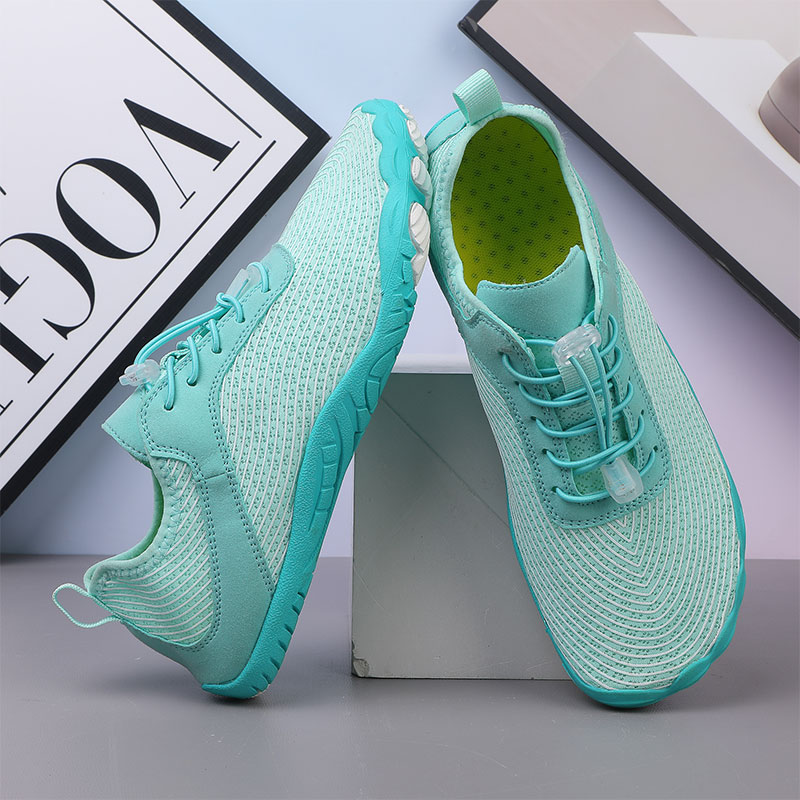
These shoes deliver a highly engineered lightweight upper. This breathable mesh allows rapid drainage the second you step out of the surf. It completely eliminates the parachute effect. Furthermore, the AquaTrek Outdoor Shoes utilize a reinforced, high-traction outsole. This sturdy base actively resists punctures from jagged shells. The siped tread guarantees you remain upright on slippery boat ramps.
Versatility remains a crucial factor for outdoor enthusiasts. You want gear that transitions smoothly across different environments. Their locking design secures the heel tightly during sudden submerged movements. This locked fit prevents ballooning drag when you kick underwater. Yet, they maintain a remarkably sleek profile. You can transition straight from a rocky shoreline directly onto a kayak without changing your footwear.
Even the best gear fails if you wear it incorrectly or neglect basic maintenance. You must follow specific protocols to maximize comfort and ensure the longevity of your footwear.
Buying the correct size requires a shift in thinking. You must account for the "wet sizing" rule. Human feet naturally swell slightly when submerged in water. Therefore, a water shoe should fit snugly on land. It needs to prevent slipping off in strong river currents. However, you should leave a tiny fraction of room for that natural underwater expansion. Always aim for a snug, secure fit that does not pinch your toes.
People constantly ask if they should wear socks with their water shoes. The answer requires strict guidelines.
Rule 1: No Cotton. Never wear cotton socks underwater. Cotton retains water instantly. It increases internal friction and guarantees painful blisters.
Rule 2: Proper Materials. If you need socks for extra warmth or blister prevention, strictly use synthetic blends. Micro-fleece or dedicated neoprene diving socks are the only acceptable options.
Rule 3: Barefoot is Standard. Most high-quality models feature smooth inner linings. They are designed for bare feet. Try them without socks first.
Harsh environments destroy poorly maintained gear. Saltwater corrodes zippers. Pool chlorine eats away at synthetic fabrics. Sand grinds down soft inner linings.
Best Practices for Gear Maintenance:
Action | Why It Matters |
|---|---|
Rinse thoroughly with fresh water | Removes corrosive salt, harsh pool chlorine, and abrasive sand. |
Air dry in a shaded, well-ventilated area | Prevents foul mold and mildew from growing inside the toe box. |
Avoid all direct heat sources | CRUCIAL WARNING: Never use a tumble dryer, radiator, or direct sunlight. High heat melts the industrial adhesives and permanently degrades the rubber sole. |
The primary purpose of an aqua shoe is strict risk mitigation. They successfully transform hazardous, slippery, or jagged aquatic environments into safe, navigable terrain. You face unnecessary dangers when you ignore this specialized category of gear. Bare feet and heavy old sneakers simply do not belong in demanding water sports.
Actionable Next Steps:
Discard your dangerous, water-logging old sneakers before your next trip.
Assess your primary water environments (pools, rocky shores, or boats) to determine your required sole thickness.
Invest in purpose-built, highly engineered gear like AquaTrek Outdoor Shoes.
Always practice the "wet sizing" rule for a secure, anti-drag fit.
Rinse your gear with fresh water immediately after every excursion.
Prioritizing proper footwear guarantees safety and hygiene. It deeply enhances your overall performance and comfort. Protect your feet properly, and you will enjoy your aquatic adventures without fear of injury or fatigue.
A: Yes, but they are designed primarily for wading, transitions, and water aerobics, not competitive speed swimming. While you can swim in them, they add slight drag. For distance swimming, you must ensure a very tight fit to minimize the parachute effect and reduce resistance.
A: Waterproof boots (like sailing boots or rain boots) are specifically designed to keep water out and ensure your feet stay completely dry. Water shoes do the opposite. They are designed to let water in but drain it instantly. They maintain incredible grip and physical protection while your feet remain wet.
A: Yes, many high-quality water shoes feature thicker, highly supportive rubber soles. These rugged soles provide critical arch support during high-impact pool aerobics. This structured support significantly reduces heel strike pain when compared to performing those same exercises entirely barefoot.


