 English
Views: 0 Author: Site Editor Publish Time: 2026-04-17 Origin: Site


Walking on a beach sounds incredibly relaxing. Yet, the physical toll quickly becomes apparent. Trudging across loose sand remains notoriously exhausting. It often reduces a standard 15-mile hiking pace to barely 10 miles. You also expose unprotected feet to scorching 125°F surface temperatures. Hidden hazards lurk just under the surface.
Standard sneakers sink deeply into shifting ground. They fill up rapidly with abrasive sand. They completely lack grip on wet transitions. Basic flip-flops create even bigger problems. They offer zero structural stability. This leads directly to painful blisters and dangerously rolled ankles.
Buyers must transition to purpose-built footwear. This helps you walk safely and comfortably. This guide breaks down the underlying physics of sand walking. We explore core evaluation criteria for high-quality Non-Slip Beach Walking Shoes. You will learn how to avoid common purchasing traps. For instance, do not rely on fragile slip-on water shoes for dry sand hikes.
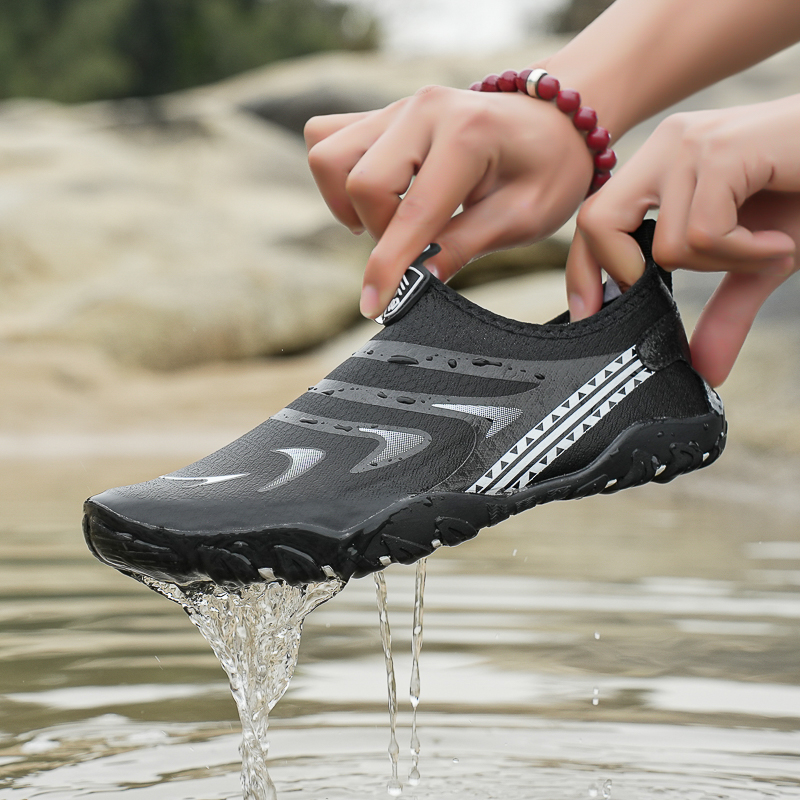
The "Float" Principle: Wider soles act like off-road tires, preventing feet from sinking into soft sand and drastically reducing muscle fatigue.
Traction is Non-Negotiable: True non-slip beach walking shoes require specialized outsoles to safely transition between dry sand, wet sand, and slick coastal rocks.
Protection over Aesthetics: Closed-toe designs are essential for beaches with sharp shells, hidden glass, or rocky tide pools.
The Waterproofing Trap: Gore-Tex keeps fine sand out but traps sweat, softening skin and increasing blister risk in hot coastal environments.
Secure Fit Prevents Injury: A secure heel strap or bungee closure prevents ankle rolling in unpredictable, shifting sand.
Many beachgoers underestimate the mechanical difficulty of walking on soft ground. We must establish a baseline for success by understanding why standard shoes fail so poorly in coastal environments.
When you step onto loose sand, the ground gives way beneath you. Kinetic energy dissipates into the shifting grains. Narrow shoe profiles lack sufficient surface area. They plunge straight down into dry sand. Your leg muscles must work twice as hard just to push off. You constantly fight for balance on an unstable base. Over several miles, this biomechanical inefficiency drains your energy completely.
Wet sand behaves very differently than dry sand. Tide pools introduce smooth, wet rocks covered in algae. Smooth-soled footwear becomes downright dangerous in these environments. Traditional slip-on shoes lack heel stabilization. Your foot slides laterally inside the shoe. They shift unpredictably under your body weight. This frequent instability frequently leads to severely rolled ankles.
Pure slip-on water shoes perform admirably underwater. They fail miserably when subjected to abrasive dry sand. The rough grains act like sandpaper against thin fabrics. These shoes often degrade completely after just two coastal trips. Furthermore, thin soles fail to block intense thermal heat. Midday shoreline sand frequently reaches a burning 130°F. Sharp shells and hidden debris easily pierce flimsy materials. You risk serious cuts and puncture wounds.
Selecting proper footwear requires a clear decision framework. You must map specific shoe features to desired physical outcomes.
Outsole Width and the "Float" Effect: Evaluate the shoe footprint carefully. Look for a noticeably wider toe box. Flared outsoles distribute your body weight over a larger area. They create better surface tension. Outdoor experts call this the "float" effect. It acts much like off-road vehicle tires on soft dirt. It keeps you above loose sand. It prevents deep sinking and saves massive amounts of energy.
Ergonomic Footbeds (The Wet Sand Principle): Pay attention to interior support. Quality footwear features anatomical arch support. It mimics the natural cupping sensation of stepping on firm, wet sand. This distributes plantar pressure evenly across your entire sole. It significantly prevents arch fatigue over long distances.
Traction and Tread Patterns: Assess the lug design carefully. You need shallow, closely spaced lugs. They provide excellent grip on wet, slick surfaces. They naturally avoid trapping excess mud or coarse sand. Top-tier Non-Slip Beach Walking Shoes utilize this precise tread geometry.
Toe Coverage: You must decide between open or closed designs. Open-toe sandals drain water instantly. Closed-toe shoes remain absolutely crucial for rocky beaches. They reliably protect you from broken glass and sharp oyster shells.
We categorize sand footwear based on specific terrain requirements. You should apply shortlisting logic to find your ideal match.
These strapped designs work best for casual beach walking. They handle tide pooling and shallow wading perfectly. You must evaluate the harness system carefully. Ensure they feature sturdy heel straps. Adjustable buckles remain essential for a locked-in fit. Sand flows freely through the open straps. However, exposed skin risks friction over extended mileage.
They excel during quick transitions from sand to swimming. They feel incredibly lightweight. They breathe exceptionally well under hot sun. However, they often lack a rigid midsole. You need a stiff midsole for miles of dry sand hiking. Always look for reinforced rubber outsoles to compensate for flexible uppers.
These dominate long-distance coastal hikes. They handle rugged, unpredictable terrain brilliantly. Look for durable, abrasion-resistant uppers. Bungee lace closures ensure a tightly locked-in fit. They offer the highest available ankle support. They deliver superior slip resistance across wet coastal rocks.
Shoe Category | Best For | Key Evaluation Criteria |
|---|---|---|
Hybrid Water Sandals | Casual walks, tide pooling, shallow wading. | Sturdy heel straps, adjustable buckles, open drainage. |
Quick-Dry Mesh Water Shoes | Frequent transitions from dry sand to active swimming. | Lightweight mesh, reinforced outsoles, breathability. |
Beach Hiking Shoes | Long-distance hikes, rocky shorelines, rugged terrain. | Rugged outsoles, bungee laces, locked-in heel support. |
Sand management presents a frustrating dilemma. Do you block it completely or let it flow? We must address the implementation realities and hard truths of coastal hiking.
Highly breathable mesh drains water incredibly fast. Unfortunately, it also acts like a fine sieve. It constantly lets microscopic sand grains inside the shoe cavity. They accumulate rapidly beneath your toes. You must stop frequently to empty your footwear. This constant interruption ruins pacing.
Many buyers assume waterproof liners solve the sand problem. GTX liners block fine sand grains flawlessly. However, they severely compromise shoe breathability. Hot beach environments exacerbate this critical flaw. Your feet sweat profusely. Trapped moisture softens your skin rapidly. Soft, wet skin rubbing against synthetic linings virtually guarantees painful blisters.
Closed shoes need a reliable mechanical barrier. A gusseted tongue connects directly to the interior sides of the shoe. It seals the primary entry point for debris. It blocks sand intrusion highly effectively. It accomplishes this without relying on stifling waterproof membranes. You maintain essential breathability while keeping abrasive grit outside.
You need expert setups for high-performance walking. Apply these actionable strategies to guarantee post-purchase success.
The Counter-Intuitive Sock Rule: You might think bare feet work best in the heat. Actually, mid-weight Merino wool socks are optimal for closed shoes. They excel during long-distance sand trekking. Wool fibers absorb a third of their weight in moisture. They manage this before ever feeling wet to the touch. Wool regulates foot heat naturally. It provides a reliable physical barrier. This completely stops friction and sand abrasion from destroying your skin.
The Baby Powder Clean-Up: This is a proven field hack among coastal hikers. Keep baby powder in your vehicle. Apply it generously to wet feet immediately after your walk. The powder absorbs residual moisture immediately. Stubborn, sticky sand loses its grip on your skin. You can brush the grit off instantly. You keep your street shoes perfectly clean for the drive home.
We base final purchase decisions strictly on the primary use case. Short resort walks require minimal gear. Strapped water sandals suffice beautifully for casual swimming and wading. Long expeditions demand serious footwear. You must prioritize closed-toe beach hiking shoes for miles of rugged coastal exploration. Look for wide bases and gusseted tongues.
Always prioritize a highly secure closure system. Bungee laces or robust heel straps keep your foot stabilized. Insist on a dedicated non-slip outsole. Do not rely on ultra-thin, slip-on water socks for sustained land walking. They completely lack the structural integrity necessary to support your foot on shifting sand.
A: No. Running shoes feature highly breathable mesh. This material acts as a sieve and will quickly fill with abrasive sand. Their standard tread patterns are designed for pavement or packed dirt. They are not optimized for wet, slick coastal rocks. Wearing them significantly increases your slip risks and leads to heavy, uncomfortable footwear once saturated.
A: No. Standard flip-flops completely lack heel security. This forces your toes to grip the footbed constantly. This causes severe toe-gripping fatigue. It also increases the risk of rolled ankles on uneven terrain. Clogs present a different problem. They often trap large amounts of abrasive sand inside the wide toe box, causing severe friction.
A: Blisters occur from a combination of friction, trapped moisture, and fine sand. Prevent them by ensuring a tightly locked-down fit. Your foot must not slip inside the shoe. Consider wearing mid-weight Merino wool socks for long-distance coastal hikes. Wool actively manages moisture and provides a protective physical barrier against internal shoe friction.


