 English

Views: 0 Author: Site Editor Publish Time: 2026-06-03 Origin: Site


The human foot contains the highest density of sweat glands anywhere on the body. It can produce over half a cup of sweat daily, driven by rising temperatures, intense physical exertion, and emotional stress. This biological reality turns ordinary footwear into a trap for trapped heat and heavy moisture.
Standard sneaker marketing loosely throws around the word "breathable," leading you to make bad purchases. When hot air cannot escape, you experience rapid material degradation, rotting insoles, and persistent discomfort. You need a better strategy to evaluate athletic shoes and everyday footwear.
This guide cuts through the marketing fluff to provide a strict evaluation framework for selecting shoes. We will help you find footwear designed to actively manage heavy foot sweat and hyperhidrosis. You will learn the mechanical differences in shoe construction and discover how to build a rotation built for ultimate comfort.
Material Matters Most: True ventilation requires a combination of open-weave uppers (like mesh) and active moisture-wicking liners.
The Beach Crossover: Breathable beach sneakers and amphibious shoes are emerging as the ultimate everyday solution for extreme sweaters due to their quick-dry, high-drainage designs.
The Durability Trade-Off: Maximum airflow inherently reduces upper durability; buyers must weigh ventilation against abrasion resistance.
The "Cotton is Rotten" Rule: Even the most technically advanced sneaker will fail if paired with standard cotton socks.
Consumers often buy sneakers simply because they feature a mesh toe box. However, managing severe foot sweat requires a more sophisticated approach. You must look at the physical mechanics of cooling and avoid clever marketing traps.
Ventilation falls into two categories. Understanding the difference helps you pick a shoe capable of handling extreme moisture.
Passive Ventilation: This relies on ambient air to dry your feet. Standard canvas or single-layer mesh uppers provide passive airflow. They work fine for mild weather. They fail during heavy exertion because they cannot force hot air out fast enough.
Active Ventilation: High-performance shoes utilize active cooling. Specialized outsole and midsole structures create a mechanical "pump" effect while you walk. Every step compresses the sole. This action forces hot, moist air out and pulls cool, fresh air inside.
Ventilation Type | Mechanism | Best Use Case | Drawbacks |
|---|---|---|---|
Passive | Uses thin materials to let air pass naturally. | Light walking, office wear, mild climates. | Overwhelmed by heavy sweat or high heat. |
Active | Uses mechanical compression to pump air in and out. | Hyperhidrosis, intense workouts, all-day wear. | Often requires thicker soles, reducing ground feel. |
Airflow alone cannot solve a severe sweat problem. Good shoes do not just let air inside. They rely on advanced interior liners. These liners pull liquid sweat away from your skin. The fabric then pushes the moisture to the shoe's exterior to accelerate evaporation.
Without a moisture-wicking liner, sweat pools against your skin. This creates a clammy environment. You run a higher risk of developing blisters and fungal infections. An effective evaporation engine transforms a damp shoe into a dry one.
Never ignore the insole. It acts as the direct contact point for your sweat. You must evaluate whether the insoles are removable, washable, and antimicrobial.
Many brands use glued-down foam insoles to cut manufacturing costs. Glued foam traps bacteria beneath the surface. It degrades rapidly under heavy moisture. Always choose shoes featuring removable footbeds. You can take them out, wash them, and let them dry completely.
People suffering from hyperhidrosis often struggle to find traditional running shoes capable of handling their symptoms. A major shift is happening in the footwear market. Buyers now look toward amphibious categories for daily wear.
Consumers abandon traditional running shoes in favor of Breathable Beach Sneakers and water-friendly hybrid shoes. These crossover models combine sneaker aesthetics with extreme moisture management. They handle physical water and heavy sweat equally well.
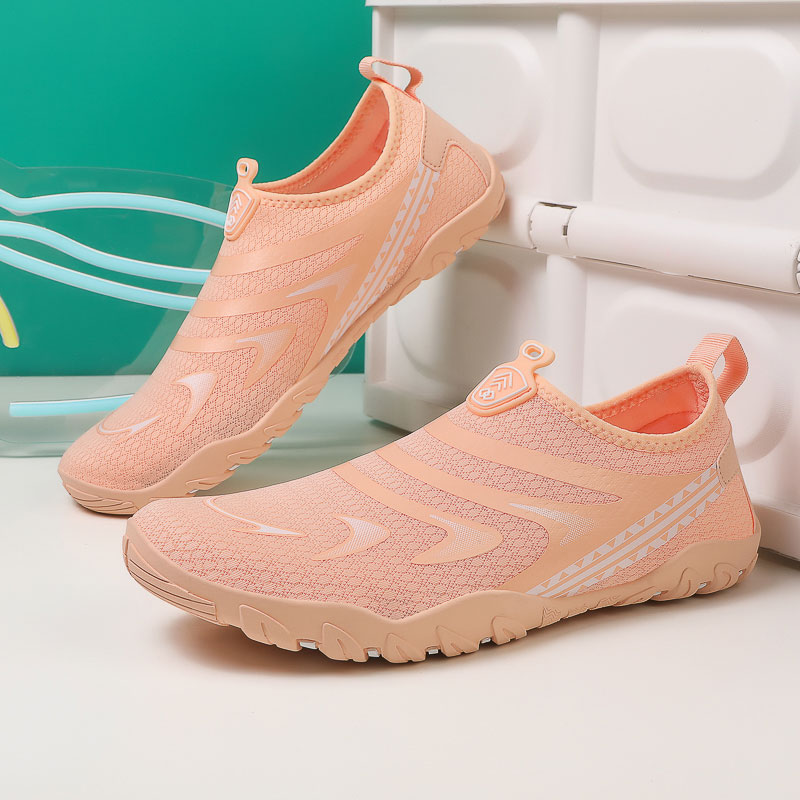
Standard athletic shoes absorb moisture until they become saturated. Amphibious models utilize a completely different design philosophy. Engineers build these shoes to expel physical water instantly.
Drainage Ports: Midsole holes channel liquid out of the footbed immediately.
Hydrophobic Materials: The uppers repel water instead of absorbing it.
Rapid Drying: Even if fully soaked, they dry within hours rather than days.
Because they handle severe water exposure, they easily manage extreme foot sweat. Your feet never feel waterlogged or clammy.
Wearing socks in peak summer heat adds an unwanted insulating layer. Traditional sneakers cause blisters if you wear them without socks. Water-friendly models solve this issue.
Designers build them specifically for barefoot wear. They feature soft, friction-free interior seams. The internal collars utilize smooth neoprene or microfiber. You can eliminate the sock entirely, maximizing cooling during hot weather.
A major pain point for heavy sweaters involves slipping around inside their own shoes. Excess moisture turns standard rubber or leather footbeds into a sliding surface. Beach-specific sneakers feature locked-in, non-absorbent footbeds. They maintain internal traction even when completely wet. You get superior stability regardless of how much you sweat.
You cannot buy a perfect shoe. Footwear design involves strict compromises. When you prioritize extreme airflow, you must sacrifice other features. Managing buyer expectations prevents post-purchase frustration.
Maximum airflow requires ultra-thin, highly porous uppers. These materials score perfectly on laboratory smoke tests and airflow evaluations. However, they lack toughness.
Highly ventilated mesh remains highly susceptible to abrasion, tearing, and scuffing. If you scrape your shoe against a rough surface, the fabric will likely tear. You trade long-term durability for immediate cooling relief. Expect to replace highly ventilated shoes more frequently than heavy leather boots.
Open-mesh and quick-dry materials prioritize flexibility. They wrap around the foot softly. They rarely offer the rigid lateral support found in leather or heavy synthetic overlays.
If you suffer from severe overpronation, these models might lack the necessary structure. They do not hold the foot firmly in place during heavy load-bearing activities like weightlifting or carrying heavy backpacks. They work best for walking, casual wear, and light training.
Many heavy sweaters mistakenly believe sandals offer the ultimate solution. Simply switching to open-toed sandals usually backfires. Sweat pools on the dense rubber or leather footbeds of standard sandals. Because the footbed cannot absorb or wick the moisture, your foot slides uncontrollably.
This slippage causes extreme friction and deep blisters. Furthermore, dirt mixes with the sweat to create a muddy residue. A closed-toe, high-airflow sneaker provides a safer, more hygienic, and more comfortable environment. It wicks the sweat away while protecting your foot from debris.
You can buy the most advanced, highly ventilated shoe on the market. If you pair it with the wrong materials, you completely neutralize the technology.
Podiatrists and outdoor professionals rely on a simple phrase: "Cotton is rotten." Cotton fibers absorb moisture efficiently. However, they refuse to release it.
Wearing cotton socks inside a highly breathable sneaker destroys the evaporation engine. The cotton traps the sweat against your skin. The moisture never reaches the shoe's wicking liner. Your foot stays wet, bacteria multiply, and odor develops rapidly. You must banish cotton socks from your wardrobe if you struggle with sweaty feet.
You must view your socks and shoes as an integrated system. Choose specific material pairings designed to optimize airflow and moisture transfer.
Merino Wool: This natural fiber regulates temperature beautifully. It keeps you cool in summer and warm in winter. Merino wool naturally resists microbes, drastically reducing foot odor.
High-Performance Synthetics: Polyester, nylon, and spandex blends actively push moisture away from the skin. They dry incredibly fast and pair perfectly with open-mesh uppers.
Now you understand the mechanics of ventilation and the necessary compromises. Use this actionable buying framework to shortlist your next purchase and maintain the shoes properly.
You can test a shoe's passive ventilation immediately. Hold the sneaker up to a bright light source. Look directly into the toe box.
You should see light penetrating the upper material clearly. If you cannot see light shining through the fabric, air will not flow efficiently. Dense materials block light and trap heat. Always perform the light test before committing to a purchase.
Feet swell significantly when exposed to heat and moisture. A shoe fitting perfectly in the morning might feel painfully tight by mid-afternoon. Tight shoes compress the foot, cut off air circulation, and trigger even more sweating.
Always advise sizing up a half-size for your high-ventilation models. The extra room allows for the micro-circulation of air around your toes. It also accommodates the inevitable afternoon swelling.
You cannot wear the same pair of shoes every single day. Dense midsoles absorb microscopic moisture over a long day of wear. They require at least 24 hours to fully dry out internally.
Wearing the same damp pair daily guarantees aggressive bacterial growth and persistent odor. You must mandate buying two pairs of shoes if you plan to wear them daily. Rotate them to allow proper drying time.
Feature | Look For | Avoid |
|---|---|---|
Upper Material | Open mesh, visible light penetration. | Solid leather, thick synthetic overlays. |
Insoles | Removable, washable, perforated. | Glued-down memory foam. |
Interior Lining | Smooth seams, moisture-wicking synthetic. | Heavy padding, exposed stitching. |
Sock Choice | Merino wool, ultra-thin polyester blends. | 100% Cotton. |
Beating sweaty feet requires a holistic, systemic approach. You cannot rely on a single magic material to solve hyperhidrosis or intense summer heat. Audit your current footwear and eliminate anything trapping moisture.
Here are your required action steps:
Choose uncompromised airflow by investing in amphibious models like Breathable Beach Sneakers.
Accept the durability trade-offs. Lighter, porous uppers wear out faster but keep you comfortable.
Ditch cotton socks entirely and replace them with merino wool or high-performance synthetics.
Buy at least two pairs to enforce the 24-hour rotation rule and prevent bacterial buildup.
Take control of your foot health today. Implement this evaluation framework, test your materials, and build a dedicated, high-ventilation rotation for your daily life.
A: Yes. You should pair them with heavy-weight moisture-wicking wool socks. Foot sweat happens year-round. Indoor heating and closed-in winter boots trigger intense sweating. Using a ventilated shoe indoors prevents this winter moisture trap.
A: They significantly reduce odor. They eliminate the damp, dark environment bacteria thrive in. However, they do not cure odor entirely alone. You must rotate them daily and let them dry fully to stop bacterial growth completely.
A: You can wear them for casual walking safely. For high-impact running, you must evaluate the midsole cushioning carefully. Some beach-specific sneakers prioritize water drainage over shock absorption, making them unsuitable for long-distance pavement running.


