 English

Views: 0 Author: Site Editor Publish Time: 2026-08-07 Origin: Site


Walking on shorelines composed of crushed coquina, broken conchs, or brittle oyster beds presents a unique biomechanical hazard that standard aquatic footwear is rarely engineered to handle. Consumers frequently experience sole punctures, deep tissue bruising, or severe discomfort when tiny, sharp shell fragments bypass inadequate soles or become trapped inside open-toed footwear. Selecting the correct footwear requires moving beyond generic water shoes to evaluate specific sole thickness, rubber durometer, and upper designs engineered for debris exclusion. This guide provides a technical framework for evaluating protective shoreline shoes based on terrain severity, multi-terrain versatility, and user activity.
Optimal Thickness Threshold: A sole thickness of 5mm to 8mm of high-density vulcanized rubber provides the optimal baseline for preventing shell punctures without compromising aquatic mobility.
Material Trumps Thickness: Thick EVA foam (common in standard flip-flops) is highly susceptible to shell splinter embedding; thinner, high-durometer rubber offers superior protection.
The Debris Entrapment Factor: Sole thickness is irrelevant if the upper design allows small shells to enter the footbed. Effective sand release beach footwear must combine a protective outsole with a secure, gasket-like ankle collar.
Proprioception vs. Protection Trade-off: Thicker soles reduce ground feel, which can increase the risk of ankle rolls on uneven, shifting shell banks, making the balance of a protective layer and minimal excess bulk critical.
Understanding why footwear fails on shell-covered shores requires analyzing the terrain itself. Not all shell beaches present the same hazards. The physical structure of the shells dictates the type of damage they inflict on both your footwear and your feet. You must evaluate the specific environment you plan to navigate before selecting your gear.
Differentiate between smooth, whole shells and fragmented, brittle shells. Smooth shells, like intact whelks or rolling scallops, primarily cause pressure bruising. When you step on a large, unbroken shell, the rounded surface pushes upward into the arch or heel. This blunt force trauma requires structural rigidity in the shoe to disperse the impact across the entire footbed. Without a rigid layer, the foot absorbs the entire impact, leading to deep tissue bruising that can last for weeks.
Conversely, fragmented shells present a severe laceration and puncture risk. Oyster shells formed in mud and silt environments develop highly brittle exterior textures. These shells shatter unpredictably underfoot into razor-sharp shards. When a 180-pound person steps on a shattered oyster shell, the entire body weight concentrates onto a point less than a millimeter wide. This extreme point-load pressure easily pierces thin materials. Crushed coquina beaches consist of millions of tiny, abrasive fragments that act like coarse sandpaper. Navigating these environments demands high-density puncture resistance rather than just impact absorption.
Consumers often rely on everyday summer footwear when visiting the coast. These traditional options fail catastrophically on abrasive shell banks due to fundamental design flaws. We see three common categories of failure in the field.
Hard Slides and Flip-Flops: Rigid, open designs create a funnel for tiny shell fragments. As you walk, the heel lifts, allowing debris to kick up and land on the footbed. When the heel strikes back down, the fragments become wedged between the hard footbed and the soft sole of the foot. This causes severe friction lacerations and immediate pain. The open nature of the shoe guarantees continuous debris intrusion, forcing you to stop every few steps to clear the footbed.
Standard Neoprene Water Socks: Soles under 2mm lack the structural integrity to distribute the point-load pressure of a sharp shell. While neoprene provides thermal insulation and basic scratch protection against smooth sand, it compresses instantly under weight. A sharp oyster fragment will push right through the thin rubber dot-matrix sole, leading to localized bruising or direct skin puncture. These socks offer a false sense of security on jagged terrain.
Running Shoes: While thick-soled and highly protective against punctures, traditional athletic shoes absorb massive amounts of water. They become excessively heavy and lack proper drainage. The trapped saltwater and abrasive sand create a highly corrosive environment inside the shoe. The friction from the trapped grit leads to rapid skin maceration and severe blistering within minutes of walking. Furthermore, the mesh uppers on running shoes easily tear when scraped against sharp barnacles.
Sole thickness serves as the primary defense against downward puncture threats. However, simply maximizing thickness is not the solution. You must balance protection with the flexibility required for swimming and walking on uneven terrain. Finding the right Beach Shoes requires matching the sole profile to your specific activity level.
Minimalist soles characterize barefoot-style water shoes and protective aquatic socks. These designs prioritize maximum flexibility and minimal weight. Manufacturers often use thin layers of injected silicone or low-density thermoplastic rubber to achieve this profile.
The primary advantage of a minimalist sole is maximum proprioception. Ground feel allows the nerve endings in your feet to detect shifts in the terrain. This sensory feedback helps you adjust your balance instantly on slippery rocks or shifting sand. These shoes remain incredibly lightweight, making them excellent for swimming. They produce almost no drag in the water, allowing for a natural flutter kick.
However, the risks are significant on shell-covered shores. Minimalist soles carry a high risk of stone-bruising on dense shell beds. Sharp oyster fragments can easily penetrate lower-quality rubber at this thickness. A 2mm sole simply cannot stop a concentrated point-load puncture from a shattered clam shell. Reserve minimalist soles for fine sand beaches with sparse, smooth shell distribution. They excel in pristine environments but fail on rugged coastlines.
Moderate soles represent the technical sweet spot for shoreline navigation. You will find this thickness on purpose-built amphibious hikers and high-quality water shoes.
This thickness provides exceptional versatility. A 5mm to 9mm profile is thick enough to house a flexible puncture-resistant layer or a protective rock plate. Yet, it remains thin enough to maintain the flexibility required for swimming and navigating uneven tide pools. The rubber can bend with the natural articulation of your foot, reducing fatigue over long distances. You can walk for miles on a crushed shell beach without experiencing the arch fatigue associated with overly rigid boots.
The drawbacks are minimal but present. Hybrid shoes are slightly heavier than minimalist socks. Depending on the specific rubber compound used, they may require a brief break-in period to achieve optimal flexibility. Moderate soles are best for active shelling, reef walking, and navigating dense, broken-shell shorelines. They offer the most reliable balance of safety and performance for the average coastal explorer.
Maximalist soles dominate the category of amphibious boots, thick-soled sandals, and modified trail runners. These designs prioritize absolute barrier protection above all else. They often feature thick EVA foam midsoles paired with heavy rubber outsoles.
The core benefit is absolute protection against downward punctures and heavy impacts. You can step directly onto a bed of shattered oysters with zero risk of the shell penetrating the footbed. The thick material absorbs all blunt force trauma, eliminating pressure bruising entirely. For individuals with sensitive feet or pre-existing plantar fascia issues, this level of impact absorption is highly beneficial.
The trade-offs alter your biomechanics. Thick soles cause a severe loss of ground feel. Without proprioceptive feedback, your risk of ankle rolls increases dramatically on shifting shell piles. You cannot feel the ground giving way beneath you until your ankle is already twisting. Furthermore, highly buoyant thick soles can disrupt swimming mechanics, forcing your feet to float unnaturally toward the surface. Maximalist soles are best for stationary wading, kayak fishing, or walking exclusively on flat, heavily compacted shell paths where ankle stability is not challenged by uneven terrain.
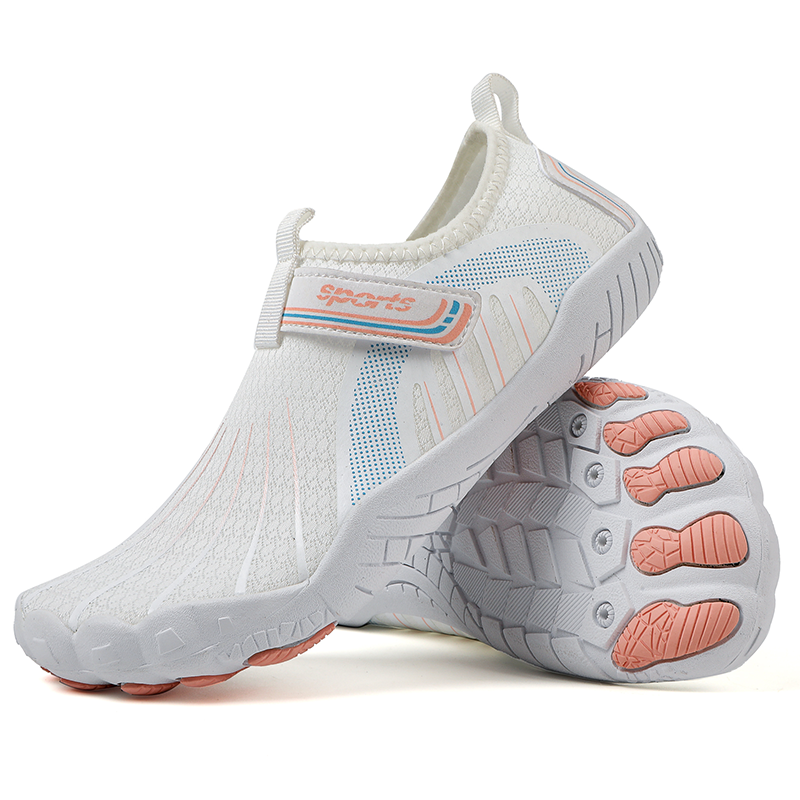
Evaluating sole thickness in a vacuum leads to poor purchasing decisions. The chemical composition and structural engineering of the sole material dictate its actual performance on jagged terrain. You need protective shoreline shoes built from materials specifically engineered to deflect sharp objects.
Durometer measures the hardness of a material. In shoreline footwear, high-durometer rubber is non-negotiable. A 4mm layer of high-density vulcanized rubber vastly outperforms 12mm of compression-molded EVA foam.
EVA foam, commonly used in running shoe midsoles and standard flip-flops, relies on trapped air bubbles for cushioning. When a sharp shell strikes EVA foam, the material compresses. Brittle shells easily splinter and embed directly into the soft foam matrix. As you continue walking, the repeated pressure pushes the embedded shell shard deeper into the sole. Eventually, the fragment works its way entirely through the foam and punctures your foot. High-density rubber resists this initial embedding. The hard surface forces the shell to deflect or crush rather than penetrate. Vulcanized rubber undergoes a chemical process that cross-links the polymer chains, creating a highly abrasion-resistant surface that withstands the sandpaper-like effect of crushed coquina.
Shoreline Outsole Material Comparison
Material Type | Durometer (Hardness) | Puncture Resistance | Best Application |
|---|---|---|---|
Blown EVA Foam | Low (30A - 40A) | Poor (Prone to embedding) | Poolside, smooth concrete |
Injected Silicone | Medium (40A - 50A) | Moderate (Deflects blunt objects) | Fine sand, boat decks |
Vulcanized Rubber | High (60A - 70A) | Excellent (Shatters brittle shells) | Oyster beds, jagged reefs |
TPU (Thermoplastic Polyurethane) | Very High (70A+) | Maximum (Used in rock plates) | Extreme jagged terrain, coral |
Premium shoreline footwear often incorporates internal structural defenses. Flexible TPU shanks or integrated rock plates sit between the outsole and the midsole. These plates serve a specific biomechanical function. They disperse the localized pressure of a sharp shell across the entire sole. Instead of feeling a sharp point jabbing into your heel, the rock plate spreads that force over a three-inch radius. This eliminates pressure bruising without requiring an excessively thick rubber outsole.
For users who already own thinner water shoes, aftermarket upgrades provide a viable solution. You can add aftermarket puncture-resistant insoles made from woven Kevlar or rigid synthetic polymers. These drop-in sole protectors upgrade your baseline protection, allowing you to tackle harsher environments without buying entirely new footwear. Ensure you size up slightly if you plan to add a thick aftermarket insole, as it will consume interior volume.
Tread design dictates how the shoe interacts with loose debris. Thick soles with aggressive, deep lugs pose a significant implementation risk on shell beaches. Deep, widely spaced lugs act like claws. They inadvertently pick up and trap medium-sized shells. As you walk, these trapped shells scrape against the ground, destroying your traction and creating a hazardous, uneven walking surface. You are essentially walking on ball bearings.
Instead, look for shallow, siped tread patterns. Siping involves razor-thin cuts in the rubber that open up when the sole flexes. These micro-treads grip wet, slimy rocks effectively but remain closed when standing flat, preventing debris from wedging into the outsole. A flatter, siped profile releases crushed shells naturally with every step. It provides maximum surface area contact on wet rocks while refusing to hold onto jagged fragments.
A bulletproof outsole provides zero protection if the upper design allows debris to bypass the sole entirely. Small shell entrapment remains the primary complaint among coastal walkers. Every time you take a step in shallow water, your foot creates a vacuum effect. As you lift your foot, water and suspended sand rush into any open gaps in the shoe. When you step down, the water pushes out, but the heavy shell fragments remain trapped inside.
A thick sole cannot protect the top or sides of the foot. When walking through loose, deep shell hash, your foot sinks. The abrasive fragments scrape against the exposed skin on the top of your toes and the sides of your arches. You must evaluate the necessity of closed-toe designs.
Open sandals leave the toes completely vulnerable to kicking buried shells. A reinforced rubber toe cap acts as a bumper, absorbing the impact when you accidentally kick a submerged conch or a dense cluster of oysters. The upper material must be tightly woven to prevent sharp fragments from slicing through the fabric and reaching the skin. Look for uppers constructed from tightly knit hydrophobic synthetic fibers rather than loose, open-cell mesh.
Effective sand release beach footwear must balance rapid water drainage with aggressive debris intrusion prevention. Analyze the effectiveness of micro-mesh uppers and sole-drainage ports.
Many water shoes feature holes drilled directly through the sole to expel water. However, if these ports are left open, they become entry points for crushed coquina and shell hash. Sole ports must be covered by a fine metallic or synthetic mesh. This mesh allows water and fine silt to escape downward while blocking sharp fragments from pushing upward into the footbed. The micron size of the mesh must be small enough to block coarse sand but large enough to prevent clogging from mud.
The ankle collar serves as the final line of defense. A loose collar acts as a bucket, catching debris kicked up by the surf. The importance of a tight, adjustable neoprene or elastic collar cannot be overstated. It must act as a gasket against your skin. When surf surges over your feet, a gasket-like seal prevents tiny shells from washing in over the top of the shoe. If the collar does not seal tightly against your ankle, the shoe will inevitably fill with abrasive fragments. Look for models with a bungee cinch cord or a Velcro strap at the ankle to lock the collar down tight.
Selecting the right footwear requires matching the technical specifications of the shoe to your specific environmental conditions and activity levels. Use this framework to narrow down your options before heading to the coast.
Assess the primary environment before making a selection. Identify the specific type of shell beach you plan to visit. Sanibel Island features rolling, whole shells that demand impact dispersion. Conversely, a jagged, brittle oyster bed in the Carolinas requires high-durometer puncture resistance. Match the sole hardness to the sharpness of the local terrain. If you expect to encounter razor clams, prioritize lateral protection on the sides of the shoe.
Consider multi-terrain versatility. Evaluate the approach to the beach. If you are walking on abrasive asphalt parking lots or rugged dirt trails before hitting the sand, a minimalist silicone sole will shred before you even reach the water. Prioritize a highly durable rubber outsole designed for cross-terrain abrasion resistance. A shoe with a dedicated hiking tread pattern will survive the parking lot and perform well on the wet rocks.
Match sole thickness to activity duration. Short walks from a boat to a sandbar allow for thinner, more flexible soles. Multi-hour shelling expeditions require the fatigue-reduction and structural support of a 5mm+ supported sole. Foot fatigue sets in rapidly when your plantar fascia has to constantly micro-adjust to uneven shell beds. A stiffer sole reduces the workload on your foot muscles.
Account for sizing in wet conditions. Wet footwear expands, and feet swell in hot, humid coastal environments. Guidelines on sizing dictate that the shoe must remain tight enough to exclude shells without causing pressure points. Purchase shoes that fit snugly when dry, as they will loosen slightly once saturated. An adjustable lacing system or Velcro strap is critical for locking down the midfoot once the material expands in the water.
Protecting your feet on jagged shorelines requires moving past generic water socks and investing in purpose-built footwear. By understanding the mechanics of puncture resistance, material hardness, and debris exclusion, you can navigate the harshest coastal environments without injury.
Measure your feet at the end of the day when they are naturally swollen to ensure accurate sizing for hot, wet environments.
Inspect the bottom tread of any potential shoe to confirm it uses solid vulcanized rubber rather than exposed EVA foam.
Verify that all sole drainage ports feature a fine-mesh covering to block crushed shell hash from entering the footbed.
Test the ankle collar fit dynamically by mimicking walking motions to confirm it maintains a tight, gasket-like seal against your skin.
A: A minimum of 5mm of high-density rubber is required to reliably prevent sharp, brittle shells like oysters from puncturing through to the footbed. Thinner soles risk penetration under the full weight of an adult, especially on uneven terrain where force concentrates on a single point.
A: This occurs due to inadequate ankle sealing, rigid open-slide designs, or overly large drainage ports. Effective sand release footwear utilizes tight, gasket-like ankle collars and micro-mesh over drainage holes to block debris from entering while still allowing water to escape.
A: No. While thick, EVA foam is easily penetrated by sharp shell fragments. The shells can embed into the soft foam and eventually push completely through the material to puncture your heel or arch. They also offer zero lateral or top-of-foot protection.
A: If you are walking on highly jagged terrain, such as oyster beds or coral reefs, a flexible TPU rock plate or an aftermarket puncture-resistant insole provides necessary pressure dispersion that rubber alone cannot offer. It prevents deep tissue bruising from blunt impacts.
A: Target a hybrid sole thickness of 5mm to 7mm. This thickness provides adequate puncture resistance against shells while remaining flexible and light enough to prevent excessive drag or unnatural buoyancy while swimming. Avoid heavy boots if swimming is your primary activity.
A: Running shoes offer thick puncture protection but fail in aquatic environments. They absorb heavy amounts of water, lack proper drainage, and trap abrasive sand inside, which rapidly causes severe skin blistering and maceration. The mesh uppers also tear easily on sharp shells.


