 English

Views: 0 Author: Site Editor Publish Time: 2026-08-06 Origin: Site


Finding the right aquatic footwear usually ends in a frustrating compromise. You either buy a pair that leaves your feet bruised on sharp river rocks or one that feels like wearing concrete blocks while swimming. The main problem is balancing barefoot flexibility with actual puncture resistance. A sole that is too thin means you feel every jagged edge on the shore. A sole that is too thick ruins the lightweight, second-skin feel you need from true water socks. Let's clear up the terminology first. General water socks are lightweight and breathable. Swim shoes have stiff, heavy soles built for walking. Beach socks are specifically designed to keep fine sand out. Knowing the difference ensures you evaluate the right gear. We need to look at sole thickness, material density, and tread design to match the footwear to your specific environment, whether you are launching a kayak or portaging over gravel.
Activity Dictates Thickness: Ultra-thin soles (1-2mm) are strictly for sand, pools, and layering; medium soles (3-5mm) offer versatility for paddling; reinforced soles (Kevlar/heavy rubber) are mandatory for rocky, abrasive environments.
Material Over Millimeters: A 2mm Kevlar-reinforced sole can offer higher puncture resistance than a 4mm standard neoprene or cheap TPR (Thermoplastic Rubber) sole, altering the thickness-to-protection ratio.
The "Roll" Risk: Pairing a heavy, inflexible sole with a lightweight, stretchy upper often causes the sock to roll or slip off the foot during lateral movements or swimming.
Drainage and Weight: Thicker soles often require more robust uppers to maintain structural integrity, which can compromise the performance of quick dry kayak socks by trapping water.
The Layering Strategy: Ultra-thin aqua socks serve a dual purpose as protective liners worn inside heavier water shoes or dive fins to prevent blisters.
Let's break down the success criteria for lightweight aquatic footwear. You need zero waterlogging. When you step out of the river, the water should drain instantly. You also need high proprioception. This means your feet can feel the shape of the rocks beneath you, allowing your brain to adjust your balance automatically. At the same time, you need a physical barrier against environmental hazards.
Aquatic environments present specific threats that dictate your footwear needs:
Zebra Mussels: These invasive species coat rocks and concrete boat ramps. Their shells are razor-sharp and easily slice through standard low-density foam soles.
Broken Glass: Common in urban waterways and public beaches. Requires high-density rubber to prevent penetration.
Algae-Covered Ramps: Concrete boat launches develop a slick biological layer. Flat soles fail here; you need siped treads for mechanical grip.
Hot Sand and Pavement: Thermal transfer happens quickly through thin materials. You need a specific density to block heat without adding weight.
Many buyers fall into the barefoot expectation gap. They order a pair of Aqua Socks expecting them to feel like a second skin. Instead, they pull them out of the box and find a rigid, inflexible slab of rubber glued to the bottom. You have to understand that thickness does not always dictate stiffness. Material density is the real variable. A 4mm low-density neoprene sole will bend in half easily. A 3mm high-density thermoplastic rubber sole might barely flex at all.
Adding millimeters to your sole directly impacts your swim efficiency. Every extra millimeter of rubber adds weight and bulk. This increases drag in the water. When you perform a flutter kick, a heavy sole alters your ankle biomechanics. Your foot acts like a paddle, catching water on the upstroke. This strains the Achilles tendon and burns unnecessary energy. If you plan to swim long distances, you need a streamlined profile.
Evaluating sole flexibility requires checking two specific movements. You can perform these tests immediately upon unboxing:
The Pinch Test: Grab the sole at the heel and toe. Bring your hands together. If the sole folds easily into a U-shape, it has high longitudinal flexibility.
The Twist Test: Hold the heel stationary and twist the toe box. If it resists twisting, it will likely cause heel-slip on uneven terrain.
The Rebound Test: Bend the toe upward and release it. Watch how quickly it snaps back to a flat position. Fast rebound indicates a stiffer, more responsive material that might feel rigid in the water.
A rigid sole mimics a traditional hiking shoe. If the sole cannot twist with your foot, the upper fabric will stretch away from the base when you step on an angled surface. This leads directly to heel-slip in wet conditions.
Ultra-thin soles take the most minimalist approach possible. We use these primarily for sand beaches, swimming pools, and smooth fiberglass boat decks. They deliver the maximum barefoot feel. You get the lowest overall weight and the fastest drying times. Manufacturers often use a dip-coating process or print a thin layer of silicone directly onto the neoprene to achieve this profile. This keeps the weight negligible while providing basic abrasion resistance.
These thin profiles excel as a base layer. Field guides often wear them inside heavier water shoes during long, abrasive hikes. If you are trekking up a waterfall, the thin sock prevents the heavy outer shoe from rubbing your skin raw. They also fit perfectly inside snorkeling fins to stop chafing on your heels and toes. The thin material acts as a second skin, absorbing the friction that would otherwise cause severe blisters.
The limitations are obvious. You get zero protection against sharp rocks or sea urchins. If you walk on hot pavement or abrasive concrete boat ramps, you will wear through the 1mm material in a single afternoon. They are built for soft surfaces and water suspension, not overland travel.
Medium-profile soles hit the middle ground between ground feel and impact resistance. We rely on these for paddleboarding, kayaking, and walking on mixed-sand or pebble beaches. A good pair of lightweight water socks in this thickness range provides enough cushioning to stop small pebbles from bruising your arches. These soles usually employ injection-molded TPR (Thermoplastic Rubber), which offers a solid balance of flex and durability.
They maintain enough flexibility to fit inside tight kayak footwells. You can operate rudder pedals without feeling clumsy. They handle brief walks across gravel parking lots without sending shooting pain up your legs. The 3mm to 5mm range is the industry standard for general recreational water sports because it covers the widest variety of moderate terrains.
However, they still have limits. They feel slightly bulky if you try to swim a mile in them. A 4mm sole made of cheap, low-density foam will not stop a sharp piece of glass or a jagged oyster shell. Direct, high-pressure impacts can still penetrate the footbed if the material lacks density. You must verify that the medium-profile sole uses hardened rubber rather than compressed EVA foam if you expect to encounter sharp debris.
Heavy-duty soles handle the most aggressive environments. We use these for rocky riverbeds, reef exploration, and rugged canoe portages. You need maximum puncture resistance here. Manufacturers use advanced materials like Kevlar linings to keep the profile relatively thin while matching the protection of a heavy boot. Vulcanized rubber is often baked directly onto the upper for a permanent, indestructible bond that will not delaminate in saltwater.
We frequently pair these reinforced soles with thermal linings. PolyPro or titanium-lined neoprene protects your feet from physical hazards and freezing water temperatures simultaneously. If you are wading into a 45-degree river to launch a drift boat, this is the sole profile you need.
The trade-offs are significant. They take much longer to dry because the dense materials trap moisture. Most importantly, you lose the true sock feel. The footwear behaves more like a structured boot, which reduces your ground feel and makes swimming cumbersome.
Sole Profile Comparison Guide
Sole Thickness | Primary Material | Best Environments | Flexibility Rating | Puncture Resistance |
|---|---|---|---|---|
1mm - 2mm | Thin Neoprene / Silicone Grip | Pools, Sand, Fin Liners | Maximum | Low |
3mm - 5mm | Standard TPR / Dense Neoprene | SUP, Kayak, Pebble Beaches | Moderate | Medium |
Reinforced | Kevlar / Vulcanized Rubber | Reefs, Riverbeds, Portages | Low | Maximum |
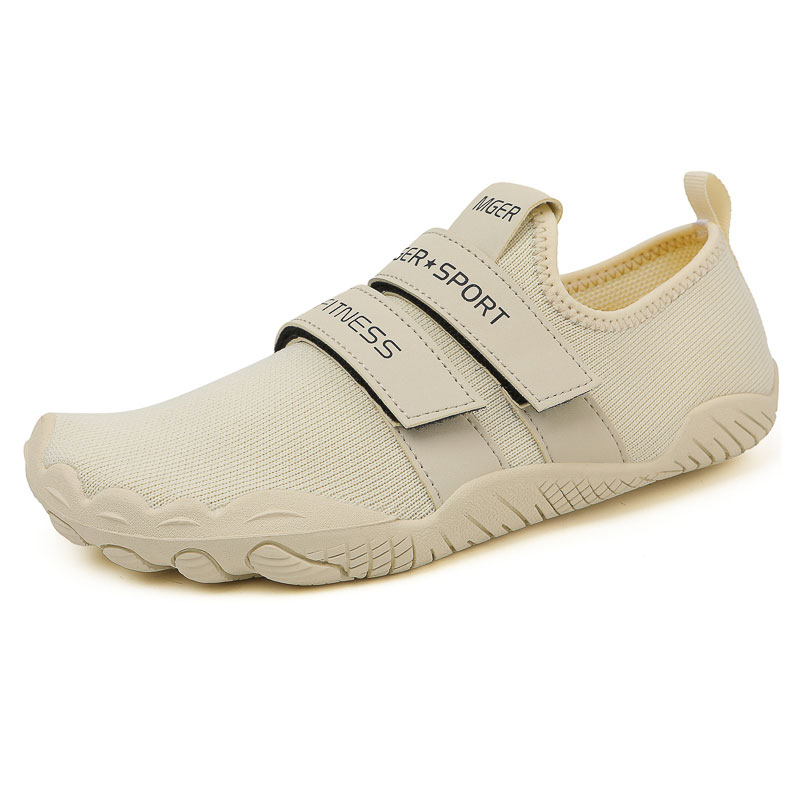
Choosing footwear for paddle sports requires balancing traction with a low-profile fit. You need grip on wet fiberglass or epoxy boards. But tight kayak cockpits leave no room for bulky shoes. A streamlined sock lets you slide your feet under deck bungee cords or into narrow foot braces without snagging.
Kayak anglers face specific requirements when selecting their gear:
Pedal Drive Compatibility: Ensure the sole is thin enough to feel the pedal grooves but stiff enough to distribute the pressure across the ball of your foot.
Cockpit Entry: The heel profile must be smooth so it slides easily against the plastic hull when you brace your legs during a cast.
Portage Protection: The heel and toe must have reinforced strike zones for dragging the kayak up concrete ramps at the end of the day.
Drainage dictates the design of quick dry kayak socks. Kayak footwear must prioritize highly breathable uppers. Perforated or channeled soles stop your feet from sitting in a swampy hull all day. Trapped water causes skin maceration, where the skin absorbs water, turns white, and tears easily under friction. It also leads to rapid thermal loss in cold weather. Efficient drainage ensures your feet dry out quickly after you launch the vessel in knee-deep water. Look for designs that incorporate mesh drainage ports directly above the sole line. These ports allow gravity to pull water out of the footbed the moment you lift your foot out of the river.
Standard neoprene bottoms fail completely on jagged terrain. Navigating rocky riverbeds and coral reefs requires strict puncture resistance. Vulcanized rubber or Kevlar-reinforced soles are mandatory. Sharp rocks, barnacles, and coral will slice right through standard 3mm neoprene. This exposes your feet to severe lacerations and marine infections.
Reef environments demand specific sole characteristics:
Coral Abrasions: Coral is highly infectious. The sole must wrap up the sides of the foot to protect the soft arches from side-impact scrapes.
Urchin Spines: Only Kevlar or thick vulcanized rubber can stop a direct step on a sea urchin.
Current Resistance: Heavy boots create drag in strong rip currents. A reinforced sock profile keeps you streamlined while offering boot-level protection.
Traction on rocks relies heavily on siping. Siping refers to the thin slits cut across the rubber surface. Sole thickness dictates how deep these tread patterns can go. Deeper siping channels water away from the contact patch. This gives you mechanical grip on slick, algae-covered rocks. A perfectly flat sole acts like a ski on wet moss. Deep treads cut through the biological layer to grip the hard stone beneath.
Thin soles excel in controlled environments like public pools and manicured beaches. They provide thermal protection against hot sand or rough pool plaster without adding bulk. Walking barefoot on midday sand causes severe burns. A 2mm sole blocks the heat transfer entirely while letting your foot sink naturally into the sand.
Hygiene is a primary concern for pool users. Thin aqua socks act as a lightweight barrier against locker room bacteria, athlete's foot, and plantar warts. They also protect your toes from abrasions caused by rough pool bottoms during water aerobics. The minimal thickness ensures you forget you are wearing them.
Biomechanical failure happens when manufacturers glue a thick, inflexible sole to a highly elastic upper. We call this the "roll" effect. When you step on an angled rock, the stiff sole tries to stay flat against the uneven surface. The stretchy upper cannot contain the lateral force of your body weight shifting sideways. Your foot slides completely off the side of the footbed, while the sole remains planted. This results in painful ankle rolls, sprains, and immediate loss of balance in moving water.
You can mitigate this structural failure by looking for wrap-around sole designs. The rubber should extend up the sides of the heel and wrap over the toe box. This creates a supportive cup that locks your foot in place, acting like a chassis. If you opt for thicker soles, you need adjustable lockdown straps across the instep. These straps provide the mechanical tension necessary to stop lateral shifting during aggressive movements.
Lightweight water footwear expands when submerged. This wet stretch phenomenon drastically alters the fit. A sock that feels perfectly snug in your living room will become loose and sloppy in the lake. A thick sole exacerbates friction if the sock fits too loosely. The heavy bottom drags against the ground, pulling the loose upper back and forth across your skin with every step. This repetitive shearing force removes the top layer of skin in minutes.
Seam placement directly impacts blister formation. The junction where the rubber sole meets the fabric upper creates a rigid ridge. If this ridge sits directly against your Achilles tendon or the side of your little toe, you will get severe blisters rapidly in wet conditions. High-quality designs use blind-stitched and glued seams to keep the interior profile completely smooth. This mitigates friction hot spots. Always inspect the inside of the footwear before buying. Run your fingers along the heel cup and toe box to check for exposed threads or overlapping fabric joints.
Identify the primary surface you will walk on most frequently to determine your baseline sole thickness requirement before purchasing.
Measure your foot at the end of the day when it is most swollen, and size down slightly to account for material expansion in the water.
Inspect the sole construction for wrap-around rubber at the heel and toe to prevent lateral rolling on uneven terrain.
Verify the seam type on the interior of the sock to ensure blind stitching is used around high-friction areas like the Achilles tendon.
A: Aqua socks feature lightweight, breathable uppers with highly flexible soles for swimming and layering. Swim shoes utilize sturdier, rigid soles and structured uppers designed for walking on rocky terrain. Beach socks prioritize fine-mesh or neoprene uppers to exclude sand, usually paired with ultra-thin soles for heat protection rather than impact resistance.
A: Yes. Socks with 1mm to 2mm soles allow for highly effective swimming. They minimize drag and maintain natural ankle mobility. Thicker soles create resistance during flutter kicks, causing fatigue and altering your natural swimming biomechanics.
A: Yes. Ultra-thin 1-2mm socks serve as excellent blister-prevention liners. Wearing them inside rigid dive fins or heavy hiking water shoes reduces friction, prevents chafing, and adds a slight thermal barrier for prolonged aquatic activities.
A: It depends on the rock type. A 3mm kayak sock handles smooth river rocks and gravel boat launches well. However, they lack the puncture resistance required for sharp oyster beds, jagged coral reefs, or broken glass.
A: Kevlar-reinforced linings offer the highest puncture resistance without adding massive bulk. Vulcanized rubber and high-density TPR (Thermoplastic Rubber) also provide excellent barriers against sharp objects, though they reduce overall sole flexibility.
A: They should fit very snugly, mimicking a second skin. Neoprene and spandex expand when wet. If they fit loosely when dry, they will bag, sag, and cause the sole to shift underfoot once waterlogged, leading to blisters and ankle rolls.
A: Sand entry is dictated by the ankle collar seal, not the thickness of the sole. To prevent sand intrusion, look for socks featuring an adjustable bungee closure or a tight, elasticized ankle gasket that seals directly against the skin.


