 English

Views: 0 Author: Site Editor Publish Time: 2026-08-12 Origin: Site


Wading through moving water alters natural gait mechanics. Surface refraction obscures submerged hazards, making toe impacts on rocky beds highly probable. Standard lightweight water shoes prioritize drainage over structural integrity, leaving you vulnerable to contusions, nail damage, and instability. Conversely, overly rigid footwear compromises proprioception and grip on slick surfaces. Selecting the correct Stream Shoes requires balancing external impact resistance with internal friction management. You must achieve this without sacrificing the specialized grip required for wet environments. Proper toe protection ensures you can navigate uneven terrain safely while maintaining essential tactile feedback. We need to look at how external bumpers and internal friction guards work together to keep your feet intact during aggressive riverbed navigation.
Impact vs. Friction: External rubber rands protect against blunt force from submerged rocks, while internal aftermarket solutions (silicone caps, taping, and toe socks) mitigate friction, toe-jamming, and pressure during steep downstream descents.
Material Trade-offs: Rigid composite toe caps offer maximum protection but trap water and reduce the flexibility needed to navigate uneven riverbeds.
Traction Dependency: Toe protection is only effective if the shoe maintains grip; wet stone traction shoes must integrate protective toe boxes with high-friction, siped rubber outsoles.
Sizing Realities: Incorporating internal toe guards and barrier layers requires sizing adjustments to prevent restricted circulation and accelerated blister formation when wet.
Stream navigation presents a dual threat to your feet. You face high-velocity blunt impacts against unseen boulders. You also endure sustained internal pressure from foot-sliding during descents. Effective rocky creek footwear must absorb frontal impact forces. It must prevent the foot from sliding forward into the toe box. It also needs to maintain structural stability in high-current environments. When you step into a fast-moving channel, the water pushes your leg, forcing your foot into the front of the boot. If the toe box lacks structure, your toes take the full brunt of that force against whatever rock you just hit.
Gravity and sloped creek beds shift foot mass forward. This magnifies pressure on the distal phalanges and nail beds. The result is often subungual hematoma, commonly known as runner's toe. Navigating uneven rocks barefoot or in unstructured shoes causes toes to catch in crevices. They can bend under, leading to severe hyperextension. Stiffer toe-to-sole transitions prevent this specific hazard. A rigid shank extending from the midfoot to the toe bumper stops the sole from folding backward when you wedge your foot between two submerged stones.
Prolonged exposure to water softens the epidermis through a process called maceration. This increases your susceptibility to friction injuries and skin shearing. A shoe's toe box needs proper containment to prevent this damage. If the foot shifts constantly, wet skin will tear quickly against internal seams. You need a locked-in heel to keep the toes from ramming into the front bumper. We see this constantly in the field: people buy shoes that are too loose, their feet slide forward, and their toes get pulverized even if the shoe has a thick rubber cap.
To understand the forces at play, consider the typical hazards encountered during a standard river hike. You are dealing with variable depths, shifting substrates, and constant moisture. Your footwear must act as a barrier against all of these elements simultaneously. The mechanics of injury dictate that protection must be both external and internal.
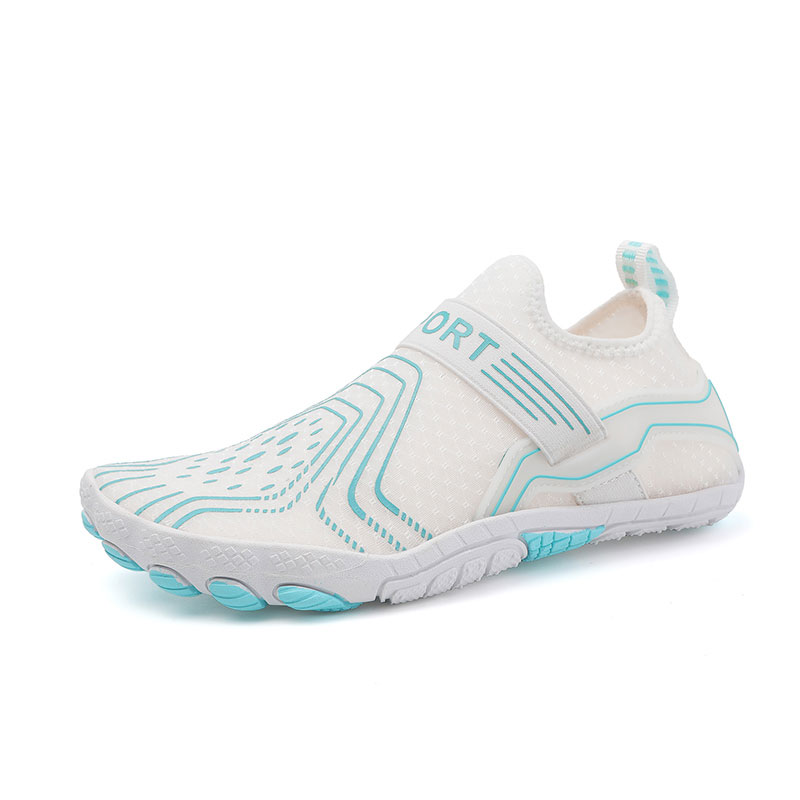
This mechanism uses thickened, vulcanized rubber extending from the outsole over the toe box. It provides high impact absorption and seamless integration. There is no added internal bulk. It effectively prevents toes from catching and bending under. However, it adds weight and can reduce toe-off flexibility during long hikes. When you are scrambling over dry boulders between river crossings, that stiffness can cause calf fatigue. Yet, for pure aquatic protection, vulcanized rubber remains the most reliable barrier against blunt force trauma.
These are wearable silicone sleeves or caps placed directly over individual toes. They are excellent for mitigating friction, pressure, and nail damage during steep downhill walks. They are inexpensive and provide an inter-digital cushion to prevent toes from rubbing together. Unfortunately, they offer zero protection against heavy blunt impacts. They can also slip, trap moisture, or degrade when fully submerged. If you use them, you must pair them with a thin liner sock to keep them anchored in place.
Hardened inserts are built into the shoe structure, common in occupational safety gear. They offer absolute crush protection from heavy rolling stones. Despite this, they are generally unsuitable for aquatic environments. They bring excessive weight and poor drainage. Steel variations have rust potential. They also cause a complete loss of tactile feedback on riverbeds. You cannot feel the shape of the rock beneath your foot, which destroys your balance in fast currents.
Protection Type | Primary Benefit | Primary Drawback | Best Use Case |
|---|---|---|---|
Vulcanized Rubber Rand | Blunt impact resistance | Reduced flexibility | Aggressive river wading |
Silicone Toe Caps | Friction reduction | Zero impact protection | Steep downhill descents |
Composite Safety Cap | Crush protection | Loss of proprioception | Industrial aquatic work |
Evaluate how a stiffer midsole supports the toe bumper. A protective toe cap is ineffective if the sole collapses under the arch on uneven rocks. Structural integrity must flow from the heel through the midfoot directly into the toe box. If the shoe bends like a slipper in the middle, the toe bumper will just pivot and drive into the top of your foot when you strike an obstacle.
Analyze the trade-off between open-mesh designs and closed-cell synthetic uppers. Open mesh drains fast but allows gravel in, causing internal toe abrasion. Closed-cell neoprene keeps debris out but retains water weight. Your choice dictates how much internal friction you will experience. We generally recommend closed-cell designs for environments with heavy silt and fine gravel, as keeping debris out of the toe box is critical for preventing blisters.
Examine outsole compounds carefully. The best toe protection cannot compensate for poor traction. Look for sticky rubber compounds and siping. Razor cuts in the lug displace water for surface contact in quality wet stone traction shoes. Grip prevents the slips that cause toe impacts in the first place. If your shoes grip the rock, you don't slide forward, and your toes don't smash into the bumper.
Thicker toe protection reduces the foot's ability to feel the riverbed. This tactile feedback is a critical sensory input for maintaining balance in moving water. You must balance armor with proprioception to walk safely. If you cannot feel the angle of the rock, you will overcommit your weight and slip. A moderate rubber bumper provides enough protection without completely numbing your foot to the terrain.
Heavy-duty footwear reduces acute injury risk but increases caloric expenditure. Leg fatigue can indirectly lead to stumbling and subsequent injury. A lighter shoe might prevent the fall that a heavier shoe would protect against. You have to evaluate your own physical conditioning and the length of the approach hike before committing to a heavily armored boot.
Heavy rubber overlays and reinforced toe boxes significantly increase drying time. This raises the risk of bacterial growth and material degradation if not managed properly. Fast-drying materials extend the lifespan of the footwear. Always remove the insoles and dry the boots in a shaded, well-ventilated area to prevent the rubber from delaminating.
Adding internal silicone toe protectors or neoprene wading socks alters foot volume. Failing to size up the shoe results in compression, numbness, and restricted blood flow. Always test footwear volume with your intended internal layers. If you buy your exact street shoe size and then add a 3mm neoprene sock, your toes will be crushed against the bumper before you even hit the water.
For extreme descents and maximum friction mitigation, implement the 3-Layer Comprehensive Stack Protocol:
Base Layer: Apply kinesiology tape to protect the epidermis from moisture friction.
Mid Layer: Wear a thin, synthetic toe sock to manage moisture and prevent the silicone from sticking to the skin.
Outer Layer: Place the silicone toe cap over the sock to absorb pressure and prevent toe-jamming inside the shoe.
Mitigation requires pairing protective shoes with integrated gaiters or tight ankle collars. This prevents small stones from entering and becoming trapped against the toe box. Debris management is just as important as impact protection. A single piece of quartz trapped against your pinky toe will end your hike faster than a blunt impact.
Measure your foot volume while wearing your intended neoprene water socks or silicone caps to ensure proper sizing before purchasing.
Prioritize outsole stickiness and siping alongside toe protection to prevent the slips that cause impact injuries.
Test the footwear on a steep, dry incline to check for forward foot-slide and heel lift before entering the water.
Apply kinesiology tape to known friction points on your toes before long descents to prevent maceration tearing.
A: Yes, they are highly effective for friction and pressure reduction. However, they do not protect against heavy blunt impacts from submerged rocks. They must be paired with protective socks to avoid slipping off when wet.
A: Standard water shoes prioritize lightweight drainage for sandy environments. Rocky creek footwear features reinforced toe boxes, stiffer midsoles, and specialized sticky rubber for impact protection and grip.
A: No. Steel or composite toe caps add unnecessary weight and trap water. They eliminate foot flexibility and can rust. Vulcanized rubber toe bumpers are the industry standard for aquatic environments.
A: Ensure a proper fit with a locked-in heel. Use a heel lock lacing technique. Consider utilizing silicone toe guards stacked over a protective toe sock to absorb forward pressure.
A: Avoid ultra-minimalist or floppy water shoes. Look for shoes featuring a stiff, continuous outsole-to-toe-bumper transition. This prevents the toe box from collapsing downward or flexing backward when striking an obstacle.
A: They utilize softer, hydrophilic rubber compounds designed to grip slick, algae-covered rocks. They combine this with drainage ports and non-absorbent materials that maintain structural integrity when fully submerged.


