 English

Views: 0 Author: Site Editor Publish Time: 2026-08-10 Origin: Site


Standard aquatic footwear often fails when exposed to jagged river rocks, abrasive coral reefs, and coarse sand. You buy a pair expecting protection, only to experience upper mesh tearing and seam separation after a few uses. Worse is the dreaded sand infiltration. Your shoes fill with sand in 30 seconds, causing severe blisters. Sole-upper delamination compromises safety and forces frequent replacements. These premature blowouts ruin trips and leave your feet vulnerable to sharp underwater hazards.
The longevity of Aqua Shoes relies heavily on the technical specifications of their upper construction. Flimsy fabrics simply cannot survive harsh aquatic environments. We must look closely at material density, structural reinforcements, and seam integrity. This evaluation framework helps you identify materials, hardware, and structural designs that genuinely withstand high-friction, wet-dry environments.
Material Density Dictates Durability: Tightly woven synthetics and TPU-coated meshes offer significantly higher abrasion resistance than standard open-cell mesh or untreated neoprene.
Structural Overlays are Non-Negotiable: True abrasion resistant water shoes utilize welded TPU overlays, extended toe rands, and secure outsole-to-upper bonding to protect high-impact zones.
The Wet-Dry Cycle Accelerates Wear: Repeated soaking, UV exposure, and saltwater crystallization degrade low-grade adhesives and fabrics; materials must be rated for chemical and hydrolysis resistance.
The Trade-off Matrix: Maximum durability often compromises drainage speed and flexibility; buyers must weigh heavy-duty, puncture-resistant construction against the lightweight agility of minimalist aqua footwear based on terrain.
Seam and Closure Integrity: Glued-only seams and cheap plastic zippers fail rapidly; double-stitched, ultrasonically welded seams, and marine-grade zippers are essential for long-term reliability.
Aquatic environments present two primary threats to shoe uppers: shear abrasion and puncture. Shear abrasion involves friction-based wear. Granite riverbeds grind against the fabric. Trapped sand causes constant micro-abrasion. When you wedge your foot between submerged boulders, the upper material drags against rough stone. This dragging action shears away weak fibers layer by layer. Puncture hazards are sudden and sharp. Zebra mussels, jagged coral, and submerged sticks slice through weak materials instantly. A single misstep on a sharp reef can destroy a basic mesh upper. Understanding these distinct threats helps you choose the right upper protection for your specific environment.
Field experience shows that shear abrasion destroys shoes slowly over a multi-day trip, while punctures cause catastrophic failure in seconds. You need materials that handle both. A shoe built only for shear resistance might still fail if a sharp branch pierces the side panel. Conversely, a hard plastic shell stops punctures but might lack the flexibility needed to resist continuous grinding without cracking.
Repeated soaking and drying severely weakens certain fibers. It promotes mold and mildew rot. Standard adhesives degrade quickly under these conditions. Saltwater adds another layer of destruction. Salt crystallizes inside fabric fibers as the shoe dries. These crystals act as an internal abrasive. They cut the fibers from the inside every time you take a step. Materials must resist this chemical and mechanical breakdown.
When you leave wet shoes in the sun, UV rays bake the salt into the fabric. This bakes the adhesives holding the upper to the sole. Over time, the tensile strength of the upper drops by more than half. What started as a tough fabric becomes brittle. You can literally pull it apart with your hands. High-quality uppers use synthetic blends specifically engineered to resist hydrolysis and UV degradation.
Sand-proof design is critical for foot health. Coarse sand acts as sandpaper when trapped between your foot and the shoe upper. This leads to severe blister formation. It also causes rapid liner breakdown. Once sand enters, it grinds away the internal stitching and fabrics. Effective designs block sand entry at the collar and through the mesh pores. Preventing sand infiltration extends the life of the footwear.
The "filled with sand in 30 seconds" failure happens when the mesh pores are larger than the sand grains, or when the ankle collar gaps during movement. As your foot flexes, it creates a pumping action that sucks sand and silt directly into the shoe. Once inside, the grit cannot escape. It settles under the arch and between the toes. You must stop the sand at the barrier. This requires high-density weaves and tight-fitting entry systems.
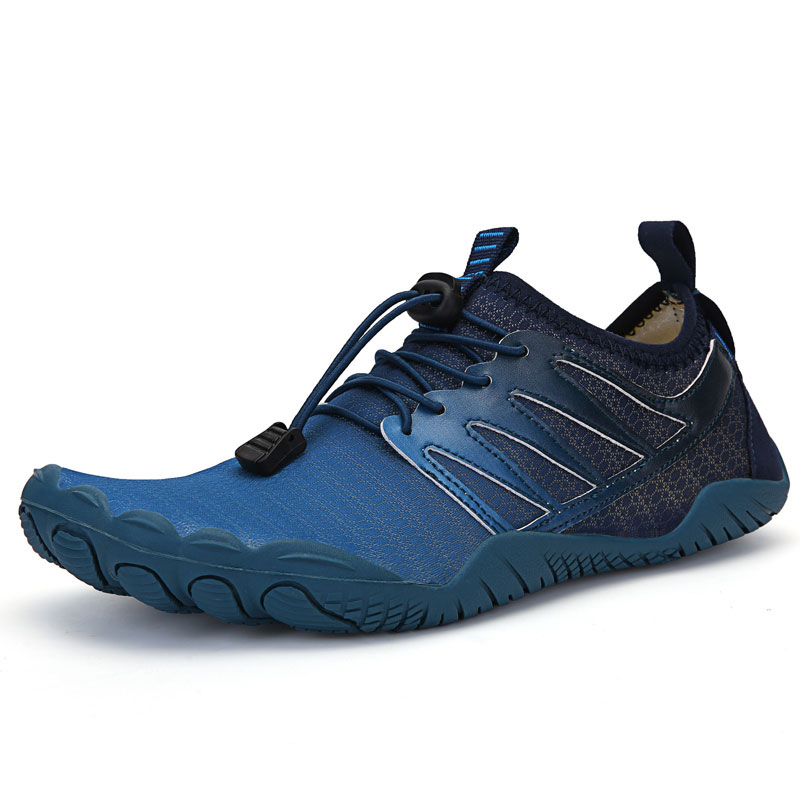
Different environments demand different upper materials. You cannot take a basic beach shoe into a slot canyon and expect it to survive. Here is a technical breakdown of the most common options.
Material Type | Abrasion Resistance | Puncture Resistance | Best Use Case |
|---|---|---|---|
Neoprene Blends | Low to Medium | Low | Cold water, sandy beaches, diving |
TPU-Coated Mesh | High | High | Canyoneering, rocky rivers, coral reefs |
Engineered Knit | Low | Low | Paddleboarding, boat decks, smooth bottoms |
Ballistic Nylon | Very High | Medium | Heavy portaging, overland wet trekking |
Neoprene provides excellent thermal benefits. It offers a skin-tight fit that keeps debris out. However, it is highly vulnerable to slicing. Sharp rocks and coral easily snag and tear untreated neoprene. It works best for cold water and diving. Use it in sandy environments where thermal retention outweighs extreme puncture resistance.
When inspecting neoprene uppers, look for varying thicknesses. A 3mm neoprene upper offers more protection than a 1.5mm version, but it will be hotter and heavier. Some manufacturers add a thin layer of spandex or nylon over the neoprene to reduce snagging. This helps, but it still will not survive a direct scrape against volcanic rock.
High-denier, tightly woven mesh prevents micro-debris entry. TPU coatings add a hardened, scrape-resistant shell. This combination resists punctures without adding excessive weight. It does not restrict water drainage. This is the industry standard for premium abrasion resistant water shoes. They are designed for canyoneering, whitewater rafting, and rocky river crossings.
The TPU is usually applied as a welded overlay. It covers the high-wear zones like the toe box, heel counter, and lateral edges. Because the TPU is melted directly into the mesh, there are no stitches to fray. This creates a smooth, armored surface that deflects sharp objects. The underlying mesh remains open enough to let water escape quickly.
Engineered knits offer exceptional flexibility and breathability. They provide a barefoot feel. However, exposed yarns are highly vulnerable. They fray and catch on debris easily. They require treatment with hydrophobic, abrasion-resistant resins to survive. These materials suit paddleboarding, kayaking, and boat decks. Choose minimalist aqua footwear when tactile feedback matters more than heavy impact protection.
Knit uppers excel in environments where you control foot placement. On a paddleboard, you want maximum grip and flexibility. You do not need armor. But if you step off the board onto a bed of oyster shells, a knit upper offers zero protection. Always match the material to the specific hazard level of your location.
Extending the outsole rubber over the toe box creates a protective rand. This shields the most vulnerable part of the upper. It absorbs direct frontal impacts and prevents scraping. When evaluating a shoe, inspect the bonding agent. Check the rand thickness and coverage area. A robust rand will not peel back after exposure to water and heat.
The toe bumper takes the brunt of the abuse when you stumble underwater. Without it, your toes smash into rocks, and the upper fabric tears away from the sole. The best designs wrap the rubber high over the toes and extend it down the sides of the foot. This creates a bumper car effect, deflecting impacts away from the softer upper materials.
The connection point between the flexible upper and rigid outsole is critical. High-flex movements under water stress this joint constantly. Look for vulcanized construction or perimeter stitching. Deep-channel molded cups also prevent the sole from separating. Weak bonding leads to rapid delamination and total shoe failure.
When you pivot on a wet rock, the upper pulls violently against the sole. If the manufacturer used cheap glue, the shoe will split open. You can test this by grabbing the sole in one hand and the upper in the other. Pull them apart firmly. If you see the glue stretching or separating, put the shoe back on the shelf. You want a seamless transition between the rubber and the fabric.
Exposed cotton or nylon thread rots and frays under abrasion. Kevlar-reinforced stitching performs much better. High-frequency welded or taped seams offer the best durability. Identify signs of weak seam construction before buying. Avoid single stitching in high-flex zones. Watch out for visible glue squeeze-out, which indicates poor manufacturing.
Welded seams eliminate the needle holes that weaken fabrics. They create a continuous, waterproof bond that lies flat against the foot. This reduces internal chafing and prevents external snagging. If a shoe must use stitching, it should be double or triple stitched, and recessed into a groove in the material so it doesn't rub directly against rocks.
High-stretch, gasket-like ankle collars seal out grit. Integrated gusseted tongues prevent debris from sliding down the instep. Marine-grade zippered closures secure the fit without jamming. Assess the corrosion resistance of zipper teeth. Check the elasticity retention of the collar material after UV exposure. The entry mechanism must prevent sand from entering within seconds of submersion.
A loose collar defeats the purpose of a durable upper. If rocks and sand pour in through the top, the shoe fails. Look for collars made of raw neoprene or silicone-backed elastic. These grip the skin tightly. If the shoe uses laces, ensure the tongue is fully gusseted—meaning it is sewn to the sides of the upper all the way to the top. This creates an impenetrable barrier against debris.
Thicker, heavily reinforced uppers resist tearing and cushion impacts. However, they trap water. This makes the shoe heavy and slow to dry. Slow drying breeds bacteria and weakens foot skin. To mitigate this, look for strategic mechanical drainage ports. These ports integrate into the sole-upper junction. They bypass the need for highly porous, fragile mesh.
You cannot have a shoe that is completely armored and also drains instantly. The armor blocks the water. Mechanical drainage ports solve this by channeling water down through the footbed and out through the sides of the sole. This allows the upper to remain dense and protective while still shedding water weight quickly.
Stiff, heavily armored uppers restrict natural foot movement. They increase weight and reduce ground feel. You must decide based on your terrain. Opt for heavily armored shoes when hiking submerged slot canyons with heavy packs. Choose minimalist designs for beach walking, swimming, and paddle sports.
Minimalist shoes let your foot wrap around rocks, providing better balance in slippery conditions. But they offer no ankle support and minimal puncture protection. Heavy-duty shoes protect your feet from crushing impacts but feel clunky when swimming. Assess your primary activity. If you spend 80% of your time walking on sharp rocks, accept the extra weight and buy the armored shoe.
Do not trust marketing claims blindly. You need to physically inspect the footwear to determine if the upper construction will survive your intended use. Use these field-tested methods to evaluate the build quality.
Perform the scratch test. Run your fingernail hard across the upper material. If the fibers snag or separate easily, the shoe will not survive a riverbed.
Flex the toe box aggressively. Bend the shoe in half. Watch the point where the rubber rand meets the upper fabric. If it buckles sharply or shows signs of separation, the bonding is weak.
Pull on the seams. Grab the material on both sides of a seam and pull laterally. You should not see any daylight through the stitching.
Evaluate hardware durability. Check bungee laces, toggles, eyelets, and zippers. They must resist saltwater corrosion. Plastic hardware is often better than cheap metal that will rust after one trip.
Test the collar elasticity. Stretch the ankle opening wide and let it snap back. It should return to its original shape instantly without sagging.
Match construction to terrain. For sharp reefs, choose TPU-coated mesh with thick rands. For fine sand, pick gasket-collared neoprene. For boat decks, select minimalist knits.
No single upper construction is completely indestructible. However, TPU-coated, high-denier mesh with extended rubber rands and welded seams offers the highest baseline protection. It resists abrasion and punctures effectively. Define your primary aquatic environment first. Decide if you face sand-heavy or rock-heavy conditions. Then, select the upper material and entry system that balances protection with acceptable drainage rates.
Test the shoes with the exact socks you plan to use in the water to ensure the collar still seals out sand.
Verify the manufacturer's return policy regarding field-testing failures before taking them on a multi-day trip.
Perform routine freshwater rinses after every use to remove salt crystals and grit from the upper fibers.
Inspect seams and bonding points regularly to catch early signs of wear before they cause a blowout.
A: TPU-coated synthetic high-denier mesh provides the highest durability. It resists cuts from sharp rocks and coral. Reinforced neoprene is also durable but better suited for thermal protection rather than extreme puncture resistance.
A: Look for high-ankle cuffs and gusseted tongues. Tightly woven uppers and gasket-style collars create a seal against your skin. This prevents the common issue where shoes fill with sand in 30 seconds.
A: Generally, no. Lightweight knit uppers lack structural reinforcements. They fray and tear easily on sharp rocks. Minimalist designs fail quickly in high-abrasion environments and are better suited for smooth surfaces.
A: Standard thread and adhesives degrade from water saturation and salt crystals. The constant wet-dry cycle rots the materials. Welded seams or Kevlar-reinforced stitching are necessary to survive these harsh aquatic conditions.
A: Yes. Thicker, dense materials retain more water. This increases drying time. To combat this, choose shoes with integrated mechanical drainage ports in the sole to expel water quickly without relying on the upper fabric.
A: Yes, many amphibious shoes cross over well. They feature rugged uppers and supportive outsoles with aggressive grip. They perform much better on trails than standard water socks, which lack midsole support and traction.


